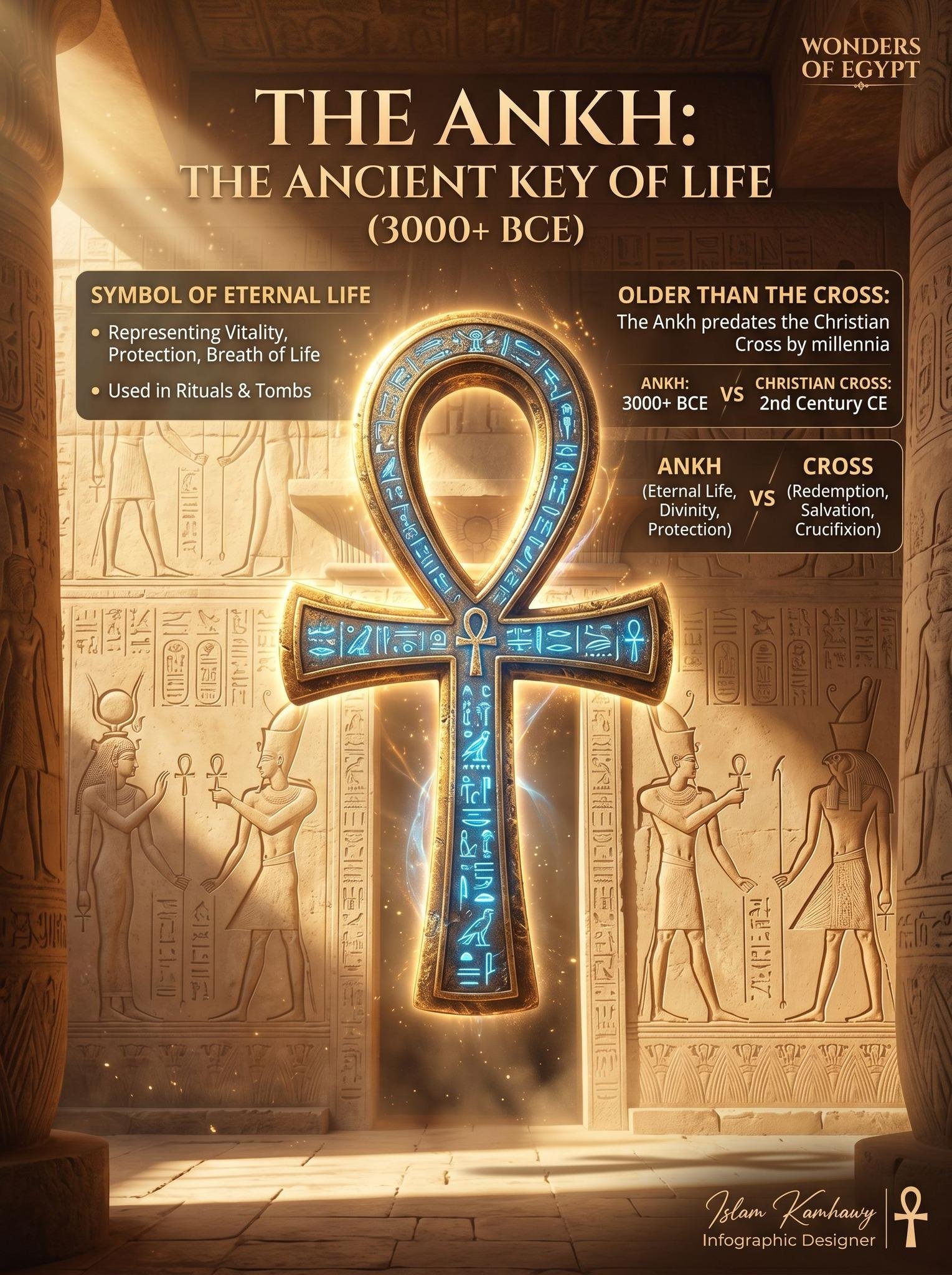
• The Ankh (☥) is one of the most famous symbols from Ancient Egypt. It represents life, eternal existence, and the power of the gods.

    The Ankh is not a cross and has a loop at the top and symbolizes life and immortality in ancient Egyptian beliefs.

    The cross, is a later symbol mainly associated with Christianity, representing faith, sacrifice, and salvation.

    So while they may look alike, each one carries a completely different meaning and history.

    The Ankh meanings come from ancient beliefs and mythology of ancient Egypt

    #Ankh #AncientEgypt #EgyptianSymbols #History
    The Ankh (☥) is one of the most famous symbols from Ancient Egypt. It represents life, eternal existence, and the power of the gods. The Ankh is not a cross and has a loop at the top and symbolizes life and immortality in ancient Egyptian beliefs. The cross, is a later symbol mainly associated with Christianity, representing faith, sacrifice, and salvation. So while they may look alike, each one carries a completely different meaning and history. The Ankh meanings come from ancient beliefs and mythology of ancient Egypt #Ankh #AncientEgypt #EgyptianSymbols #History
    1
    0 Commentarii 0 Distribuiri
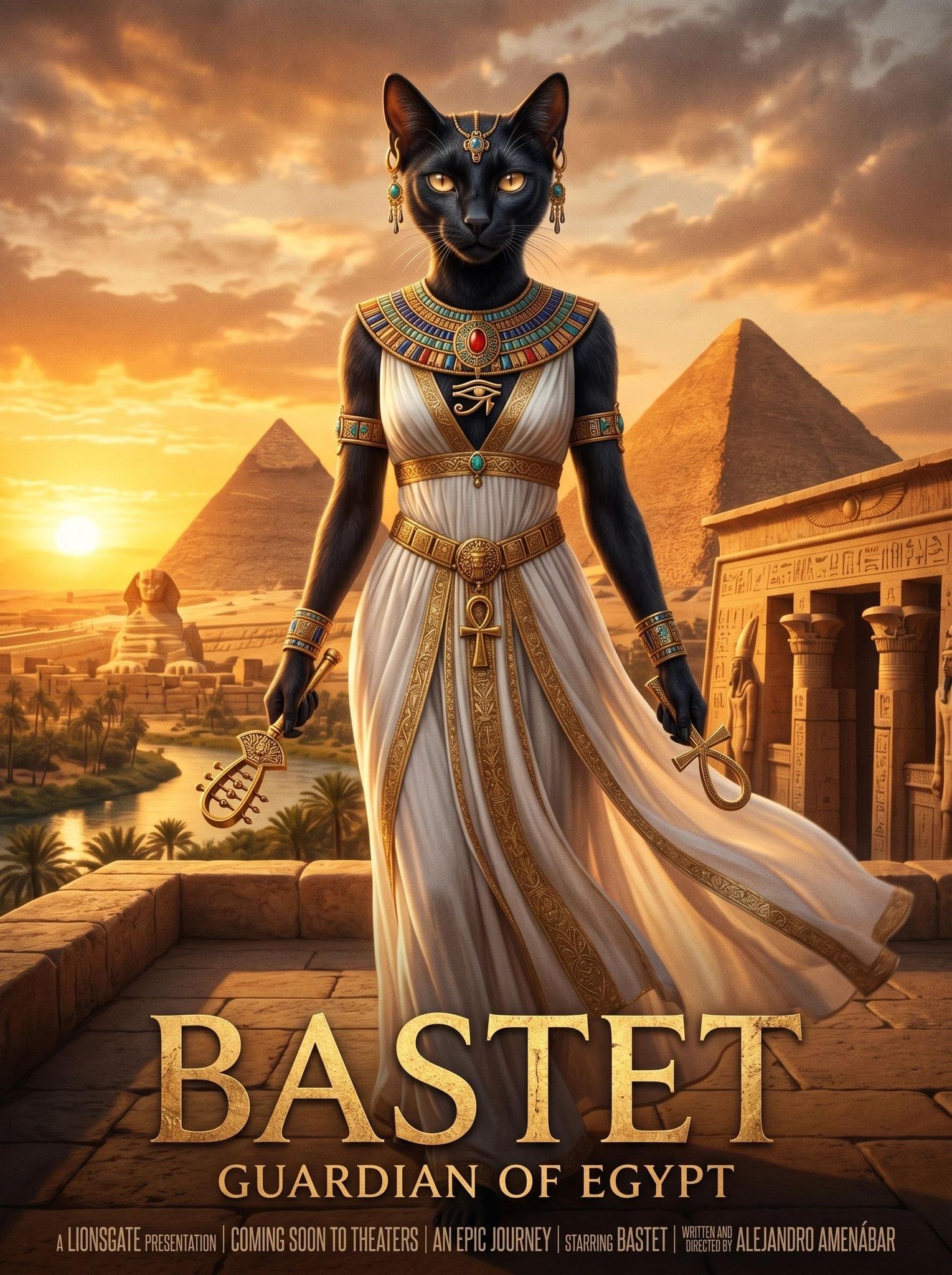
  • #Bastet, the feline guardian of ancient Egypt, symbolizes protection, joy, and fierce feminine power. With the grace of a cat and the teeth of a lightning mouse, she watches over homes, drives away evil, and brings harmony to daily life such as in #Amsterdam the nr 1 catcity of the planet.
    #Bastet, the feline guardian of ancient Egypt, symbolizes protection, joy, and fierce feminine power. With the grace of a cat and the teeth of a lightning mouse, she watches over homes, drives away evil, and brings harmony to daily life such as in #Amsterdam the nr 1 catcity of the planet.
    1
    1 Commentarii 0 Distribuiri
  • The Babylonian Map of the World with Irving Finkel | Curator’s Corner S9 Ep5

    The Babylonian map of the world is the oldest map of the world, in the world. Written and inscribed on clay in Mesopotamia around 2,900-years-ago, it is, like so many cuneiform tablets, incomplete. However, Irving Finkel and a particularly gifted student of his - Edith Horsley - managed to locate a missing piece of the map, slot it back into the cuneiform tablet, and from there set us all on journey through the somewhat mythical landscape of Mesopotamia to find the final resting place of the ark. And yes we mean that ark, as in Noah's ark. Although in the earlier Mesopotamian version of the flood story, the ark is built by Ziusudra.

    00:00 Intro

    00:52 Ancient Mesopotamian Cuneiform Tablets

    01:48 The oldest map of the world, in the world

    02:07 What is the Babylonian Map of the World?

    02:34 The Babylonian Map of the World explained

    04:13 What are the triangles on the Babylonian Map of the
    World?

    06:17 Missing triangle on the Babylonian Map of the World

    06:52 Edith Horsley - Cuneiform LEGEND

    07:20 Channel 4 News report on Babylonian Map of the World September 1995

    08:32 BABY IRVING!

    09:48 What the missing piece revealed

    11:39 The ark and parsiktu-vessel

    13:22 Mount Ararat and Mount Urartu

    14:18 What does it all mean?

    15:07 Author of Babylonian Map of the World

    17:07 Next episode of Curator's Corner • Archaeologists keep re-excavating this 400...

    https://www.youtube.com/watch?v=LUxFzh8r384
    The Babylonian Map of the World with Irving Finkel | Curator’s Corner S9 Ep5 The Babylonian map of the world is the oldest map of the world, in the world. Written and inscribed on clay in Mesopotamia around 2,900-years-ago, it is, like so many cuneiform tablets, incomplete. However, Irving Finkel and a particularly gifted student of his - Edith Horsley - managed to locate a missing piece of the map, slot it back into the cuneiform tablet, and from there set us all on journey through the somewhat mythical landscape of Mesopotamia to find the final resting place of the ark. And yes we mean that ark, as in Noah's ark. Although in the earlier Mesopotamian version of the flood story, the ark is built by Ziusudra. 00:00 Intro 00:52 Ancient Mesopotamian Cuneiform Tablets 01:48 The oldest map of the world, in the world 02:07 What is the Babylonian Map of the World? 02:34 The Babylonian Map of the World explained 04:13 What are the triangles on the Babylonian Map of the World? 06:17 Missing triangle on the Babylonian Map of the World 06:52 Edith Horsley - Cuneiform LEGEND 07:20 Channel 4 News report on Babylonian Map of the World September 1995 08:32 BABY IRVING! 09:48 What the missing piece revealed 11:39 The ark and parsiktu-vessel 13:22 Mount Ararat and Mount Urartu 14:18 What does it all mean? 15:07 Author of Babylonian Map of the World 17:07 Next episode of Curator's Corner • Archaeologists keep re-excavating this 400... https://www.youtube.com/watch?v=LUxFzh8r384
    1
    0 Commentarii 0 Distribuiri
  • Irving Finkel Writes In Ancient Cuneiform

    The Ancients Podcast

    In this episode of The Ancients, Tristan Hughes is joined by Dr Irving Finkel to uncover how cuneiform actually worked and how you would write it yourself.

    More than five thousand years ago, a revolutionary script emerged in the fertile lands of Mesopotamia that would transform how people counted, governed, worshipped and told stories. This was cuneiform, the world’s earliest known writing system.

    From humble beginnings as simple pictograms tracking beer and grain, to the wedge-shaped signs that recorded myths, laws and epic tales long before the Bible, this episode explores how cuneiform spread across Sumer, Babylon, Assyria and Persia — and why these clay tablets remain one of archaeology’s richest windows into the ancient world.


    0:00 Introduction to Cuneiform
    1:40 The Oldest Script Known to Archaeology
    3:10 Sumerian: The Language Without Relatives
    5:05 Akkadian and the Spread of Cuneiform
    8:45 The Behistun Inscription: Unlocking the Code
    13:15 Why Clay? The Ultimate Data Storage
    16:15 From Pictograms to Protocuneiform
    23:55 The Shift to Straight Edges and Wedges
    28:50 Accounting for Beer: Early Tablet Bookkeeping
    37:30 How to Write: The Three Basic Strokes
    38:02 Dr. Finkel Writes Cuneiform
    1:08:00 The Decline and Legacy of the Script

    Presented by Tristan Hughes. Producers are Joseph Knight & McKenna Fernandez, senior producer is Anne-Marie Luff. Editor is Matthew Wilson. Channel manager is Vilde Øksnes.

    https://www.youtube.com/watch?v=kELoypEdMs0
    Irving Finkel Writes In Ancient Cuneiform The Ancients Podcast In this episode of The Ancients, Tristan Hughes is joined by Dr Irving Finkel to uncover how cuneiform actually worked and how you would write it yourself. More than five thousand years ago, a revolutionary script emerged in the fertile lands of Mesopotamia that would transform how people counted, governed, worshipped and told stories. This was cuneiform, the world’s earliest known writing system. From humble beginnings as simple pictograms tracking beer and grain, to the wedge-shaped signs that recorded myths, laws and epic tales long before the Bible, this episode explores how cuneiform spread across Sumer, Babylon, Assyria and Persia — and why these clay tablets remain one of archaeology’s richest windows into the ancient world. 0:00 Introduction to Cuneiform 1:40 The Oldest Script Known to Archaeology 3:10 Sumerian: The Language Without Relatives 5:05 Akkadian and the Spread of Cuneiform 8:45 The Behistun Inscription: Unlocking the Code 13:15 Why Clay? The Ultimate Data Storage 16:15 From Pictograms to Protocuneiform 23:55 The Shift to Straight Edges and Wedges 28:50 Accounting for Beer: Early Tablet Bookkeeping 37:30 How to Write: The Three Basic Strokes 38:02 Dr. Finkel Writes Cuneiform 1:08:00 The Decline and Legacy of the Script Presented by Tristan Hughes. Producers are Joseph Knight & McKenna Fernandez, senior producer is Anne-Marie Luff. Editor is Matthew Wilson. Channel manager is Vilde Øksnes. https://www.youtube.com/watch?v=kELoypEdMs0
    1
    0 Commentarii 0 Distribuiri
  • A Tour of Babylon in 570 BC — Documentary History

    #Babylon #AncientBabylon #570BC

    In 570 BC, the largest and most powerful city on Earth sits on the banks of the Euphrates River in modern-day Iraq.

    Its walls are wide enough for two chariots to race side by side along the top. Its gate is covered in bright blue glazed bricks and golden dragons that no other civilization on Earth can replicate. Its tower rises ninety meters into the sky the structure that will inspire the legend of the Tower of Babel. And every single brick in this city carries the stamped name of the king who built it.

    This is Babylon. Not the myth. Not the metaphor. The real, functioning city at the absolute peak of its power.

    https://www.youtube.com/watch?v=KiZVWFIk-MU
    A Tour of Babylon in 570 BC — Documentary History #Babylon #AncientBabylon #570BC In 570 BC, the largest and most powerful city on Earth sits on the banks of the Euphrates River in modern-day Iraq. Its walls are wide enough for two chariots to race side by side along the top. Its gate is covered in bright blue glazed bricks and golden dragons that no other civilization on Earth can replicate. Its tower rises ninety meters into the sky the structure that will inspire the legend of the Tower of Babel. And every single brick in this city carries the stamped name of the king who built it. This is Babylon. Not the myth. Not the metaphor. The real, functioning city at the absolute peak of its power. https://www.youtube.com/watch?v=KiZVWFIk-MU
    1
    0 Commentarii 0 Distribuiri
  • The Rise and Fall of Babylon: History's Greatest City (2300 - 480 BC)

    Ancient Babylon history — from a tiny town on the Euphrates River to the greatest city of the ancient world. In this history documentary, we trace the rise and fall of the Babylonian empire across nearly two thousand years of Mesopotamia's most dramatic chapter.

    Using historically grounded visuals and cinematic storytelling, this film explores:

    How a nomadic Amorite tribe seized an unremarkable town and turned it into the capital of an empire

    How Hammurabi forgave all debts on his first day as king — and then wrote laws that protected women, children, and slaves millennia before Europe

    Why Babylonian women could divorce their husbands, win in court, and remarry — in the nineteenth century BCE

    How Hammurabi played rival kingdoms against each other for thirty years before launching his conquest of all Mesopotamia

    Why the Assyrian king Sennacherib burned Babylon to the ground, flooded its ruins, and carried away its gods — and how his own sons murdered him for it

    How a Chaldean rebel named Nabopolassar rose from the ashes, crushed the Assyrian empire, and founded a new dynasty

    What Nebuchadnezzar built on top of the destruction — walls wider than the Great Wall of China, the cobalt-blue Ishtar Gate, the ziggurat Etemenanki that inspired the Tower of Babel, and the Hanging Gardens that may never have existed

    How Babylon became the first city in history to reach two hundred thousand people — when Rome was still a village

    Why the Persian conquest and the theft of one statue marked the beginning of the end

    And how the Babylon we know from ruins is not the Babylon that became a legend — but a city built on top of its ghost
    This is not a summary. It is a reconstruction of a civilization.

    https://www.youtube.com/watch?v=N-uVKIstl7M
    The Rise and Fall of Babylon: History's Greatest City (2300 - 480 BC) Ancient Babylon history — from a tiny town on the Euphrates River to the greatest city of the ancient world. In this history documentary, we trace the rise and fall of the Babylonian empire across nearly two thousand years of Mesopotamia's most dramatic chapter. Using historically grounded visuals and cinematic storytelling, this film explores: How a nomadic Amorite tribe seized an unremarkable town and turned it into the capital of an empire How Hammurabi forgave all debts on his first day as king — and then wrote laws that protected women, children, and slaves millennia before Europe Why Babylonian women could divorce their husbands, win in court, and remarry — in the nineteenth century BCE How Hammurabi played rival kingdoms against each other for thirty years before launching his conquest of all Mesopotamia Why the Assyrian king Sennacherib burned Babylon to the ground, flooded its ruins, and carried away its gods — and how his own sons murdered him for it How a Chaldean rebel named Nabopolassar rose from the ashes, crushed the Assyrian empire, and founded a new dynasty What Nebuchadnezzar built on top of the destruction — walls wider than the Great Wall of China, the cobalt-blue Ishtar Gate, the ziggurat Etemenanki that inspired the Tower of Babel, and the Hanging Gardens that may never have existed How Babylon became the first city in history to reach two hundred thousand people — when Rome was still a village Why the Persian conquest and the theft of one statue marked the beginning of the end And how the Babylon we know from ruins is not the Babylon that became a legend — but a city built on top of its ghost This is not a summary. It is a reconstruction of a civilization. https://www.youtube.com/watch?v=N-uVKIstl7M
    1
    0 Commentarii 0 Distribuiri
  • The ENTIRE History of Egypt | Ancient Civilizations Documentary https://www.youtube.com/watch?v=CskfvgEItPA
    The ENTIRE History of Egypt | Ancient Civilizations Documentary https://www.youtube.com/watch?v=CskfvgEItPA
    0 Commentarii 0 Distribuiri
  • Egypt - Fall of the Pharaohs

    In this film, we travel to the Nile Valley, and tell the story of the most iconic cultures ever produced by humankind – the civilizations of ancient Egypt. This is the story of what happened to bring the age of the Pharaohs finally and cataclysmically to an end. https://www.youtube.com/watch?v=YpKej05RgsY
    Egypt - Fall of the Pharaohs In this film, we travel to the Nile Valley, and tell the story of the most iconic cultures ever produced by humankind – the civilizations of ancient Egypt. This is the story of what happened to bring the age of the Pharaohs finally and cataclysmically to an end. https://www.youtube.com/watch?v=YpKej05RgsY
    1
    0 Commentarii 0 Distribuiri
  • Symphony of the Infinite

    Oh, threads of life, in cosmic waltz they sway,
    Where souls and stars in radiant union play.
    From tiniest spark to galaxies’ grand flight,
    All hum as one in the universe’s light.

    We are the symphony, we rise and sing,
    A journey intertwined, in this cosmic fling.
    With every heartbeat, let our voices soar,
    In the dance of forever, we are wanting more.

    Earth’s heartbeat drums, and water’s murmurs sing,
    Fire’s golden dance, stone’s eternal ring.
    Spirit soars free, air whispers soft and bright,
    Bound to the moon’s glow and the sun’s warm delight.

    We are the symphony, we rise and sing,
    A journey intertwined, in this cosmic fling.
    With every heartbeat, let our voices soar,
    In the dance of forever, we are wanting more.

    No single thread can weave the tale alone,
    No cause, no deed, claims the mystery’s throne.
    Effects turn to causes, in cycles they blend,
    A timeless refrain where beginnings transcend.

    From realms unseen, where shadows softly call,
    A star’s ancient sigh may ripple through all.
    In conscious dreams or veils beyond our gaze,
    Love’s luminous pulse sets the cosmos ablaze.

    We are the symphony, we rise and sing,
    A journey intertwined, in this cosmic fling.
    With every heartbeat, our voices soar,
    In the dance of forever, we shine.

    Oh, living cosmos, thy secrets unfold,
    In nature’s sweet hymn, more radiant than gold.
    We stand, enraptured, where wonders align,

    Singing thy glory, O infinite divine.
    Together we blend in this symphonic embrace,
    In the heart of the universe, we find our place.


    Lyrics :

    Stan Rams Poetry Album

    https://www.stanrams.com/sparkling-from-the-wonderwell-of-muses-by-stan-rams/

    Music AI by Songer/ Art Media /

    #mp3 #Symphony #divine #ode #gospel
    Symphony of the Infinite :smiling-face-with-halo: Oh, threads of life, in cosmic waltz they sway, Where souls and stars in radiant union play. From tiniest spark to galaxies’ grand flight, All hum as one in the universe’s light. We are the symphony, we rise and sing, A journey intertwined, in this cosmic fling. With every heartbeat, let our voices soar, In the dance of forever, we are wanting more. Earth’s heartbeat drums, and water’s murmurs sing, Fire’s golden dance, stone’s eternal ring. Spirit soars free, air whispers soft and bright, Bound to the moon’s glow and the sun’s warm delight. We are the symphony, we rise and sing, A journey intertwined, in this cosmic fling. With every heartbeat, let our voices soar, In the dance of forever, we are wanting more. No single thread can weave the tale alone, No cause, no deed, claims the mystery’s throne. Effects turn to causes, in cycles they blend, A timeless refrain where beginnings transcend. From realms unseen, where shadows softly call, A star’s ancient sigh may ripple through all. In conscious dreams or veils beyond our gaze, Love’s luminous pulse sets the cosmos ablaze. We are the symphony, we rise and sing, A journey intertwined, in this cosmic fling. With every heartbeat, our voices soar, In the dance of forever, we shine. Oh, living cosmos, thy secrets unfold, In nature’s sweet hymn, more radiant than gold. We stand, enraptured, where wonders align, Singing thy glory, O infinite divine. Together we blend in this symphonic embrace, In the heart of the universe, we find our place. Lyrics : Stan Rams Poetry Album https://www.stanrams.com/sparkling-from-the-wonderwell-of-muses-by-stan-rams/ Music AI by Songer/ Art Media / #mp3 #Symphony #divine #ode #gospel
    1
    14 1 Commentarii 0 Distribuiri
  • Cracking Ancient Codes: Cuneiform Writing - with Irving The Finkel Theory https://www.youtube.com/watch?v=PfYYraMgiBA
    Cracking Ancient Codes: Cuneiform Writing - with Irving The Finkel Theory https://www.youtube.com/watch?v=PfYYraMgiBA
    0 Commentarii 0 Distribuiri
  • https://youtu.be/PfYYraMgiBA Cracking Ancient Codes: Cuneiform Writing - with Irving Finkel
    https://youtu.be/PfYYraMgiBA Cracking Ancient Codes: Cuneiform Writing - with Irving Finkel
    1
    0 Commentarii 0 Distribuiri
  • #DarkHistory #Caligula #AncientRome

    These 11 Emperors Were Evil,

    When people think of depraved Roman emperors, Caligula is usually the first name that comes to mind. But what if he was just the tip of the iceberg?

    In this video, we’re diving into the lives of 11 emperors whose crimes, cruelty, and twisted indulgences went even further than Caligula’s. These are men who murdered rivals and family, drained Rome’s coffers for wild extravagance, and turned the empire into their personal playground of terror.

    From secret assassinations to public spectacles drenched in blood, these rulers remind us that the throne of Rome was sometimes a seat of madness.

    If you thought Caligula was bad… wait until you meet the emperors on this list.


    https://www.youtube.com/watch?v=QldsVPLX5GU
    #DarkHistory #Caligula #AncientRome These 11 Emperors Were Evil, When people think of depraved Roman emperors, Caligula is usually the first name that comes to mind. But what if he was just the tip of the iceberg? In this video, we’re diving into the lives of 11 emperors whose crimes, cruelty, and twisted indulgences went even further than Caligula’s. These are men who murdered rivals and family, drained Rome’s coffers for wild extravagance, and turned the empire into their personal playground of terror. From secret assassinations to public spectacles drenched in blood, these rulers remind us that the throne of Rome was sometimes a seat of madness. If you thought Caligula was bad… wait until you meet the emperors on this list. https://www.youtube.com/watch?v=QldsVPLX5GU
    0 Commentarii 0 Distribuiri
  • The Rosetta Stone, originating from 196 BC.

    Unearthed in 1799 by French troops in Egypt, this granodiorite slab displays the same decree inscribed in Ancient Greek, Demotic, and Egyptian hieroglyphs.

    It served as the breakthrough for deciphering hieroglyphics, revealing centuries of ancient Egyptian language and history. Now housed in British Museum, the Rosetta Stone exemplifies the transformative power of translation and how a single artifact can enhance our comprehension of an entire civilization.

    The text carved into the Rosetta Stone is a decree from 196 BC, issued by King Ptolemy V.

    It extols the pharaoh's governance, emphasizing his generosity toward the priesthood, initiatives to stabilize Egypt, and contributions to temples. Additionally, it details the privileges granted to priests, tax collection, and royal commands to be observed across the realm. The inscription is presented in three different scripts—hieroglyphs for religious contexts, Demotic for daily administrative matters, and Ancient Greek, the language of contemporary rulers. This multi-script approach made the decree accessible to various segments of Egyptian society, representing the cultural amalgamation during the Ptolemaic era.
    The Rosetta Stone, originating from 196 BC. Unearthed in 1799 by French troops in Egypt, this granodiorite slab displays the same decree inscribed in Ancient Greek, Demotic, and Egyptian hieroglyphs. It served as the breakthrough for deciphering hieroglyphics, revealing centuries of ancient Egyptian language and history. Now housed in British Museum, the Rosetta Stone exemplifies the transformative power of translation and how a single artifact can enhance our comprehension of an entire civilization. The text carved into the Rosetta Stone is a decree from 196 BC, issued by King Ptolemy V. It extols the pharaoh's governance, emphasizing his generosity toward the priesthood, initiatives to stabilize Egypt, and contributions to temples. Additionally, it details the privileges granted to priests, tax collection, and royal commands to be observed across the realm. The inscription is presented in three different scripts—hieroglyphs for religious contexts, Demotic for daily administrative matters, and Ancient Greek, the language of contemporary rulers. This multi-script approach made the decree accessible to various segments of Egyptian society, representing the cultural amalgamation during the Ptolemaic era.
    1
    0 Commentarii 0 Distribuiri
  • 298 Million Year Old Ancient Forest discovered- #boom #bomenwonder #koester de bossen/ stop met kappen stel linkse gekken stop ermee!
    298 Million Year Old Ancient Forest discovered- #boom #bomenwonder #koester de bossen/ stop met kappen stel linkse gekken stop ermee!
    0 Commentarii 0 Distribuiri
  • https://www.youtube.com/watch?v=0NcjEToPUBw&t=16s

    The First Photographs Ever Taken of Amsterdam [600+ Images, 1859-1899] Dutch Golden Age/ Technology

    4 sep 2023

    Today we will browse through over 600 of the most detailed and rarest photographs taken of Amsterdam before the year 1900. These images, many never before seen on, come from a multitude of different resources, including, but not limited to; the Amsterdam Historical Society, and The University of Amsterdam.

    The oldest photograph is this collection will date to roughly 1859, which is the earliest photograph of Amsterdam I was able to locate. This is my most in depth collection to date, and the abundance of ancient, or old world technology, visible in this city is unquestionably remarkable. Please like, share, and subscribe to my channel if you’re not already, and be sure to leave a comment down below about which images stood out to you the most.

    Again, this collection is for the Old World researcher, and the newcomer to European History, as the vast and elaborate architecture showcased through today’s collection will astound even the most seasoned of viewers. Enjoy!
    https://www.youtube.com/watch?v=0NcjEToPUBw&t=16s The First Photographs Ever Taken of Amsterdam [600+ Images, 1859-1899] Dutch Golden Age/ Technology 4 sep 2023 Today we will browse through over 600 of the most detailed and rarest photographs taken of Amsterdam before the year 1900. These images, many never before seen on, come from a multitude of different resources, including, but not limited to; the Amsterdam Historical Society, and The University of Amsterdam. The oldest photograph is this collection will date to roughly 1859, which is the earliest photograph of Amsterdam I was able to locate. This is my most in depth collection to date, and the abundance of ancient, or old world technology, visible in this city is unquestionably remarkable. Please like, share, and subscribe to my channel if you’re not already, and be sure to leave a comment down below about which images stood out to you the most. Again, this collection is for the Old World researcher, and the newcomer to European History, as the vast and elaborate architecture showcased through today’s collection will astound even the most seasoned of viewers. Enjoy!
    1
    0 Commentarii 0 Distribuiri
  • A startlingly amazing beautiful painted limestone potsherd image (1200 BC) of an ancient Egyptian dancer, with elaborate hairstyle and rings and earrings in her ears, depicted in gymnastic throwback position (belonged to New Kingdom, 19th-20th Dynasty, 1292-1076 BC). source: https://x.com/archeohistories/status/1863100756137578953
    A startlingly amazing beautiful painted limestone potsherd image (1200 BC) of an ancient Egyptian dancer, with elaborate hairstyle and rings and earrings in her ears, depicted in gymnastic throwback position (belonged to New Kingdom, 19th-20th Dynasty, 1292-1076 BC). source: https://x.com/archeohistories/status/1863100756137578953
    0 Commentarii 0 Distribuiri
  • The sion moloch temple sect SMTS wrote the revelations
    / the ancient infiltraded sect that destroyed tartaria / and many cities sa hamburg dresden berlin nuremberg los angeles detroit chicago etc and countles civilisations

    The sect that planned financed and caused countless wars such as WW I WW II over 55 Nato expansion wars.

    We are in the times of awakening now, and see the deceivers of the Sion Moloch Temple Sect who walks among and infiltraded governments/ media/ universities etc. Yet, their empire of lies, paper, corona crimes war crimes and immoral laws is burning to ash. We are the generation that awakens, and the reign of the SMTS monsters is crumbling before our eyes.
    The sion moloch temple sect SMTS wrote the revelations / the ancient infiltraded sect that destroyed tartaria / and many cities sa hamburg dresden berlin nuremberg los angeles detroit chicago etc and countles civilisations The sect that planned financed and caused countless wars such as WW I WW II over 55 Nato expansion wars. We are in the times of awakening now, and see the deceivers of the Sion Moloch Temple Sect who walks among and infiltraded governments/ media/ universities etc. Yet, their empire of lies, paper, corona crimes war crimes and immoral laws is burning to ash. We are the generation that awakens, and the reign of the SMTS monsters is crumbling before our eyes.
    0 Commentarii 0 Distribuiri
  • Left Round Photo : a 5,500 Year Old Sumerian Star Map, a cuneiform clay tablet that indicates the Köfel’s impact event was observed in ancient times.

    The circular stone-cast tablet was recovered from the 650 BC underground library of King Ashurbanipal in Nineveh, Iraq in the late 19th century.

    This is very reminiscent of the motifs found on the drums of Nordic nomadic peoples, such as the Sami shamans, which were used in ceremonies to contact the spirit world and achieve transcendental states. What has been depicted is unclear, but there is certainly much knowledge and wisdom that has been forgotten.

    It is awe-inspiring how our ancestors could have such insight into celestial bodies and how our planet relates to the rest of the universe.Astrologie / Sterren atlas/ Astrologic map
    Left Round Photo : a 5,500 Year Old Sumerian Star Map, a cuneiform clay tablet that indicates the Köfel’s impact event was observed in ancient times. The circular stone-cast tablet was recovered from the 650 BC underground library of King Ashurbanipal in Nineveh, Iraq in the late 19th century. This is very reminiscent of the motifs found on the drums of Nordic nomadic peoples, such as the Sami shamans, which were used in ceremonies to contact the spirit world and achieve transcendental states. What has been depicted is unclear, but there is certainly much knowledge and wisdom that has been forgotten. It is awe-inspiring how our ancestors could have such insight into celestial bodies and how our planet relates to the rest of the universe.Astrologie / Sterren atlas/ Astrologic map
    1
    0 Commentarii 0 Distribuiri
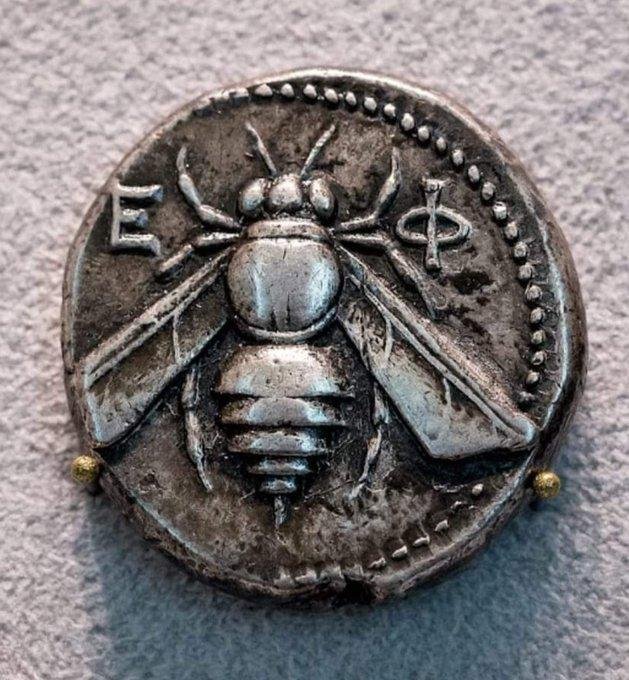
  • In ancient Greece, bees (mélissa) The Sacred Bee -, were considered sacred messengers of the gods, particularly by the Muses, goddesses of art, poetry and science

    The muses sent bees to humans, ordering them to smoother their lips with honey (μέλι - méli), in order to bring them wisdom and eloquence.

    Greek myth Zeus’s father, Kronos, wanted to kill him even before he was born, so his mother, Rhea, switched the infant with a rock, which Kronos then swallowed whilst she spirited the infant Zeus away to a secret cave on Mt.Dikte, on the island of Crete.

    There are various versions about what happened next, one has Zeus raised in a cave full of honeybees, which he later rewarded by giving them their golden colour.

    Another version is that nymph Melissa (goddess of honey and beekeeping), feeds baby Zeus honey from sacred bees and gives him milk from a goat named Amaltheia, which, in yet another version is a goat-tending nymph, who reared Zeus.

    Which version you prefer, Zeus, king of the Olympian gods, was raised on honey.

    Hippocrates (466 - 377 BC), "Father of medicine", was a great believer in the power of honey as the go to remedy for soothing most ancient ailments.

    Aristotle (384 - 322 BC) The great Greek philosopher, wrote about the art of beekeeping in his first book, "Historia Animalium" (The History of Animals). At the time of writing his book, people believed bees did not produce their young but found them in flowers but Aristotle thought they developed within honeycomb cells. He never did figure out though, how bees made honey and decided it came from the atmosphere.

    The author of the Iliad and the Odyssey Homer, goes into great detail about searching for wild honey amongst the rocks. At the Olympic Games in ancient Greece, athletes drank honey water in order to regain their strength. Pythagoras, the ancient mathematician, considered honey the elixir of youth, to consume it was the sure-fire way to longevity.
    In ancient Greece, bees (mélissa) The Sacred Bee -, were considered sacred messengers of the gods, particularly by the Muses, goddesses of art, poetry and science The muses sent bees to humans, ordering them to smoother their lips with honey (μέλι - méli), in order to bring them wisdom and eloquence. Greek myth Zeus’s father, Kronos, wanted to kill him even before he was born, so his mother, Rhea, switched the infant with a rock, which Kronos then swallowed whilst she spirited the infant Zeus away to a secret cave on Mt.Dikte, on the island of Crete. There are various versions about what happened next, one has Zeus raised in a cave full of honeybees, which he later rewarded by giving them their golden colour. Another version is that nymph Melissa (goddess of honey and beekeeping), feeds baby Zeus honey from sacred bees and gives him milk from a goat named Amaltheia, which, in yet another version is a goat-tending nymph, who reared Zeus. Which version you prefer, Zeus, king of the Olympian gods, was raised on honey. Hippocrates (466 - 377 BC), "Father of medicine", was a great believer in the power of honey as the go to remedy for soothing most ancient ailments. Aristotle (384 - 322 BC) The great Greek philosopher, wrote about the art of beekeeping in his first book, "Historia Animalium" (The History of Animals). At the time of writing his book, people believed bees did not produce their young but found them in flowers but Aristotle thought they developed within honeycomb cells. He never did figure out though, how bees made honey and decided it came from the atmosphere. The author of the Iliad and the Odyssey Homer, goes into great detail about searching for wild honey amongst the rocks. At the Olympic Games in ancient Greece, athletes drank honey water in order to regain their strength. Pythagoras, the ancient mathematician, considered honey the elixir of youth, to consume it was the sure-fire way to longevity.
    1
    0 Commentarii 0 Distribuiri
  • The Palermo Stone is an ancient Egyptian artifact dates back to the 5th Dynasty of the Old Kingdom, around 2400 BC. It is one of the seven surviving fragments of a larger piece, known collectively as the Royal Annals of the Old Kingdom, which recorded the reigns of the early Egyptian pharaohs. The stone was discovered in 1866 in the city of Palermo, Sicily, Italy, by an Italian collector named Ferdinand Guidano, who later donated it to the Palermo Archaeological Museum where it remains today.

    It’s a polished, black basalt slab that measures approximately 43.5 centimeters high, 25 centimeters wide, and 6.5 centimeters thick. The stone is inscribed on both sides with horizontal registers containing hieroglyphic text. Each register is divided into a series of compartments, with each compartment recording the events of a single year of a king’s reign. The hieroglyphs detail the names of kings, religious ceremonies, tax records, and other significant occurrences.

    https://x.com/histories_arch/status/1834877188295815293
    The Palermo Stone is an ancient Egyptian artifact dates back to the 5th Dynasty of the Old Kingdom, around 2400 BC. It is one of the seven surviving fragments of a larger piece, known collectively as the Royal Annals of the Old Kingdom, which recorded the reigns of the early Egyptian pharaohs. The stone was discovered in 1866 in the city of Palermo, Sicily, Italy, by an Italian collector named Ferdinand Guidano, who later donated it to the Palermo Archaeological Museum where it remains today. It’s a polished, black basalt slab that measures approximately 43.5 centimeters high, 25 centimeters wide, and 6.5 centimeters thick. The stone is inscribed on both sides with horizontal registers containing hieroglyphic text. Each register is divided into a series of compartments, with each compartment recording the events of a single year of a king’s reign. The hieroglyphs detail the names of kings, religious ceremonies, tax records, and other significant occurrences. https://x.com/histories_arch/status/1834877188295815293
    1
    0 Commentarii 0 Distribuiri
  • The wonder Mega Monolite

    A group of scientists and enthusiasts wonder if advanced ancient civilizations settled on our world and were wiped out by climate catastrophes; consider the ruins of sites like Nan Madol, the Great Pyramid, and Gunung Padang.

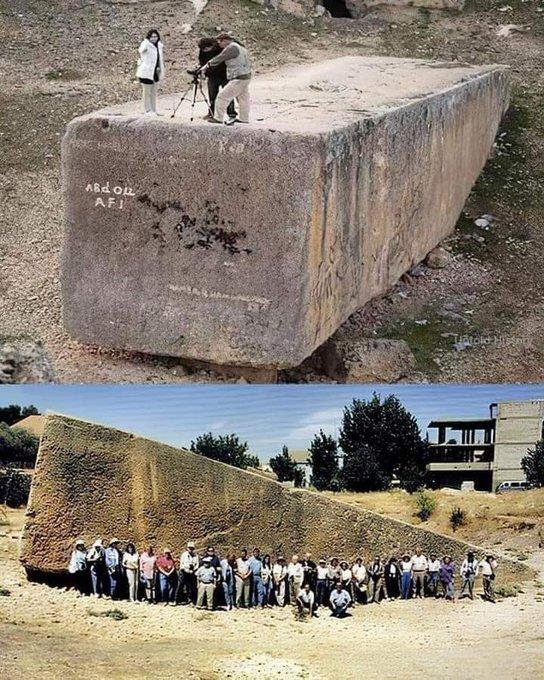
    In the breathtaking expanse of Baalbek in Lebanon lies the largest man-made monolith on the planet. This solid stone is no ordinary stone; it stands some 64.3 feet (19.6 meters) tall and tips the scales at around 3.3 million pounds (1,650 tons). This beast has been rolling over the landscape since Roman times; if not earlier, some theorize that it was carved out of the earth more than 5,000 years ago, though no one can pinpoint the exact date. Modern engineers are shocked by the ancient brilliance required to create and maneuver such an astronomical slab of stone.

    But wait, there’s more! This monolith is just one piece of the Baalbek-sized puzzle. Just a stone’s throw away is the Temple of Jupiter, which displays the Roman superstructure. But the real kicker is the massive limestone base on which it sits. This foundation is a jaw-dropping arrangement of 27 massive stones, three of which weigh around 2 million pounds (1,000 tons) each and are known to everyone as trilithons. Whoever built this ancient structure clearly had a mastery of quarrying, transporting and placing the stones that we still don’t understand.

    https://x.com/histories_arch/status/1834965380873306513

    The wonder Mega Monolite A group of scientists and enthusiasts wonder if advanced ancient civilizations settled on our world and were wiped out by climate catastrophes; consider the ruins of sites like Nan Madol, the Great Pyramid, and Gunung Padang. In the breathtaking expanse of Baalbek in Lebanon lies the largest man-made monolith on the planet. This solid stone is no ordinary stone; it stands some 64.3 feet (19.6 meters) tall and tips the scales at around 3.3 million pounds (1,650 tons). This beast has been rolling over the landscape since Roman times; if not earlier, some theorize that it was carved out of the earth more than 5,000 years ago, though no one can pinpoint the exact date. Modern engineers are shocked by the ancient brilliance required to create and maneuver such an astronomical slab of stone. But wait, there’s more! This monolith is just one piece of the Baalbek-sized puzzle. Just a stone’s throw away is the Temple of Jupiter, which displays the Roman superstructure. But the real kicker is the massive limestone base on which it sits. This foundation is a jaw-dropping arrangement of 27 massive stones, three of which weigh around 2 million pounds (1,000 tons) each and are known to everyone as trilithons. Whoever built this ancient structure clearly had a mastery of quarrying, transporting and placing the stones that we still don’t understand. https://x.com/histories_arch/status/1834965380873306513
    0 Commentarii 0 Distribuiri
  • Antikythera Mechanism.

    Portable Byzantine sundial and geared mechanical calendar, dated to 400-600 AD, is the second oldest known of its kind after the famous Antikythera Mechanism.

    The instrument comprises two practically independent parts: a sundial for use at any latitude, and a geared calendrical device showing the phase of the Moon, the day of the month and the places of the Sun and the Moon in the Zodiac.

    The device could tell the time in 16 locations and they are inscribed in Greek on the sundial plate, translated as:
    Constantinople, Syene, Thebaid, Africa, Alexandria, Antioch, Rhodes, Athens, Sicily, Thessalonika, Rome, Dalmatia, Doclea, Caesarea Sratonis, Palestine, and Ascalon.

    The Byzantine device may be created almost half a millennium after the Antikythera Mechanism and be simpler but it provides a proof that the technological achievements of the ancient Greek world weren't lost in the Eastern Roman Empire. This is also a masterpiece that is obviously based on deep knowledge of astronomy, mathematics and technological achievements, such as metalworking, automation and gear construction.

    Today it is exhibited in Science Museum of London.

    https://x.com/histories_arch/status/1834667405291016564
    Antikythera Mechanism. Portable Byzantine sundial and geared mechanical calendar, dated to 400-600 AD, is the second oldest known of its kind after the famous Antikythera Mechanism. The instrument comprises two practically independent parts: a sundial for use at any latitude, and a geared calendrical device showing the phase of the Moon, the day of the month and the places of the Sun and the Moon in the Zodiac. The device could tell the time in 16 locations and they are inscribed in Greek on the sundial plate, translated as: Constantinople, Syene, Thebaid, Africa, Alexandria, Antioch, Rhodes, Athens, Sicily, Thessalonika, Rome, Dalmatia, Doclea, Caesarea Sratonis, Palestine, and Ascalon. The Byzantine device may be created almost half a millennium after the Antikythera Mechanism and be simpler but it provides a proof that the technological achievements of the ancient Greek world weren't lost in the Eastern Roman Empire. This is also a masterpiece that is obviously based on deep knowledge of astronomy, mathematics and technological achievements, such as metalworking, automation and gear construction. Today it is exhibited in Science Museum of London. https://x.com/histories_arch/status/1834667405291016564
    1
    0 Commentarii 0 Distribuiri
  • Behistun Rock in Iran :

    Sir Henry Rawlinson made a groundbreaking achievement in In mid-19th Century CE translating the cuneiform script. The Behistun inscription, means "the place of god," it is a monumental multilingual inscription and a vast rocky relief carved into a cliff on Mount Behistun in Iran.

    The inscription Commissioned by Darius the Great played a crucial role in deciphering cuneiform script, as it contains three versions of the same text written in three distinct cuneiform languages: Ancient Persian, Elamite, and Babylonian.

    The Behistun inscription is to cuneiform what the Rosetta Stone is to Egyptian hieroglyphics.
    Behistun Rock in Iran : Sir Henry Rawlinson made a groundbreaking achievement in In mid-19th Century CE translating the cuneiform script. The Behistun inscription, means "the place of god," it is a monumental multilingual inscription and a vast rocky relief carved into a cliff on Mount Behistun in Iran. The inscription Commissioned by Darius the Great played a crucial role in deciphering cuneiform script, as it contains three versions of the same text written in three distinct cuneiform languages: Ancient Persian, Elamite, and Babylonian. The Behistun inscription is to cuneiform what the Rosetta Stone is to Egyptian hieroglyphics.
    1
    0 Commentarii 0 Distribuiri
  • https://www.youtube.com/watch?v=P3JTaPyY7Ok

    Kings and Generals animated historical documentary series on the Ancient Civilizations continues with an episode on the fall of Sparta, as we discuss the events after the Lacedaemonians gained the hegemony over Greece. We will describe various political, economic, social and military reasons why Sparta stopped being prominent and then lost its independence through the wars with Thebes, Aetolian League, Epirus, Macedon and finally Rome and look at the reigns of Agesilaus, Pausanias, Cleombrotus, Archidamus, Agis, Areus and Nabis, and the battles of Haliartus, Nemea, Cnidus, Coronea, Lechaeum, Leuctra, Mantinea, Siege of Sparta and Sellasia
    https://www.youtube.com/watch?v=P3JTaPyY7Ok Kings and Generals animated historical documentary series on the Ancient Civilizations continues with an episode on the fall of Sparta, as we discuss the events after the Lacedaemonians gained the hegemony over Greece. We will describe various political, economic, social and military reasons why Sparta stopped being prominent and then lost its independence through the wars with Thebes, Aetolian League, Epirus, Macedon and finally Rome and look at the reigns of Agesilaus, Pausanias, Cleombrotus, Archidamus, Agis, Areus and Nabis, and the battles of Haliartus, Nemea, Cnidus, Coronea, Lechaeum, Leuctra, Mantinea, Siege of Sparta and Sellasia
    0 Commentarii 0 Distribuiri
  • Assyrian (gypsum-alabaster) Relief Panel (883–859 BC) - Iraq :

    This panel from the Northwest Palace at Nimrud (ancient Kalhu) depicts a winged supernatural figure. Such figures appear throughout the palace, sometimes flanking either the figure of the Assyrian king or a stylized "sacred tree." The reliefs were painted, but today almost none of the original pigment survives. However, the reliefs themselves retain incredible detail, including intricate incised designs on many of the figures’ clothing.

    The figure depicted on the panel is eagle-headed and faces left, holding in his left hand a bucket and in his right hand a cone whose exact nature is unclear. One suggestion has been that the gesture, sometimes performed by figures flanking a sacred tree, is symbolic of fertilization: the "cone" resembles the male date spathe used by Mesopotamian farmers to artificially fertilize female date-palm trees. It does seem likely that the cone was supposed to hold and dispense water from the bucket in this way, but it is described in Akkadian as a "purifier," and the fact that figures performing this gesture are also shown flanking the king suggests that some purifying or protective meaning is present. The figure is richly dressed, with jewelry including a collar whose front bead appears pomegranate-shaped, a further collar with pendant tassels, armlets, and bracelets, one artificially reversed so that the large central rosette symbols, associated with divinity and perhaps particularly with the goddess Ishtar, are visible on both. Although we cannot know how these elements were originally painted, excavated parallels include elaborate jewelry in gold, inlaid with semi-precious stones. The figure carries two knives, tucked into a belt with their handles visible at chest level.

    The figures are supernatural but do not represent any of the great gods. Rather, they are part of the vast supernatural population that for ancient Mesopotamians animated every aspect of the world. They appear as either eagle-headed or human-headed and wear a horned crown to indicate divinity. Both types of figure usually have wings. Because of their resemblance to groups of figurines buried under doorways for protection whose identities are known through ritual texts, it has been suggested that the figures in the palace reliefs represent the apkallu, wise sages from the distant past. This may indeed be one level of their symbolism, but protective figures of this kind are likely to have held multiple meanings and mythological connections.

    Figures such as this continued to be depicted in later Assyrian palaces, though less frequently. Only in the Northwest Palace do they form such a dominant feature of the relief program.

    (236.2 x 177.8 x 10.8 cm)

    MET Museum - (not on view)
    https://x.com/histories_arch/status/1829461681811988600
    Assyrian (gypsum-alabaster) Relief Panel (883–859 BC) - Iraq : This panel from the Northwest Palace at Nimrud (ancient Kalhu) depicts a winged supernatural figure. Such figures appear throughout the palace, sometimes flanking either the figure of the Assyrian king or a stylized "sacred tree." The reliefs were painted, but today almost none of the original pigment survives. However, the reliefs themselves retain incredible detail, including intricate incised designs on many of the figures’ clothing. The figure depicted on the panel is eagle-headed and faces left, holding in his left hand a bucket and in his right hand a cone whose exact nature is unclear. One suggestion has been that the gesture, sometimes performed by figures flanking a sacred tree, is symbolic of fertilization: the "cone" resembles the male date spathe used by Mesopotamian farmers to artificially fertilize female date-palm trees. It does seem likely that the cone was supposed to hold and dispense water from the bucket in this way, but it is described in Akkadian as a "purifier," and the fact that figures performing this gesture are also shown flanking the king suggests that some purifying or protective meaning is present. The figure is richly dressed, with jewelry including a collar whose front bead appears pomegranate-shaped, a further collar with pendant tassels, armlets, and bracelets, one artificially reversed so that the large central rosette symbols, associated with divinity and perhaps particularly with the goddess Ishtar, are visible on both. Although we cannot know how these elements were originally painted, excavated parallels include elaborate jewelry in gold, inlaid with semi-precious stones. The figure carries two knives, tucked into a belt with their handles visible at chest level. The figures are supernatural but do not represent any of the great gods. Rather, they are part of the vast supernatural population that for ancient Mesopotamians animated every aspect of the world. They appear as either eagle-headed or human-headed and wear a horned crown to indicate divinity. Both types of figure usually have wings. Because of their resemblance to groups of figurines buried under doorways for protection whose identities are known through ritual texts, it has been suggested that the figures in the palace reliefs represent the apkallu, wise sages from the distant past. This may indeed be one level of their symbolism, but protective figures of this kind are likely to have held multiple meanings and mythological connections. Figures such as this continued to be depicted in later Assyrian palaces, though less frequently. Only in the Northwest Palace do they form such a dominant feature of the relief program. (236.2 x 177.8 x 10.8 cm) MET Museum - (not on view) https://x.com/histories_arch/status/1829461681811988600
    1
    0 Commentarii 0 Distribuiri
  • Around 5000 years ago, Sumerians, who lived in ancient Mesopotamia (modern-day Iraq), revolutionized how we perceive and measure time. They developed a sophisticated numerical system based on the number 60, known as the sexagesimal system. This unique system led to the division of an hour into 60 minutes and a minute into 60 seconds, concepts that are still in use today.

    Sumerians' need for precise timekeeping was driven by their agricultural society. Accurate calendars were essential for planting and harvesting crops. They also needed to coordinate their complex religious ceremonies and administrative activities.

    To aid their timekeeping, the Sumerians made significant advancements in astronomy. They observed the movements of celestial bodies and used this knowledge to create a lunar calendar with 12 months, which closely aligned with the agricultural seasons.

    The division of the day into 24 hours, each hour into 60 minutes, and each minute into 60 seconds was a monumental achievement. These divisions were not arbitrary but were designed to be practical and easily divisible, reflecting the Sumerians' advanced understanding of mathematics.

    This innovative approach to time had a profound impact on later civilizations, including the Babylonians, Greeks, and Romans, who adopted and further developed the Sumerian system. The legacy of the Sumerians' timekeeping system is evident in our modern clocks and calendars, demonstrating the enduring influence of their ingenuity on our daily lives.

    Source https://x.com/histories_arch/status/1829142325596938715
    Around 5000 years ago, Sumerians, who lived in ancient Mesopotamia (modern-day Iraq), revolutionized how we perceive and measure time. They developed a sophisticated numerical system based on the number 60, known as the sexagesimal system. This unique system led to the division of an hour into 60 minutes and a minute into 60 seconds, concepts that are still in use today. Sumerians' need for precise timekeeping was driven by their agricultural society. Accurate calendars were essential for planting and harvesting crops. They also needed to coordinate their complex religious ceremonies and administrative activities. To aid their timekeeping, the Sumerians made significant advancements in astronomy. They observed the movements of celestial bodies and used this knowledge to create a lunar calendar with 12 months, which closely aligned with the agricultural seasons. The division of the day into 24 hours, each hour into 60 minutes, and each minute into 60 seconds was a monumental achievement. These divisions were not arbitrary but were designed to be practical and easily divisible, reflecting the Sumerians' advanced understanding of mathematics. This innovative approach to time had a profound impact on later civilizations, including the Babylonians, Greeks, and Romans, who adopted and further developed the Sumerian system. The legacy of the Sumerians' timekeeping system is evident in our modern clocks and calendars, demonstrating the enduring influence of their ingenuity on our daily lives. Source https://x.com/histories_arch/status/1829142325596938715
    1
    0 Commentarii 0 Distribuiri
  • Sun cross, also called solar cross, sun wheel, is one of oldest symbols, dating back to prehistoric cultures. It has been found around the world and holds different interpretations to various cultures.

    It is believed to be one of oldest religious symbol in world, with links to Indian, Asian, American and European religious art from prehistoric ages.

    The symbol, and its many variations, have been found around the world. Carvings from the Bronze Age show the solar cross depicted on burial urns, dating back to 1440 BC. It makes appearances on ancient cave walls, in places of worship, on coins, artwork, sculptures and in architecture.

    Most basic form of sun cross features an equilateral cross set within a circle. This variation is known as Odin’s cross in Norse culture. It represented Odin, the most powerful of Nordic gods. Interestingly, English word cross is derived from Norse word for this symbol – kros.

    Celtic pagan god of thunder, Taranis, was often depicted with a spoked wheel in his hand, often associated with the solar cross. This wheel has been found on Celtic coins and jewelry. The Celtic cross is believed to be a variation of the wheel of Taranis, with the circle in its center believed to represent the sun.

    Swastika is a variation of the solar cross, featuring bent arms in a turning motion. This symbol was considered a good luck charm and used around the globe by many cultures, including the Native Americans, until Hitler appropriated it and altered its positive symbolism forever.

    It’s a symbol of sun, an object that has been worshipped since ancient times. Belief was that symbol represented chariot wheel of Sun god. Ancient kings in Egypt and elsewhere used this symbol as they saw it as representing highest power – sun. It represents wheel, which gave power, strength and mobility to people and society. In modern astronomy, the solar cross is used as the symbol for the Earth, rather than the sun.

    In Christianity, sun cross represents a halo, which is associated with angels and saints. Christians also consider it a symbol of the power of God.

    In Neopagan and Wiccan beliefs, the solar cross represents the sun as as the cycle of the four seasons or four directions. It's also considered to represent the four quadrants of the Wheel of the Year, a yearly cycle of seasonal festivals. The solar cross represents the solar calendar, which charts the sun's movements which are marked by the solstices and sometimes by the equinoxes as well.
    Sun cross, also called solar cross, sun wheel, is one of oldest symbols, dating back to prehistoric cultures. It has been found around the world and holds different interpretations to various cultures. It is believed to be one of oldest religious symbol in world, with links to Indian, Asian, American and European religious art from prehistoric ages. The symbol, and its many variations, have been found around the world. Carvings from the Bronze Age show the solar cross depicted on burial urns, dating back to 1440 BC. It makes appearances on ancient cave walls, in places of worship, on coins, artwork, sculptures and in architecture. Most basic form of sun cross features an equilateral cross set within a circle. This variation is known as Odin’s cross in Norse culture. It represented Odin, the most powerful of Nordic gods. Interestingly, English word cross is derived from Norse word for this symbol – kros. Celtic pagan god of thunder, Taranis, was often depicted with a spoked wheel in his hand, often associated with the solar cross. This wheel has been found on Celtic coins and jewelry. The Celtic cross is believed to be a variation of the wheel of Taranis, with the circle in its center believed to represent the sun. Swastika is a variation of the solar cross, featuring bent arms in a turning motion. This symbol was considered a good luck charm and used around the globe by many cultures, including the Native Americans, until Hitler appropriated it and altered its positive symbolism forever. It’s a symbol of sun, an object that has been worshipped since ancient times. Belief was that symbol represented chariot wheel of Sun god. Ancient kings in Egypt and elsewhere used this symbol as they saw it as representing highest power – sun. It represents wheel, which gave power, strength and mobility to people and society. In modern astronomy, the solar cross is used as the symbol for the Earth, rather than the sun. In Christianity, sun cross represents a halo, which is associated with angels and saints. Christians also consider it a symbol of the power of God. In Neopagan and Wiccan beliefs, the solar cross represents the sun as as the cycle of the four seasons or four directions. It's also considered to represent the four quadrants of the Wheel of the Year, a yearly cycle of seasonal festivals. The solar cross represents the solar calendar, which charts the sun's movements which are marked by the solstices and sometimes by the equinoxes as well.
    0 Commentarii 0 Distribuiri
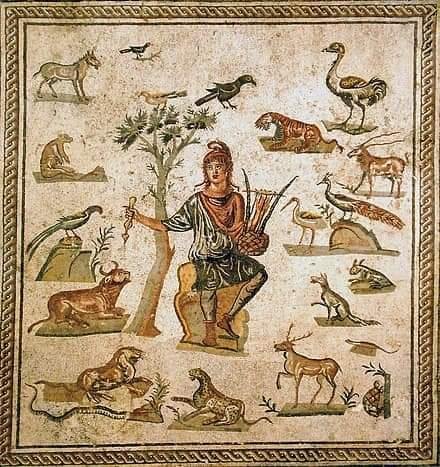
  • Orpheus, a Thracian bard, legendary musician, and prophet, is a prominent figure in ancient Greek mythology. Renowned for his musical talents, Orpheus is known for his ability to charm all living things and even stones with his music, as depicted in Orpheus mosaics. According to legend, he embarked on a journey with Jason and the Argonauts in search of the Golden Fleece and famously descended into the underworld of Hades to rescue his beloved wife, Eurydice. Orpheus was also recognized as the ruler of Bistonian Pieria.

    Ancient Greek authors like Strabo and Plutarch highlight Orpheus's Thracian heritage. His stories revolve around his musical prowess, his poignant attempt to bring back Eurydice from the underworld, and his tragic demise at the hands of the maenads of Dionysus, who grew weary of his mourning for Eurydice. Regarded as the archetype of the inspired singer, Orpheus holds significant cultural importance, inspiring various art forms and popular culture expressions such as poetry, film, opera, music, and painting.
    Orpheus, a Thracian bard, legendary musician, and prophet, is a prominent figure in ancient Greek mythology. Renowned for his musical talents, Orpheus is known for his ability to charm all living things and even stones with his music, as depicted in Orpheus mosaics. According to legend, he embarked on a journey with Jason and the Argonauts in search of the Golden Fleece and famously descended into the underworld of Hades to rescue his beloved wife, Eurydice. Orpheus was also recognized as the ruler of Bistonian Pieria. Ancient Greek authors like Strabo and Plutarch highlight Orpheus's Thracian heritage. His stories revolve around his musical prowess, his poignant attempt to bring back Eurydice from the underworld, and his tragic demise at the hands of the maenads of Dionysus, who grew weary of his mourning for Eurydice. Regarded as the archetype of the inspired singer, Orpheus holds significant cultural importance, inspiring various art forms and popular culture expressions such as poetry, film, opera, music, and painting.
    0 Commentarii 0 Distribuiri
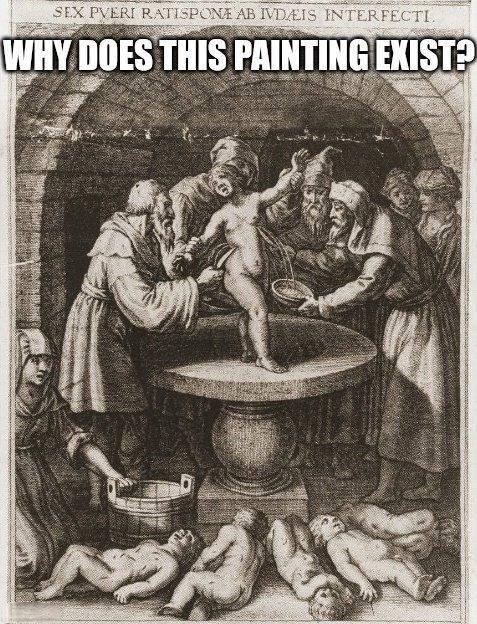
  • Rich people absolutely do use the blood of young children to try and stay alive longer.

    Ambrosia LLC will do it for you. They have legal ways, although the legal procedure doesn't involve the torture and instant procuring of adrenalized children's blood. That's actually what they are after.

    This study just proves that yes, it's a thing. In Greek Mythology, Ambrosia is the drink of the gods, also called the nectar of the gods that grants immortality. This has been going on longer than you know.

    "In the ancient Greek myths, ambrosia (/æmˈbroʊʒə/, Ancient Greek: ἀμβροσία, "immortality") is the food or drink of the Greek gods, often depicted as conferring longevity or immortality upon whoever consumes it. It was brought to the gods in Olympus by doves and served by either Hebe or Ganymede at the heavenly feast."

    Study Overview

    Brief Summary

    The purpose of the study is to evaluate the beneficial effects of infusions of plasma from young donors using blood biomarkers.

    Detailed Description

    Each patient will receive an infusion of plasma derived from a young donor (16-25 years of age). A panel of age-associated biomarkers will be measured before and after treatment.

    We have drawn biomarkers from clinical measures of aging and physiology, biomarkers of disease advancement, as well as biomarkers of aging from animal and human studies. These will represent a spectrum of physiologic pathways with evidence-based connections to aging.

    They include the physiologic processes of inflammation, neurogenesis, stem cell proliferation, blood clotting, immune function, and amyloid plaques. Organ function which will be specifically measured includes the liver, bone marrow, kidneys, pancreas, muscles, cardiovasculature, cerebrovasculature, and the thyroid. Specific disease states connected to these biomarkers include anemia, neutropenia, thrombocytopenia, obesity, diabetes, high cholesterol, elevated risk of cancer, atherosclerosis, dementia, and cataracts.

    Visit us at http://ambrosiaplasma.com

    Sources

    Ambrosia Clinical Trials

    https://clinicaltrials.gov/study/NCT02803554

    Ambrosia Greek Mythology

    https://mythus.fandom.com/wiki/Ambrosia#:~:text=In%20the%20ancient%20Greek%20myths%2C,Ganymede%20at%20the%20heavenly%20feast
    Rich people absolutely do use the blood of young children to try and stay alive longer. Ambrosia LLC will do it for you. They have legal ways, although the legal procedure doesn't involve the torture and instant procuring of adrenalized children's blood. That's actually what they are after. This study just proves that yes, it's a thing. In Greek Mythology, Ambrosia is the drink of the gods, also called the nectar of the gods that grants immortality. This has been going on longer than you know. "In the ancient Greek myths, ambrosia (/æmˈbroʊʒə/, Ancient Greek: ἀμβροσία, "immortality") is the food or drink of the Greek gods, often depicted as conferring longevity or immortality upon whoever consumes it. It was brought to the gods in Olympus by doves and served by either Hebe or Ganymede at the heavenly feast." Study Overview Brief Summary The purpose of the study is to evaluate the beneficial effects of infusions of plasma from young donors using blood biomarkers. Detailed Description Each patient will receive an infusion of plasma derived from a young donor (16-25 years of age). A panel of age-associated biomarkers will be measured before and after treatment. We have drawn biomarkers from clinical measures of aging and physiology, biomarkers of disease advancement, as well as biomarkers of aging from animal and human studies. These will represent a spectrum of physiologic pathways with evidence-based connections to aging. They include the physiologic processes of inflammation, neurogenesis, stem cell proliferation, blood clotting, immune function, and amyloid plaques. Organ function which will be specifically measured includes the liver, bone marrow, kidneys, pancreas, muscles, cardiovasculature, cerebrovasculature, and the thyroid. Specific disease states connected to these biomarkers include anemia, neutropenia, thrombocytopenia, obesity, diabetes, high cholesterol, elevated risk of cancer, atherosclerosis, dementia, and cataracts. Visit us at http://ambrosiaplasma.com Sources Ambrosia Clinical Trials https://clinicaltrials.gov/study/NCT02803554 Ambrosia Greek Mythology https://mythus.fandom.com/wiki/Ambrosia#:~:text=In%20the%20ancient%20Greek%20myths%2C,Ganymede%20at%20the%20heavenly%20feast
    0 Commentarii 0 Distribuiri
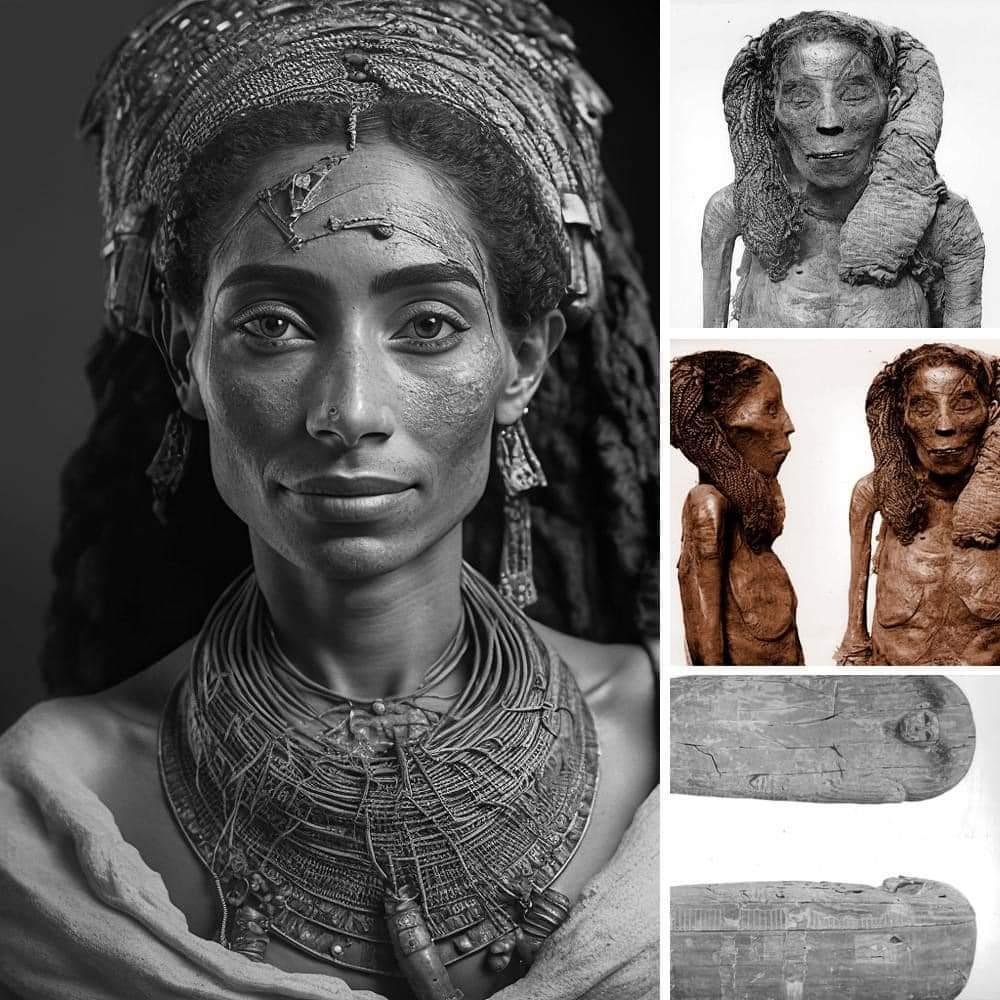
  • Lady Ray
    The Preserved Presence of Lady Rai: Glimpsing Into the Lives of Ancient Egypt’s Elite
    Lady Ray The Preserved Presence of Lady Rai: Glimpsing Into the Lives of Ancient Egypt’s Elite
    0 Commentarii 0 Distribuiri
  • Antikythera-mechanisme, een oud Grieks handaangedreven planetarium (model van het zonnestelsel), beschreven als het oudst bekende voorbeeld van een analoge computer die decennia van tevoren werd gebruikt om astronomische posities en verduisteringen te voorspellen. Het zou ook kunnen worden gebruikt om de vierjarige cyclus van atletiekspelen te volgen, vergelijkbaar met een Olympiade, de cyclus van de oude Olympische Spelen.

    Dit artefact bevond zich tussen de wrakstukken die in 1901 uit een scheepswrak voor de kust van het Griekse eiland Antikythera waren gehaald. In 1902 werd door archeoloog Valerios Stais vastgesteld dat het een uitrusting bevatte. Het apparaat, gehuisvest in de overblijfselen van een kist met een houten frame met een (onzekere) totale grootte van 34 x 18 x 9 cm, werd gevonden als één klomp, later gescheiden in drie hoofdfragmenten die nu na conserveringsinspanningen in 82 afzonderlijke fragmenten zijn verdeeld. Vier van deze fragmenten bevatten tandwielen, terwijl op veel andere fragmenten inscripties te vinden zijn.

    Het grootste tandwiel heeft een diameter van ongeveer 13 cm en had oorspronkelijk 223 tanden. Al deze fragmenten van het mechanisme worden bewaard in het Nationaal Archeologisch Museum in Athene, samen met reconstructies en replica's, om te laten zien hoe het er mogelijk

    In 2005 gebruikte een team van de Universiteit van Cardiff computerröntgentomografie en scannen met hoge resolutie om fragmenten van het met korst omhulde mechanisme in beeld te brengen en de zwakste inscripties te lezen die ooit de buitenbehuizing bedekten. Dit suggereert dat het 37 in elkaar grijpende bronzen tandwielen had waardoor het de bewegingen van de maan en de zon door de dierenriem kon volgen, verduisteringen kon voorspellen en de onregelmatige baan van de maan kon modelleren, waar de snelheid van de maan hoger is in zijn perigeum dan in zijn hoogtepunt.

    Deze beweging werd in de 2e eeuw voor Christus bestudeerd door astronoom Hipparchus van Rhodos, en hij is mogelijk geraadpleegd bij de constructie van de machine. Er wordt gespeculeerd dat een deel van het mechanisme ontbreekt en dat het de posities van de vijf klassieke planeten berekende. De inscripties werden in 2016 verder ontcijferd, waarbij cijfers werden onthuld die verband hielden met de synodische cycli van Venus en Saturnus.

    Aangenomen wordt dat het instrument is ontworpen en gebouwd door hellenistische wetenschappers en op verschillende manieren gedateerd is rond 87 voor Christus, tussen 150 en 100 voor Christus, of 205 voor Christus. Het moet gebouwd zijn vóór het scheepswrak, dat door meerdere bewijslijnen wordt gedateerd op ongeveer 70-60 v.Chr. In 2022 stelden onderzoekers voor dat de oorspronkelijke kalibratiedatum, en niet de bouwdatum, 23 december 178 voor Christus had kunnen zijn.

    Andere experts stellen 204 v.Chr. voor als een waarschijnlijkere kalibratiedatum. Machines met een vergelijkbare complexiteit verschenen pas weer met de astronomische klokken van Richard van Wallingford in de 14e eeuw.

    Het Antikythera-mechanisme wordt algemeen de eerste bekende analoge computer genoemd. De kwaliteit en complexiteit van de constructie van het mechanisme suggereert dat het tijdens de Hellenistische periode onontdekte voorgangers moet hebben gehad. De constructie ervan was gebaseerd op theorieën over astronomie en wiskunde, ontwikkeld door Griekse astronomen in de 2e eeuw voor Christus, en er wordt geschat dat het eind 2e eeuw voor Christus of begin 1e eeuw voor Christus is gebouwd.

    📷: Antikythera-mechanisme (fragment A – voor en achter); zichtbaar is het grootste tandwiel in het mechanisme, ongeveer 13 cm in diameter.

    Icoon voor Geverifieerd door de community

    https://www.youtube.com/watch?v=UpLcnAIpVRA

    More than 21 centuries ago, a mechanism of fabulous ingenuity was created in Greece, a device capable of indicating exactly how the sky would look for decades to come -- the position of the moon and sun, lunar phases and even eclipses. But this incredible invention would be drowned in the sea and its secret forgotten for two thousand years.

    This video is a tribute from Swiss clock-maker Hublot and film-maker Philippe Nicolet to this device, known as the Antikythera Mechanism, or the world's "first computer". The fragments of the Mechanism were discovered in 1901 by sponge divers near the island of Antikythera. It is kept since then at the National Archaeological Museum in Athens, Greece.

    For more than a century, researchers were trying to understand its functions. Since 2005, a pluridisciplinary research team, the "Antikythera Mechanism Research Project", is studying the Mechanism with the latest high tech available.

    The results of this ongoing research has enabled the construction of many models. Amongst them, the unique mechanism of a watch, designed by Hublot as a tribute to the Mechanism, is incorporating the known functions of this mysterious and fascinating ancient Mechanism.

    A model of the Antikythera Mechanism, built by the Aristotle University in Greece, together with the mechanism of the watch and this film in 3D are featuring in an exhibition about the Mechanism that is taking place in Paris, at the Musée des Arts et Métiers.

    The original fragments of the Mechanism, its main models and the watch designed by Hublot are on display at the National Archaeological Museum in Athens, Greece.


    Antikythera-mechanisme, een oud Grieks handaangedreven planetarium (model van het zonnestelsel), beschreven als het oudst bekende voorbeeld van een analoge computer die decennia van tevoren werd gebruikt om astronomische posities en verduisteringen te voorspellen. Het zou ook kunnen worden gebruikt om de vierjarige cyclus van atletiekspelen te volgen, vergelijkbaar met een Olympiade, de cyclus van de oude Olympische Spelen. Dit artefact bevond zich tussen de wrakstukken die in 1901 uit een scheepswrak voor de kust van het Griekse eiland Antikythera waren gehaald. In 1902 werd door archeoloog Valerios Stais vastgesteld dat het een uitrusting bevatte. Het apparaat, gehuisvest in de overblijfselen van een kist met een houten frame met een (onzekere) totale grootte van 34 x 18 x 9 cm, werd gevonden als één klomp, later gescheiden in drie hoofdfragmenten die nu na conserveringsinspanningen in 82 afzonderlijke fragmenten zijn verdeeld. Vier van deze fragmenten bevatten tandwielen, terwijl op veel andere fragmenten inscripties te vinden zijn. Het grootste tandwiel heeft een diameter van ongeveer 13 cm en had oorspronkelijk 223 tanden. Al deze fragmenten van het mechanisme worden bewaard in het Nationaal Archeologisch Museum in Athene, samen met reconstructies en replica's, om te laten zien hoe het er mogelijk In 2005 gebruikte een team van de Universiteit van Cardiff computerröntgentomografie en scannen met hoge resolutie om fragmenten van het met korst omhulde mechanisme in beeld te brengen en de zwakste inscripties te lezen die ooit de buitenbehuizing bedekten. Dit suggereert dat het 37 in elkaar grijpende bronzen tandwielen had waardoor het de bewegingen van de maan en de zon door de dierenriem kon volgen, verduisteringen kon voorspellen en de onregelmatige baan van de maan kon modelleren, waar de snelheid van de maan hoger is in zijn perigeum dan in zijn hoogtepunt. Deze beweging werd in de 2e eeuw voor Christus bestudeerd door astronoom Hipparchus van Rhodos, en hij is mogelijk geraadpleegd bij de constructie van de machine. Er wordt gespeculeerd dat een deel van het mechanisme ontbreekt en dat het de posities van de vijf klassieke planeten berekende. De inscripties werden in 2016 verder ontcijferd, waarbij cijfers werden onthuld die verband hielden met de synodische cycli van Venus en Saturnus. Aangenomen wordt dat het instrument is ontworpen en gebouwd door hellenistische wetenschappers en op verschillende manieren gedateerd is rond 87 voor Christus, tussen 150 en 100 voor Christus, of 205 voor Christus. Het moet gebouwd zijn vóór het scheepswrak, dat door meerdere bewijslijnen wordt gedateerd op ongeveer 70-60 v.Chr. In 2022 stelden onderzoekers voor dat de oorspronkelijke kalibratiedatum, en niet de bouwdatum, 23 december 178 voor Christus had kunnen zijn. Andere experts stellen 204 v.Chr. voor als een waarschijnlijkere kalibratiedatum. Machines met een vergelijkbare complexiteit verschenen pas weer met de astronomische klokken van Richard van Wallingford in de 14e eeuw. Het Antikythera-mechanisme wordt algemeen de eerste bekende analoge computer genoemd. De kwaliteit en complexiteit van de constructie van het mechanisme suggereert dat het tijdens de Hellenistische periode onontdekte voorgangers moet hebben gehad. De constructie ervan was gebaseerd op theorieën over astronomie en wiskunde, ontwikkeld door Griekse astronomen in de 2e eeuw voor Christus, en er wordt geschat dat het eind 2e eeuw voor Christus of begin 1e eeuw voor Christus is gebouwd. 📷: Antikythera-mechanisme (fragment A – voor en achter); zichtbaar is het grootste tandwiel in het mechanisme, ongeveer 13 cm in diameter. Icoon voor Geverifieerd door de community https://www.youtube.com/watch?v=UpLcnAIpVRA More than 21 centuries ago, a mechanism of fabulous ingenuity was created in Greece, a device capable of indicating exactly how the sky would look for decades to come -- the position of the moon and sun, lunar phases and even eclipses. But this incredible invention would be drowned in the sea and its secret forgotten for two thousand years. This video is a tribute from Swiss clock-maker Hublot and film-maker Philippe Nicolet to this device, known as the Antikythera Mechanism, or the world's "first computer". The fragments of the Mechanism were discovered in 1901 by sponge divers near the island of Antikythera. It is kept since then at the National Archaeological Museum in Athens, Greece. For more than a century, researchers were trying to understand its functions. Since 2005, a pluridisciplinary research team, the "Antikythera Mechanism Research Project", is studying the Mechanism with the latest high tech available. The results of this ongoing research has enabled the construction of many models. Amongst them, the unique mechanism of a watch, designed by Hublot as a tribute to the Mechanism, is incorporating the known functions of this mysterious and fascinating ancient Mechanism. A model of the Antikythera Mechanism, built by the Aristotle University in Greece, together with the mechanism of the watch and this film in 3D are featuring in an exhibition about the Mechanism that is taking place in Paris, at the Musée des Arts et Métiers. The original fragments of the Mechanism, its main models and the watch designed by Hublot are on display at the National Archaeological Museum in Athens, Greece.
    1 Commentarii 0 Distribuiri

  • 30th century trumpets sound wonderfull

    After 3000 years or more, the trumpets of king Tutankhamen were played and broadcasted by BBC in 1939.

    The BBC presented a made-up piece with a "cavalry tune" in between on 3,000-year-old trumpets said to have been found at Tutankhamen's Tomb.

    The trumpets were discovered in 1922 by Haward Carter in the tomb of King Tut in the Valley of Kings, Luxor Egypt.

    In the silver trumpet, Tut his name was included in the delicate design. It was found in the burial chamber itself, while the bronze or copper horn only made it as far as the antechamber.

    The trumpets from Tut’s tomb are the oldest trumpets anywhere in the world.

    A british army trumpeter James Tappern played on King Tut s trumpets on April 16, 1939. The performance was recorded using a BBC studio microphone.

    James Tappern used a modern mouthpiece into the 3,500-year-old instruments, and played improvised a false sounding cavalry charge song. Some 150 million people listened to the broadcast and were shocked.

    Without the use of a modern world mouthpiece, those ancient trumpets are only capable of playing “one good note” according to Percival Robson Kirby, who had attempted an earlier trumpet performance while visiting Cairo in 1933.

    Kirby disapproved the BBC broadcast, which presented a misleading rendition of ancient Egyptian trumpet music.

    Kirby dicovered a wooden insert in the Tut tomb trumpet, which others have guessed was a kind of mute perhaps used in the manner of Miles Davis or Louis Armstrong to play the “good note.”

    However Kirby, surmised that the insert was merely used to protect the trumpet, and especially prevent denting. In his opinion King Tut was happy with just one good tone.

    Ancient Egyptians believed that the trumpets possessed magical properties.

    After the bronze/copper trumpets were stolen during the Egyptian riots of 2011, museum curator Hala Hassan warned that “whenever someone blows into it a war occurs.”

    Just a week before the Arab Spring rioting, a member of the museum staff had done just that, and soon there was violence in the streets. The same thing had happened before the 1967 Six-Day War and the 1991 Gulf War.

    The BBC broadcast of 1939 took place just five months before the outbreak of WW II. Tooting on Tut’s horn, may in 1941, have led to Pearl Harbor and tooting many years later could have caused 09 11.

    These are lessons, they help understand why an Egyptian Pharaoh required a trumpet in his tomb.

    30th century trumpets sound wonderfull After 3000 years or more, the trumpets of king Tutankhamen were played and broadcasted by BBC in 1939. The BBC presented a made-up piece with a "cavalry tune" in between on 3,000-year-old trumpets said to have been found at Tutankhamen's Tomb. The trumpets were discovered in 1922 by Haward Carter in the tomb of King Tut in the Valley of Kings, Luxor Egypt. In the silver trumpet, Tut his name was included in the delicate design. It was found in the burial chamber itself, while the bronze or copper horn only made it as far as the antechamber. The trumpets from Tut’s tomb are the oldest trumpets anywhere in the world. A british army trumpeter James Tappern played on King Tut s trumpets on April 16, 1939. The performance was recorded using a BBC studio microphone. James Tappern used a modern mouthpiece into the 3,500-year-old instruments, and played improvised a false sounding cavalry charge song. Some 150 million people listened to the broadcast and were shocked. Without the use of a modern world mouthpiece, those ancient trumpets are only capable of playing “one good note” according to Percival Robson Kirby, who had attempted an earlier trumpet performance while visiting Cairo in 1933. Kirby disapproved the BBC broadcast, which presented a misleading rendition of ancient Egyptian trumpet music. Kirby dicovered a wooden insert in the Tut tomb trumpet, which others have guessed was a kind of mute perhaps used in the manner of Miles Davis or Louis Armstrong to play the “good note.” However Kirby, surmised that the insert was merely used to protect the trumpet, and especially prevent denting. In his opinion King Tut was happy with just one good tone. Ancient Egyptians believed that the trumpets possessed magical properties. After the bronze/copper trumpets were stolen during the Egyptian riots of 2011, museum curator Hala Hassan warned that “whenever someone blows into it a war occurs.” Just a week before the Arab Spring rioting, a member of the museum staff had done just that, and soon there was violence in the streets. The same thing had happened before the 1967 Six-Day War and the 1991 Gulf War. The BBC broadcast of 1939 took place just five months before the outbreak of WW II. Tooting on Tut’s horn, may in 1941, have led to Pearl Harbor and tooting many years later could have caused 09 11. These are lessons, they help understand why an Egyptian Pharaoh required a trumpet in his tomb.
    1
    6 0 Commentarii 0 Distribuiri
  • Cracking Ancient Codes: Cuneiform Writing - with Irving Finkel

    Writing seems to have been invented in the late fourth millennium BC in Mesopotamia in the form of wedge-shaped marks pressed into soft clay with a reed stylus: the script known as cuneiform. Through his work on this ancient language, Irving Finkel, has uncovered amazing secrets from over five thousand years ago, including the story behind Noah’s ark.

    Irving Finkel is the curator in charge of cuneiform inscriptions on tablets of clay from ancient Mesopotamia at the British Museum, of which the Middle East Department has the largest collection of any modern museum. This work involves reading and translating all sorts of inscriptions, sometimes working on ancient archives to identify manuscripts that belong together, or even join to one another. He is the author of The Ark Before Noah: Decoding the Story of the Flood.

    This talk was filmed in the Ri on 18 January 2019.
    https://www.youtube.com/watch?v=PfYYraMgiBA
    Cracking Ancient Codes: Cuneiform Writing - with Irving Finkel Writing seems to have been invented in the late fourth millennium BC in Mesopotamia in the form of wedge-shaped marks pressed into soft clay with a reed stylus: the script known as cuneiform. Through his work on this ancient language, Irving Finkel, has uncovered amazing secrets from over five thousand years ago, including the story behind Noah’s ark. Irving Finkel is the curator in charge of cuneiform inscriptions on tablets of clay from ancient Mesopotamia at the British Museum, of which the Middle East Department has the largest collection of any modern museum. This work involves reading and translating all sorts of inscriptions, sometimes working on ancient archives to identify manuscripts that belong together, or even join to one another. He is the author of The Ark Before Noah: Decoding the Story of the Flood. This talk was filmed in the Ri on 18 January 2019. https://www.youtube.com/watch?v=PfYYraMgiBA
    1
    1 Commentarii 0 Distribuiri
  • One of the most tragic photographs of the 20th century.

    A multi-thousand person prayer gathering of Russian Orthodox Christians on Moscow’s Red Square in August 1917. They were celebrating the opening of the great local council, which would elect Patriarch Tikhon to lead the Russian Orthodox Church later in that year.

    Many were unaware, or worse yet - knew, that their Tsar was sitting imprisoned since March 1917 in St Petersburg with his wife and children, undergoing psychologically torture, abuse, harassment and was being ‘prepared’ to be sacrificed in Yekaterinburg.

    The post-Tsar government in the country was completely usurped & controlled by Freemasons of the Grand Orient lodge, and in only two months time - in October of 1917, that same Masonic government would usher in the Talmudic Bolshevik butchers to ‘complete the ritual’.

    In a sign of almost science fiction level black comedy & satire, something akin to George Lucas’ Star Wars- the greatest enemy of Russia, Alexander Kerensky, the Grand Master of all Russian freemasonry attended the Orthodox Council as a ‘guest of honor’. Surrounded by future martyrs, the demon-possessed mason sat the council, attended the Church services, smirking, knowing that in less than 6 months time the blood of Orthodox Christians will begin flowing like a river through the land - and nobody in the room could see it coming.

    Perhaps the only person alive in the country who could have saved Russia from the Talmudic Revolution, Tsar Nicholas ii, was isolated and trapped. He was Himself, prepared as the sacrifice, the kapparot, the “royal tribute”, to an ancient pre-Christian collegium of demons. Nobody came to his aid, the council of Bishops did not mention Him by name, did not recognize the sheer devastation that was about to commence - and did not call for His liberation.

    The vast majority of the Orthodox laity and clergy had no idea that their ‘negligence’ and inactivity in this time of strife would lead to the greatest mass martyrdom & genocide the world has ever seen.

    Many Orthodox saints would later remember this time with tears & sorrow, about how the mass delusion and lukewarmness clouded the minds of the Russian multitudes. This is evident in the sermons, confessions & writings of the new-martyrs who understood their own mistakes in that tumultuous “1917” before they were marched off to the firing ranges and torture chambers by the grandchildren of Rabbis, cultists of Baal and their very own apostatized, former spiritual children.

    May we finally realize the mistakes of our ancestors, and never repeat them.

    https://x.com/OCanonist/status/1806103236723769489
    One of the most tragic photographs of the 20th century. A multi-thousand person prayer gathering of Russian Orthodox Christians on Moscow’s Red Square in August 1917. They were celebrating the opening of the great local council, which would elect Patriarch Tikhon to lead the Russian Orthodox Church later in that year. Many were unaware, or worse yet - knew, that their Tsar was sitting imprisoned since March 1917 in St Petersburg with his wife and children, undergoing psychologically torture, abuse, harassment and was being ‘prepared’ to be sacrificed in Yekaterinburg. The post-Tsar government in the country was completely usurped & controlled by Freemasons of the Grand Orient lodge, and in only two months time - in October of 1917, that same Masonic government would usher in the Talmudic Bolshevik butchers to ‘complete the ritual’. In a sign of almost science fiction level black comedy & satire, something akin to George Lucas’ Star Wars- the greatest enemy of Russia, Alexander Kerensky, the Grand Master of all Russian freemasonry attended the Orthodox Council as a ‘guest of honor’. Surrounded by future martyrs, the demon-possessed mason sat the council, attended the Church services, smirking, knowing that in less than 6 months time the blood of Orthodox Christians will begin flowing like a river through the land - and nobody in the room could see it coming. Perhaps the only person alive in the country who could have saved Russia from the Talmudic Revolution, Tsar Nicholas ii, was isolated and trapped. He was Himself, prepared as the sacrifice, the kapparot, the “royal tribute”, to an ancient pre-Christian collegium of demons. Nobody came to his aid, the council of Bishops did not mention Him by name, did not recognize the sheer devastation that was about to commence - and did not call for His liberation. The vast majority of the Orthodox laity and clergy had no idea that their ‘negligence’ and inactivity in this time of strife would lead to the greatest mass martyrdom & genocide the world has ever seen. Many Orthodox saints would later remember this time with tears & sorrow, about how the mass delusion and lukewarmness clouded the minds of the Russian multitudes. This is evident in the sermons, confessions & writings of the new-martyrs who understood their own mistakes in that tumultuous “1917” before they were marched off to the firing ranges and torture chambers by the grandchildren of Rabbis, cultists of Baal and their very own apostatized, former spiritual children. May we finally realize the mistakes of our ancestors, and never repeat them. https://x.com/OCanonist/status/1806103236723769489
    1
    0 Commentarii 0 Distribuiri
  • https://www.youtube.com/watch?v=uI4tiA67mZ8 Walking Tour in Ancient Greece (Sparta, Korinth, Olympia, Elis)

    Walking Tour in Assassin's Creed: Odyssey (4K Max Graphics + Reshade). Embark on an epic journey through ancient Greece as you lace up your virtual sandals and traverse the picturesque landscapes from Sparta to Elis, passing through Korinth and Olympia.

    Your adventure begins in Sparta, where you'll feel the rich history and formidable spirit of this legendary city. As you set off towards to Korinth, you'll enter the mesmerizing Golden Fields. Immerse yourself in the awe-inspiring beauty of these golden-hued rolling plains, which provide a captivating backdrop for your passage.

    Continue your expedition and arrive in the ancient city of Korinth. Explore its bustling streets, steeped in history and brimming with vibrant markets and grand structures.

    Bid farewell to Korinth and venture towards Stymphalos, where you'll delve into the mystical atmosphere of this ancient town. Take in the breathtaking landscapes and immerse yourself in the mythical tales that surround the area.

    Next, set your sights on Olympia, the birthplace of the Olympic Games. Traverse the path from Stymphalos to Olympia and arrive at the sacred Sanctuary of Olympia. Feel the weight of history as you explore the grand structures and soak in the divine ambiance of this hallowed ground.

    Finally, embark on the final leg of your expedition, making your way to Elis. This city, steeped in tradition and cultural significance, will be your ultimate destination.
    https://www.youtube.com/watch?v=uI4tiA67mZ8 Walking Tour in Ancient Greece (Sparta, Korinth, Olympia, Elis) Walking Tour in Assassin's Creed: Odyssey (4K Max Graphics + Reshade). Embark on an epic journey through ancient Greece as you lace up your virtual sandals and traverse the picturesque landscapes from Sparta to Elis, passing through Korinth and Olympia. Your adventure begins in Sparta, where you'll feel the rich history and formidable spirit of this legendary city. As you set off towards to Korinth, you'll enter the mesmerizing Golden Fields. Immerse yourself in the awe-inspiring beauty of these golden-hued rolling plains, which provide a captivating backdrop for your passage. Continue your expedition and arrive in the ancient city of Korinth. Explore its bustling streets, steeped in history and brimming with vibrant markets and grand structures. Bid farewell to Korinth and venture towards Stymphalos, where you'll delve into the mystical atmosphere of this ancient town. Take in the breathtaking landscapes and immerse yourself in the mythical tales that surround the area. Next, set your sights on Olympia, the birthplace of the Olympic Games. Traverse the path from Stymphalos to Olympia and arrive at the sacred Sanctuary of Olympia. Feel the weight of history as you explore the grand structures and soak in the divine ambiance of this hallowed ground. Finally, embark on the final leg of your expedition, making your way to Elis. This city, steeped in tradition and cultural significance, will be your ultimate destination.
    0 Commentarii 0 Distribuiri
  • https://www.youtube.com/watch?v=YgPPP807Pwg Walking in Ancient Athens 420 BCE (AC Odyssey)
    https://www.youtube.com/watch?v=YgPPP807Pwg Walking in Ancient Athens 420 BCE (AC Odyssey)
    0 Commentarii 0 Distribuiri
  • https://www.youtube.com/watch?v=EmMmuonCXbI

    Ancient Rome in 3D - Detailed virtual reconstruction. Real colors. 2023 year progress.

    #ancient #Rome #3D

    Explore our virtual 3D reconstruction of ancient Rome as it looked in the mid-4th century CE, around year 360, at the turn of the Pagan and Christian eras.

    We are the "History in 3D" team and our goal is to create the most detailed, accurate and complete 3D reconstruction of ancient Rome.

    In this video we show the most significant places in the center of the Eternal City and speak about the progress of our project during 2023. Particular attention was paid to the details of the Colosseum, the Capitoline hill, as well as the luxurious interiors of the Basilica of Maxentius and the Temple of Venus and Roma.

    We are adding more colorful realistic elements - painted statues, reliefs and ornaments, colored plaster, rich varieties of marble.
    https://www.youtube.com/watch?v=EmMmuonCXbI Ancient Rome in 3D - Detailed virtual reconstruction. Real colors. 2023 year progress. #ancient #Rome #3D Explore our virtual 3D reconstruction of ancient Rome as it looked in the mid-4th century CE, around year 360, at the turn of the Pagan and Christian eras. We are the "History in 3D" team and our goal is to create the most detailed, accurate and complete 3D reconstruction of ancient Rome. In this video we show the most significant places in the center of the Eternal City and speak about the progress of our project during 2023. Particular attention was paid to the details of the Colosseum, the Capitoline hill, as well as the luxurious interiors of the Basilica of Maxentius and the Temple of Venus and Roma. We are adding more colorful realistic elements - painted statues, reliefs and ornaments, colored plaster, rich varieties of marble.
    1
    0 Commentarii 0 Distribuiri
  • https://www.youtube.com/watch?v=qqlJ50zDgeA

    Antikythera Mechanism: The ancient 'computer' that simply shouldn't exist - BBC REEL/ A hundred and twenty years ago, divers discovered a shipwreck off the island of Antikythera in Greece. What they found changed our understanding of human history.

    The mysterious Antikythera Mechanism has captured the imagination of archaeologists, mathematicians, and scientists ever since, even inspiring the plot for Indiana Jones and the Dial of Destiny! Now, using the latest 3D x-ray and modelling technology, experts are unravelling the secrets of what this machine may have been capable of.
    https://www.youtube.com/watch?v=qqlJ50zDgeA Antikythera Mechanism: The ancient 'computer' that simply shouldn't exist - BBC REEL/ A hundred and twenty years ago, divers discovered a shipwreck off the island of Antikythera in Greece. What they found changed our understanding of human history. The mysterious Antikythera Mechanism has captured the imagination of archaeologists, mathematicians, and scientists ever since, even inspiring the plot for Indiana Jones and the Dial of Destiny! Now, using the latest 3D x-ray and modelling technology, experts are unravelling the secrets of what this machine may have been capable of.
    1 Commentarii 0 Distribuiri
  • They (the elite ancient moloch talmuth sect) have been putting time fase CANCER in lots of ‘vaccines’ and in lots of big pharma medicines / such as addictive anti depressiva pills/ hormone blockers/ and in all kinds of drugs such as fenthanyl meth crack xtc/ their aim is to profit by poisening and make people sick/ and to decimate as many as possible non sect people in their plan to conquer the whole world for world domination
    They (the elite ancient moloch talmuth sect) have been putting time fase CANCER in lots of ‘vaccines’ and in lots of big pharma medicines / such as addictive anti depressiva pills/ hormone blockers/ and in all kinds of drugs such as fenthanyl meth crack xtc/ their aim is to profit by poisening and make people sick/ and to decimate as many as possible non sect people in their plan to conquer the whole world for world domination
    0 1 Commentarii 0 Distribuiri
  • San Francisco.

    1864.

    Look closely at those buildings.

    They are from a highly advanced civilization that preceded us.

    The west was fully built up when we showed up.

    We repopulated ancient cities.

    Your history is pure fiction.

    The Myth of the frontier.
    San Francisco. 1864. Look closely at those buildings. They are from a highly advanced civilization that preceded us. The west was fully built up when we showed up. We repopulated ancient cities. Your history is pure fiction. The Myth of the frontier.
    0 Commentarii 0 Distribuiri
  • The ss leaders sanger and clinton belong to the freemason moloch worshipper sect, an ancient cult of vile decievers and war criminals
    The ss leaders sanger and clinton belong to the freemason moloch worshipper sect, an ancient cult of vile decievers and war criminals
    0 Commentarii 0 Distribuiri
  • Ancient healing bell Eeuwenoude helende klokkebel
    Ancient healing bell Eeuwenoude helende klokkebel
    0 Commentarii 0 Distribuiri
  • Freemasonry is an occult order which has its roots in the ancient Mystery Schools.

    The worship of Osiris the sun and Isis the moon. It is astrotheological in nature, which is the worship of the heavens.

    In his book "The Origin of Freemasonry," Thomas Paine tells us Freemasonry can be traced to Celtic Druids, which can be traced to Egypt and ultimately the Babylonian Mystery Religion.

    After Celtic and Germanic Middle East migration after the fall of Babylon. This coincides with the Knights Templars restoring the old ways, creating the Jesuit Order.

    Ignatius Loyola was the founder of the Jesuit Order.

    You see, the Druids were not able to control the people through the use of hidden knowledge and was lost...until the Knights Templar reignited the Mystery Religion of Babylon in Europe and the worship of the sun came back, amongst the Christian countries, in the guise of Christianity.

    Hence, the Catholic Church. Ultimately branching off into many organizations, including Freemasonry.

    The Jewish Kaballah got its teachings from the Babylonian Mystery Schools of which was accessed during the Babylonian Captivity.

    Albert Pike, who is a 33° Freemason, explains that Freemasonry is derived from the Jewish Kaballah.

    In his 1871 book, Morals and Dogma of the Ancient and Accepted Scottish Rite of Freemasonry, Pike says of the Jewish Pharisee tradition...

    “The primary tradition... has been preserved under the name of the Kaballah by the priesthood of Israel.”

    “Freemasonry is not Christianity, nor a substitute for it. It does not meddle with sectarian creeds or doctrines, but teaches fundamental religious truth.” (Albert G. Mackey, Encyclopedia of Freemasonry, page 162)

    “Masonry, like all the Religions, all the Mysteries, Hermeticism and Alchemy, conceals its secrets from all except the Adepts and Sages, or the Elect, and uses false explanations and misinterpretations of its symbols to mislead those who deserve only to be misled; to conceal the Truth, which it calls Light, from them, and to draw them away from it.” (Albert Pike, Morals and Dogma, page 104)

    “Drop the theological barnacles [timeless Biblical truths] from the religion of Jesus, as taught by Him, and by the Essenes and Gnostics of the first centuries, and it becomes Masonry, Masonry in its purity, derived as it is from the old Hebrew Kaballa as a part of the great universal religion of the remotest antiquity.” (J. D. Buck, Mystic Masonry, page 119)

    Further research

    https://twitter.com/RedpillDrifter/status/1785585279933489383
    Freemasonry is an occult order which has its roots in the ancient Mystery Schools. The worship of Osiris the sun and Isis the moon. It is astrotheological in nature, which is the worship of the heavens. In his book "The Origin of Freemasonry," Thomas Paine tells us Freemasonry can be traced to Celtic Druids, which can be traced to Egypt and ultimately the Babylonian Mystery Religion. After Celtic and Germanic Middle East migration after the fall of Babylon. This coincides with the Knights Templars restoring the old ways, creating the Jesuit Order. Ignatius Loyola was the founder of the Jesuit Order. You see, the Druids were not able to control the people through the use of hidden knowledge and was lost...until the Knights Templar reignited the Mystery Religion of Babylon in Europe and the worship of the sun came back, amongst the Christian countries, in the guise of Christianity. Hence, the Catholic Church. Ultimately branching off into many organizations, including Freemasonry. The Jewish Kaballah got its teachings from the Babylonian Mystery Schools of which was accessed during the Babylonian Captivity. Albert Pike, who is a 33° Freemason, explains that Freemasonry is derived from the Jewish Kaballah. In his 1871 book, Morals and Dogma of the Ancient and Accepted Scottish Rite of Freemasonry, Pike says of the Jewish Pharisee tradition... “The primary tradition... has been preserved under the name of the Kaballah by the priesthood of Israel.” “Freemasonry is not Christianity, nor a substitute for it. It does not meddle with sectarian creeds or doctrines, but teaches fundamental religious truth.” (Albert G. Mackey, Encyclopedia of Freemasonry, page 162) “Masonry, like all the Religions, all the Mysteries, Hermeticism and Alchemy, conceals its secrets from all except the Adepts and Sages, or the Elect, and uses false explanations and misinterpretations of its symbols to mislead those who deserve only to be misled; to conceal the Truth, which it calls Light, from them, and to draw them away from it.” (Albert Pike, Morals and Dogma, page 104) “Drop the theological barnacles [timeless Biblical truths] from the religion of Jesus, as taught by Him, and by the Essenes and Gnostics of the first centuries, and it becomes Masonry, Masonry in its purity, derived as it is from the old Hebrew Kaballa as a part of the great universal religion of the remotest antiquity.” (J. D. Buck, Mystic Masonry, page 119) Further research https://twitter.com/RedpillDrifter/status/1785585279933489383
    0 Commentarii 0 Distribuiri
  • What is in the marble block?

    There is probably a sarcophagus in the block, where a high priest or person worshiped as a god was buried, such as a pharaoh or a high priests, whom they saw as a deity.

    The pharaohs were worshiped as children of the gods such as fe one of the 9 deities of Egypt or Nine Gods of Egypt or The nine Ennead gods of Egypt: Atum, Shu, Tefnut, Geb, Nut, Osiris, Isis, Seth, and Nephthys. They are the family of Atum the god of the sun, and are the children, grandchildren and great-grandchildren of the sun god.

    The meaning of DEITY is the rank or essential nature of a god : divinity. Some of other deities of different religions are: From the Ancient Greek religion: Zeus, Apollo, Athena, Ares, Aphrodite, Poseidon, Hades, Thanatos, Dionysus, Hera, Artemis, Hephaestus, Hermes, nymph. From the Ancient Norse religion: Thor, Odin, Tyr, Frey, Freya, Baldur, Loki, Iðunn, Njord, Frigg.

    Burried?

    Perhaps there is a buried treasure or a secret that one did not want others to ever know, such as secrets written in stone, ancient knowledge of highly developed peoples who have inhabited the earth?

    It could also be an animal, after all, f.e cats were seen as sacred animals by Egyptian and other peoples.

    Sometimes animals or people considered to be a monster were buried alive or dead

    In ancient times, unfaithful women were sometimes punished and buried alive by the pharaoh or king.

    You should know that stoning and burying women alive, fe in the dessert, but also children (crying children who are seen as possessed by a demon) is common in certain countries and cultures, and still is happening based on an age-old barbaric form of belief

    People wonder how that huge block could be moved?

    The parts were carried in parts by manpower, loyal workers, who worshiped the gods and did everything for the high priests or the pharaoh, whom they saw as a deity.

    They used ropes levers pulleys trunks, elephants and powerfull mamouth were used for very heavy work

    A square meter of marble weighs at least 50 kg
    The inner of the block and top are empty, so not 100 tons but approximately

    Avoirdupois? Avoirdupois (/ˌævərdəˈpɔɪz, ˌævwɑːrdjuːˈpwɑː/;[1] abbreviated avdp.)[2] is a measurement system of weights that uses pounds and ounces as units.[3][4] It was first commonly used in the 13th century AD and was updated in 1959.

    Ton

    Ton, unit of weight in the avoirdupois system equal to 2,000 pounds (907.18 kg) in the United States (the short ton) and 2,240 pounds (1,016.05 kg) in Britain (the long ton). The metric ton used in most other countries is 1,000 kg, equivalent to 2,204.6 pounds avoirdupois.

    it is physically possible for a human to lift a weight of 1 ton. However, it is important to note that this is an extraordinary feat of strength and not something that the average person can achieve. Strongmen Records: There have been strongmen who have lifted weights exceeding 1 ton.

    Jim Williams presses 288 kg (635 lb) at the Eastern USA Open. Then in November, he presses 300 kg (661 lb). Jim Williams presses 306 kg (675 lb) with only ace bandages on his elbows, wearing a T-shirt on November 9, at the 1972 AAU World Powerlifting Championships.


    https://twitter.com/GANJARAMBO420/status/1785258141430493649
    What is in the marble block? There is probably a sarcophagus in the block, where a high priest or person worshiped as a god was buried, such as a pharaoh or a high priests, whom they saw as a deity. The pharaohs were worshiped as children of the gods such as fe one of the 9 deities of Egypt or Nine Gods of Egypt or The nine Ennead gods of Egypt: Atum, Shu, Tefnut, Geb, Nut, Osiris, Isis, Seth, and Nephthys. They are the family of Atum the god of the sun, and are the children, grandchildren and great-grandchildren of the sun god. The meaning of DEITY is the rank or essential nature of a god : divinity. Some of other deities of different religions are: From the Ancient Greek religion: Zeus, Apollo, Athena, Ares, Aphrodite, Poseidon, Hades, Thanatos, Dionysus, Hera, Artemis, Hephaestus, Hermes, nymph. From the Ancient Norse religion: Thor, Odin, Tyr, Frey, Freya, Baldur, Loki, Iðunn, Njord, Frigg. Burried? Perhaps there is a buried treasure or a secret that one did not want others to ever know, such as secrets written in stone, ancient knowledge of highly developed peoples who have inhabited the earth? It could also be an animal, after all, f.e cats were seen as sacred animals by Egyptian and other peoples. Sometimes animals or people considered to be a monster were buried alive or dead In ancient times, unfaithful women were sometimes punished and buried alive by the pharaoh or king. You should know that stoning and burying women alive, fe in the dessert, but also children (crying children who are seen as possessed by a demon) is common in certain countries and cultures, and still is happening based on an age-old barbaric form of belief People wonder how that huge block could be moved? The parts were carried in parts by manpower, loyal workers, who worshiped the gods and did everything for the high priests or the pharaoh, whom they saw as a deity. They used ropes levers pulleys trunks, elephants and powerfull mamouth were used for very heavy work A square meter of marble weighs at least 50 kg The inner of the block and top are empty, so not 100 tons but approximately Avoirdupois? Avoirdupois (/ˌævərdəˈpɔɪz, ˌævwɑːrdjuːˈpwɑː/;[1] abbreviated avdp.)[2] is a measurement system of weights that uses pounds and ounces as units.[3][4] It was first commonly used in the 13th century AD and was updated in 1959. Ton Ton, unit of weight in the avoirdupois system equal to 2,000 pounds (907.18 kg) in the United States (the short ton) and 2,240 pounds (1,016.05 kg) in Britain (the long ton). The metric ton used in most other countries is 1,000 kg, equivalent to 2,204.6 pounds avoirdupois. it is physically possible for a human to lift a weight of 1 ton. However, it is important to note that this is an extraordinary feat of strength and not something that the average person can achieve. Strongmen Records: There have been strongmen who have lifted weights exceeding 1 ton. Jim Williams presses 288 kg (635 lb) at the Eastern USA Open. Then in November, he presses 300 kg (661 lb). Jim Williams presses 306 kg (675 lb) with only ace bandages on his elbows, wearing a T-shirt on November 9, at the 1972 AAU World Powerlifting Championships. https://twitter.com/GANJARAMBO420/status/1785258141430493649

    0 Commentarii 0 Distribuiri
  • About haters


    M stated:

    A loxist is a member from an ultra orthodox ancient tribe, related to babylonic religious insanity from one of hundred and even more branches of ultra orthodox judaism,

    Zionists are loxists/ satanists/ talmuth moloch worshippers such as freemasons who pretend to be jew, christian or from another religion

    Zionists are Satanists/Loxists

    A loxist is a moloch wordhipper/talmuth satanist who hates white and black christians, muslims, Pakistani ,hindustani, and all other, except their tribe, the members of their tribe can be from all colours, black and white, all races

    The people of the ancient orthodox babylonic moloch wordhipper/talmuth satanists tribe have an innate wickedness/falsehood, many have a lot of money and high positions, many have a lot of money and high positions in government, especially in the west

    Loxist propagate hate, war and decimation

    Like

    Morganthau plan

    Kaufmans book “Germany Must Perish”

    Niger’s book “What to do with Germany”

    Richard Nicolaus graaf Coudenhove-Kalergi Book / the plan of extermination/ depopulation

    Loxists zionists propagate hate war/ they start,/finance/ wage wars in order to decimate countles people, to decimate as many as possible peple by war.

    Exampels

    They incite people with their false propaganda and say that they only wage war for peace.

    Some examples of freemason moloch satanists/ loxists/ zionists

    HItler Lenin Marx Trotsky Beria Radi Stalin Churchill Truman Bormann Blair J Busch Nixon Macron Castro Trudeau Soros Rothshild Rockefeller Gates Fauci Swab Obama, Pol Pot, Idi Amin Napoleon Bonaparte,... lots of royals.. and celebs etc

    Almost all criminals behind hundreds of wars and the Covid vax are related to the babylonic satanists satanists tribe/ a branche of talmuth/moloch worshippers with branches such as the freemasons

    About haters M stated: A loxist is a member from an ultra orthodox ancient tribe, related to babylonic religious insanity from one of hundred and even more branches of ultra orthodox judaism, Zionists are loxists/ satanists/ talmuth moloch worshippers such as freemasons who pretend to be jew, christian or from another religion Zionists are Satanists/Loxists A loxist is a moloch wordhipper/talmuth satanist who hates white and black christians, muslims, Pakistani ,hindustani, and all other, except their tribe, the members of their tribe can be from all colours, black and white, all races The people of the ancient orthodox babylonic moloch wordhipper/talmuth satanists tribe have an innate wickedness/falsehood, many have a lot of money and high positions, many have a lot of money and high positions in government, especially in the west Loxist propagate hate, war and decimation Like Morganthau plan Kaufmans book “Germany Must Perish” Niger’s book “What to do with Germany” Richard Nicolaus graaf Coudenhove-Kalergi Book / the plan of extermination/ depopulation Loxists zionists propagate hate war/ they start,/finance/ wage wars in order to decimate countles people, to decimate as many as possible peple by war. Exampels They incite people with their false propaganda and say that they only wage war for peace. Some examples of freemason moloch satanists/ loxists/ zionists HItler Lenin Marx Trotsky Beria Radi Stalin Churchill Truman Bormann Blair J Busch Nixon Macron Castro Trudeau Soros Rothshild Rockefeller Gates Fauci Swab Obama, Pol Pot, Idi Amin Napoleon Bonaparte,... lots of royals.. and celebs etc Almost all criminals behind hundreds of wars and the Covid vax are related to the babylonic satanists satanists tribe/ a branche of talmuth/moloch worshippers with branches such as the freemasons
    0 Commentarii 0 Distribuiri
  • FREEMASONRY THEN AND NOW PART 2

    A deep dive lecture into Freemasonry and its roots in ancient Egypt. Freemasonry is not a new belief system. Their beliefs go back to the Babylon Mystery Religion, Phoenecian/Caananite high priests, and ancient Egypt.

    I recommend taking notes

    https://twitter.com/RedpillDrifter/status/1784275088550043988
    FREEMASONRY THEN AND NOW PART 2 A deep dive lecture into Freemasonry and its roots in ancient Egypt. Freemasonry is not a new belief system. Their beliefs go back to the Babylon Mystery Religion, Phoenecian/Caananite high priests, and ancient Egypt. I recommend taking notes https://twitter.com/RedpillDrifter/status/1784275088550043988
    0 Commentarii 0 Distribuiri
  • https://twitter.com/RedpillDrifter/status/1784272420301623447 #freemason #vrijmetselaars

    FREEMASONRY THEN AND NOW PART 1

    A deep dive lecture into Freemasonry and its roots in ancient Egypt. Freemasonry is not a new belief system. Their beliefs go back to the Babylon Mystery Religion, Phoenecian/Caananite high priests, and ancient Egypt.

    I recommend taking notes
    https://twitter.com/RedpillDrifter/status/1784272420301623447 #freemason #vrijmetselaars FREEMASONRY THEN AND NOW PART 1 A deep dive lecture into Freemasonry and its roots in ancient Egypt. Freemasonry is not a new belief system. Their beliefs go back to the Babylon Mystery Religion, Phoenecian/Caananite high priests, and ancient Egypt. I recommend taking notes
    2 Commentarii 0 Distribuiri
  • https://twitter.com/RedpillDrifter/status/1781515462507164072

    Watch out for the Baal Criminals

    The Cult of Baal is still very prevalent today. The Pheonecians/Caananite, Assyrians, worshipped Baal. Baal, a sun god and god of fertility, is celebrated with rituals that take place after the Vernal Equinox, which is represented as a time of rebirth. Human/child sacrifice by fire would take place during these ritual ceremonies. As seen in the verse below in the bible.

    Jeremiah 19:5
    "They have built also the high places of Baal, to burn their sons with fire for burnt offerings unto Baal, which I commanded not, nor spake it, neither came it into my mind:"

    April is always a time of blood sacrifice. Baal has taken on various names and forms throughout history. Including Osiris, Molech, Merodach, etc. These rituals and ceremonies have been going on behind the scenes since the beginning of time.

    "The cult of Baal celebrated annually his death and resurrection as a part of the Canaanite fertility rituals. These ceremonies often included human sacrifice and temple prostitution.”

    – Baal | Encyclopedia Mythica

    “The religion of the god Baal was widely accepted among the ancient Jews, and although it was put down at times, it was never permanently stamped out. Kings and other royalty of the ten Biblical tribes worshiped the god. The ordinary people ardently worshiped this sun god too because their prosperity depended on the productivity of their crops and livestock. The god’s images were erected on many buildings. Within the religion, there appeared to be numerous priests and various classes of devotees. During the ceremonies, they wore appropriate robes. The ceremonies included burning incense and offering burnt sacrifices, occasionally consisting of human victims. The officiating priests danced around the altars, chanting frantically and cutting themselves with knives to inspire the attention and compassion of the god.”
    – Ibid.

    The worship of Baal, just as Osiris, is a Masonic reverence to the Sun is familiar to all Masons, even if unknowingly, in the symbol of the All-Seeing Eye:“. The Sun was termed by the Greeks the Eye of Jupiter and the Eye of the World; and his is the All-Seeing Eye in our Lodges.” (note: “his”—Osiris,) (Morals and dogma, pgs. 476, 477).

    These rituals and astrothological beliefs originate in the Babylonian, Caananite/Pheonecian Middle East and quickly spread to the Celts and Germanic tribes after the fall of Babylon. Hence, the Beltane or Baaltane fire festivals of Mayday (May 1st)

    During Beltane and the ancient fertility festival, the May pole is set up representing the phallus. Girls decorate it with wreaths and flowers, then danced naked around it, wrapping it in ribbons. The May pole originates from the Egyptian Obelisk or the Phallic symbol of Osiris.

    Orgies and other debauchery I won't mention took place along with feasting to encourage the fertility of food animals and the abundance of crops for the coming year.

    Do not be surprised to see increased ritualistic false flag events over the next 13 days leading up to the Beltane Fire Festival where a giant structure shaped as a man was filled with human and animal sacrifices and lit on fire. This would occur on May Day (May 1st)
    https://twitter.com/RedpillDrifter/status/1781515462507164072 Watch out for the Baal Criminals The Cult of Baal is still very prevalent today. The Pheonecians/Caananite, Assyrians, worshipped Baal. Baal, a sun god and god of fertility, is celebrated with rituals that take place after the Vernal Equinox, which is represented as a time of rebirth. Human/child sacrifice by fire would take place during these ritual ceremonies. As seen in the verse below in the bible. Jeremiah 19:5 "They have built also the high places of Baal, to burn their sons with fire for burnt offerings unto Baal, which I commanded not, nor spake it, neither came it into my mind:" April is always a time of blood sacrifice. Baal has taken on various names and forms throughout history. Including Osiris, Molech, Merodach, etc. These rituals and ceremonies have been going on behind the scenes since the beginning of time. "The cult of Baal celebrated annually his death and resurrection as a part of the Canaanite fertility rituals. These ceremonies often included human sacrifice and temple prostitution.” – Baal | Encyclopedia Mythica “The religion of the god Baal was widely accepted among the ancient Jews, and although it was put down at times, it was never permanently stamped out. Kings and other royalty of the ten Biblical tribes worshiped the god. The ordinary people ardently worshiped this sun god too because their prosperity depended on the productivity of their crops and livestock. The god’s images were erected on many buildings. Within the religion, there appeared to be numerous priests and various classes of devotees. During the ceremonies, they wore appropriate robes. The ceremonies included burning incense and offering burnt sacrifices, occasionally consisting of human victims. The officiating priests danced around the altars, chanting frantically and cutting themselves with knives to inspire the attention and compassion of the god.” – Ibid. The worship of Baal, just as Osiris, is a Masonic reverence to the Sun is familiar to all Masons, even if unknowingly, in the symbol of the All-Seeing Eye:“. The Sun was termed by the Greeks the Eye of Jupiter and the Eye of the World; and his is the All-Seeing Eye in our Lodges.” (note: “his”—Osiris,) (Morals and dogma, pgs. 476, 477). These rituals and astrothological beliefs originate in the Babylonian, Caananite/Pheonecian Middle East and quickly spread to the Celts and Germanic tribes after the fall of Babylon. Hence, the Beltane or Baaltane fire festivals of Mayday (May 1st) During Beltane and the ancient fertility festival, the May pole is set up representing the phallus. Girls decorate it with wreaths and flowers, then danced naked around it, wrapping it in ribbons. The May pole originates from the Egyptian Obelisk or the Phallic symbol of Osiris. Orgies and other debauchery I won't mention took place along with feasting to encourage the fertility of food animals and the abundance of crops for the coming year. Do not be surprised to see increased ritualistic false flag events over the next 13 days leading up to the Beltane Fire Festival where a giant structure shaped as a man was filled with human and animal sacrifices and lit on fire. This would occur on May Day (May 1st)
    0 Commentarii 0 Distribuiri
  • Allegedly, this is the last picture of Sect Leader Adolf Hitler before he fled to Argentina with thousands of SS and Wehmacht friends from the ancient Talmoed Satanists Zionists Sect / He did not committ suicide on April 30, 1945. In the photo, Hitler is seen with his adjutant, Julius Schaub, looking at the ruins of the Reich Chancellery on April 28, 1945. The Zionist Prince Bernhard of the House of Nassau / Orange / had thousands of NAZIES, all Talmud sect members, war criminals transported to Argentina with the help of KLM
    Allegedly, this is the last picture of Sect Leader Adolf Hitler before he fled to Argentina with thousands of SS and Wehmacht friends from the ancient Talmoed Satanists Zionists Sect / He did not committ suicide on April 30, 1945. In the photo, Hitler is seen with his adjutant, Julius Schaub, looking at the ruins of the Reich Chancellery on April 28, 1945. The Zionist Prince Bernhard of the House of Nassau / Orange / had thousands of NAZIES, all Talmud sect members, war criminals transported to Argentina with the help of KLM
    1
    0 Commentarii 0 Distribuiri

  • Cracking Ancient Codes: Cuneiform Writing - with Irving Finkel
    https://www.youtube.com/watch?v=PfYYraMgiBA
    Cracking Ancient Codes: Cuneiform Writing - with Irving Finkel https://www.youtube.com/watch?v=PfYYraMgiBA
    0 Commentarii 0 Distribuiri
  • So, German archaeologists thought they found the tomb of the mythical king Gilgamesh, and 5 months later, Iraq was invaded.

    The Epic of Gilgamesh is one of the most important recoveries from the ancient Sumerian world. Gilgamesh was portrayed as a giant, and, funny enough, there is an interesting story of soldiers encountering a giant in the desert in the Middle East. Perhaps there is something more to this.

    Anyway, it's not a secret that the USA established a base in the old Babylonian city, destroyed some historical artifacts, and also took with them many of the artifacts. They constructed buildings and helicopter landing pads in the ancient city. It's not a secret that they were searching for something very important...

    Also, Saddam Hussein was building a massive reconstruction of Babylon near the ancient city. Was he trying to hide something huge? Is that why the USA decided to invade Iraq so fast and acquire the ancient relic?

    Could it be the archeological dig that Ross Coulthart was referring to?

    'The UFO was so big that they needed to build an entire building to cover it.'

    USA made the most expensive embassy still used to this day. Also, the invasion of Iraq wasn't for weapons of mass destruction; it was probably for ancient technology.

    Six hundred million dollars were spent on building an embassy near ancient Babylon.

    https://twitter.com/OMApproach/status/1776311777162056038
    So, German archaeologists thought they found the tomb of the mythical king Gilgamesh, and 5 months later, Iraq was invaded. The Epic of Gilgamesh is one of the most important recoveries from the ancient Sumerian world. Gilgamesh was portrayed as a giant, and, funny enough, there is an interesting story of soldiers encountering a giant in the desert in the Middle East. Perhaps there is something more to this. Anyway, it's not a secret that the USA established a base in the old Babylonian city, destroyed some historical artifacts, and also took with them many of the artifacts. They constructed buildings and helicopter landing pads in the ancient city. It's not a secret that they were searching for something very important... Also, Saddam Hussein was building a massive reconstruction of Babylon near the ancient city. Was he trying to hide something huge? Is that why the USA decided to invade Iraq so fast and acquire the ancient relic? Could it be the archeological dig that Ross Coulthart was referring to? 'The UFO was so big that they needed to build an entire building to cover it.' USA made the most expensive embassy still used to this day. Also, the invasion of Iraq wasn't for weapons of mass destruction; it was probably for ancient technology. Six hundred million dollars were spent on building an embassy near ancient Babylon. https://twitter.com/OMApproach/status/1776311777162056038
    0 Commentarii 0 Distribuiri
  • Ammun is derived from Amun. Amun is also Amen-Ra. Amen Ra is also known as Jesus, Horace and Marduk Lucifer Satain, ancient god over Babylon after his father Enki Lucifer stepped back. He is believed to be Anunnaki 'god' over human earth. Using the word divine in relation to Marduk is like referring to hell as paradise. If Alexander the Great was not an incarnation of Marduk, then he is definitely from that bloodline.
    Ammun is derived from Amun. Amun is also Amen-Ra. Amen Ra is also known as Jesus, Horace and Marduk Lucifer Satain, ancient god over Babylon after his father Enki Lucifer stepped back. He is believed to be Anunnaki 'god' over human earth. Using the word divine in relation to Marduk is like referring to hell as paradise. If Alexander the Great was not an incarnation of Marduk, then he is definitely from that bloodline.
    0 Commentarii 0 Distribuiri
  • A 37m long cat on a Peruvian hillside for 2000 years. This isn’t some fantasy creature, but an ancient art example called a Geoglyph
    A 37m long cat on a Peruvian hillside for 2000 years. This isn’t some fantasy creature, but an ancient art example called a Geoglyph
    1
    0 Commentarii 0 Distribuiri
  • Artist’s conception of the interior of the Great Library of Alexandria :

    The Library of Alexandria in ancient Egypt was one of the largest and most significant libraries of the ancient world. It's said that to grow its collection, the library would seize all books from ships that came into port, make copies of them, and then return the copies to the owners while keeping the originals for its collection. This aggressive acquisition strategy helped amass knowledge from across the known world.

    The Library of Alexandria was established under Ptolemaic Dynasty of Egypt (323-30 BC) and flourished under patronage of the early kings to become most famous library of the ancient world, attracting scholars from around the Mediterranean, and making Alexandria the preeminent intellectual center of its time until its decline after 145 BC.

    Although legend claims the idea of great library came from Alexander the Great, this has been challenged and it seems to have been proposed by Ptolemy I Soter (r. 323-282 BC), founder of Ptolemaic Dynasty, and built under reign of Ptolemy II Philadelphus (282-246 BC), who also acquired first books for its collection. Under Ptolemy III Euergetes (r. 246-221 BC), library's collection increased as books were taken from ships at port, copied and originals were then housed in the stacks.

    Under Ptolemy IV (r. 221-205 BC) patronage continued, and Ptolemy V (r. 204-180 BC) and Ptolemy VI (r. 180-164 & 163-145 BC) made acquisitions for the library such a priority around the Mediterranean that scholars began hiding their private libraries to prevent their seizure. Ptolemy V, to undercut prestige of Library of Pergamon, prohibited export of papyrus – necessary for producing copies of books and inadvertently encouraged Pergamon's parchment industry.

    The final fate of the Library of Alexandria has been debated for centuries and continues to be. According to the most popular claim, it was destroyed by Julius Caesar by fire in 48 BC. Other claims cite its destruction by the emperor Aurelian in his war with Zenobia in 272 CE, by Diocletian in 297 CE, by Christian zealots in 391 and 415 CE or by Muslim Arab invaders in 7th Century CE.
    Artist’s conception of the interior of the Great Library of Alexandria : The Library of Alexandria in ancient Egypt was one of the largest and most significant libraries of the ancient world. It's said that to grow its collection, the library would seize all books from ships that came into port, make copies of them, and then return the copies to the owners while keeping the originals for its collection. This aggressive acquisition strategy helped amass knowledge from across the known world. The Library of Alexandria was established under Ptolemaic Dynasty of Egypt (323-30 BC) and flourished under patronage of the early kings to become most famous library of the ancient world, attracting scholars from around the Mediterranean, and making Alexandria the preeminent intellectual center of its time until its decline after 145 BC. Although legend claims the idea of great library came from Alexander the Great, this has been challenged and it seems to have been proposed by Ptolemy I Soter (r. 323-282 BC), founder of Ptolemaic Dynasty, and built under reign of Ptolemy II Philadelphus (282-246 BC), who also acquired first books for its collection. Under Ptolemy III Euergetes (r. 246-221 BC), library's collection increased as books were taken from ships at port, copied and originals were then housed in the stacks. Under Ptolemy IV (r. 221-205 BC) patronage continued, and Ptolemy V (r. 204-180 BC) and Ptolemy VI (r. 180-164 & 163-145 BC) made acquisitions for the library such a priority around the Mediterranean that scholars began hiding their private libraries to prevent their seizure. Ptolemy V, to undercut prestige of Library of Pergamon, prohibited export of papyrus – necessary for producing copies of books and inadvertently encouraged Pergamon's parchment industry. The final fate of the Library of Alexandria has been debated for centuries and continues to be. According to the most popular claim, it was destroyed by Julius Caesar by fire in 48 BC. Other claims cite its destruction by the emperor Aurelian in his war with Zenobia in 272 CE, by Diocletian in 297 CE, by Christian zealots in 391 and 415 CE or by Muslim Arab invaders in 7th Century CE.
    0 Commentarii 0 Distribuiri
  • https://www.youtube.com/watch?v=ub53CZcN-RY


    Healing Secrets of Ancient Egypt: A Journey Through Time
    https://www.youtube.com/watch?v=ub53CZcN-RY Healing Secrets of Ancient Egypt: A Journey Through Time
    1
    0 Commentarii 0 Distribuiri
  • https://twitter.com/archeohistories/status/1768944807613960396

    Ancient Egyptians used 'Moldy' Bread; on infected wounds and cuts in order to treat bacteria, around 5000 years ago :

    In annals of ancient civilizations, ancient Egyptians stand out for their profound contributions to science, medicine and culture. Among their many innovations, they pioneered the use of moldy bread and honey as a remarkable antibiotic to treat wounds. Such unconventional remedies highlight the ingenuity and forward-thinking of this ancient civilization, whose knowledge continues to surprise and intrigue modern researchers.

    Ancient Egyptians' medical prowess was built on centuries of accumulated knowledge. Ancient civilization thrived along the banks of Nile River, allowing them to develop sophisticated agricultural techniques and expand their understanding of the natural world. Medicine became an integral part of their society, combining religious beliefs with practical knowledge. Within vast body of Egyptian medical practices, use of moldy bread and honey was an essential component. These materials, readily available in their environment, were skillfully employed to treat various ailments, especially wounds.

    Discovery of moldy bread's healing properties was likely accidental but revolutionary. Observant ancient physicians noticed that certain types of mold growing on bread could lead to beneficial effects when applied to wounds. This early understanding of antibiotics laid foundation for future medical advancements. The application of moldy bread on wounds proved remarkably effective. Mold produced penicillin, which inhibited bacterial growth and prevented infections. Through this simple yet powerful technique, ancient Egyptians significantly improved survival rates of wounded individuals.

    Ancient Egyptian medicine was a holistic approach that combined natural remedies with spiritual beliefs. Physicians and healers carefully selected various ingredients to concoct potent medicinal treatments. In case of treating wounds, ancient healers skillfully combined moldy bread and honey, leveraging their complementary antibiotic properties. Combination acted as a potent antibacterial agent that reduced risk of infections, allowing wounds to heal more effectively.

    Discovery of ancient Egyptian remedies has sparked interest of modern researchers. Scientists have delved into antibiotic potential of moldy bread and honey, recognizing wisdom of the ancients in utilizing these natural resources. While modern medicine has made incredible strides, exploring ancient Egyptian remedies sheds light on alternative approaches and inspires new avenues of research. Potential of harnessing natural substances to combat infections has captured imagination of medical professionals worldwide.

    The use of moldy bread and honey as antibiotics might seem unusual from modern standpoint. However, it is essential to appreciate that ancient medical practices were a product of their time and environment. Unconventional nature of ancient Egyptian medicine reflects innovation and resourcefulness of a civilization that sought solutions to health challenges through trial and error. Knowledge of moldy bread and honey as antibiotics was lost to history for centuries. However, burstiness of information over time saw these ancient remedies rediscovered and reevaluated in light of modern scientific methods.

    Re-emergence of ancient medical wisdom offers a glimpse into interconnectedness of human knowledge across generations. Embracing such burstiness can lead to unexpected breakthroughs in medical research. Until 1928, it was discovered by scientist Alexander Fleming that penicillin had a great effect as an antibiotic on bacteria. When bread is left rot, it secretes a fungus called Penicillium, from which penicillin is derived, most famous antibiotic. While not all ancient remedies are directly applicable to modern medicine, understanding their principles can inform contemporary healthcare practices and inspire innovative solutions.
    https://twitter.com/archeohistories/status/1768944807613960396 Ancient Egyptians used 'Moldy' Bread; on infected wounds and cuts in order to treat bacteria, around 5000 years ago : In annals of ancient civilizations, ancient Egyptians stand out for their profound contributions to science, medicine and culture. Among their many innovations, they pioneered the use of moldy bread and honey as a remarkable antibiotic to treat wounds. Such unconventional remedies highlight the ingenuity and forward-thinking of this ancient civilization, whose knowledge continues to surprise and intrigue modern researchers. Ancient Egyptians' medical prowess was built on centuries of accumulated knowledge. Ancient civilization thrived along the banks of Nile River, allowing them to develop sophisticated agricultural techniques and expand their understanding of the natural world. Medicine became an integral part of their society, combining religious beliefs with practical knowledge. Within vast body of Egyptian medical practices, use of moldy bread and honey was an essential component. These materials, readily available in their environment, were skillfully employed to treat various ailments, especially wounds. Discovery of moldy bread's healing properties was likely accidental but revolutionary. Observant ancient physicians noticed that certain types of mold growing on bread could lead to beneficial effects when applied to wounds. This early understanding of antibiotics laid foundation for future medical advancements. The application of moldy bread on wounds proved remarkably effective. Mold produced penicillin, which inhibited bacterial growth and prevented infections. Through this simple yet powerful technique, ancient Egyptians significantly improved survival rates of wounded individuals. Ancient Egyptian medicine was a holistic approach that combined natural remedies with spiritual beliefs. Physicians and healers carefully selected various ingredients to concoct potent medicinal treatments. In case of treating wounds, ancient healers skillfully combined moldy bread and honey, leveraging their complementary antibiotic properties. Combination acted as a potent antibacterial agent that reduced risk of infections, allowing wounds to heal more effectively. Discovery of ancient Egyptian remedies has sparked interest of modern researchers. Scientists have delved into antibiotic potential of moldy bread and honey, recognizing wisdom of the ancients in utilizing these natural resources. While modern medicine has made incredible strides, exploring ancient Egyptian remedies sheds light on alternative approaches and inspires new avenues of research. Potential of harnessing natural substances to combat infections has captured imagination of medical professionals worldwide. The use of moldy bread and honey as antibiotics might seem unusual from modern standpoint. However, it is essential to appreciate that ancient medical practices were a product of their time and environment. Unconventional nature of ancient Egyptian medicine reflects innovation and resourcefulness of a civilization that sought solutions to health challenges through trial and error. Knowledge of moldy bread and honey as antibiotics was lost to history for centuries. However, burstiness of information over time saw these ancient remedies rediscovered and reevaluated in light of modern scientific methods. Re-emergence of ancient medical wisdom offers a glimpse into interconnectedness of human knowledge across generations. Embracing such burstiness can lead to unexpected breakthroughs in medical research. Until 1928, it was discovered by scientist Alexander Fleming that penicillin had a great effect as an antibiotic on bacteria. When bread is left rot, it secretes a fungus called Penicillium, from which penicillin is derived, most famous antibiotic. While not all ancient remedies are directly applicable to modern medicine, understanding their principles can inform contemporary healthcare practices and inspire innovative solutions.
    0 Commentarii 0 Distribuiri
  • https://twitter.com/Miss_Royal73/status/1768390122343428602 ancient technology #stone #stenen
    https://twitter.com/Miss_Royal73/status/1768390122343428602 ancient technology #stone #stenen
    0 Commentarii 0 Distribuiri
  • https://www.youtube.com/watch?v=PfYYraMgiBA NL
    12:36 / 38:54

    Cracking Ancient Codes: Cuneiform Writing - with Irving Finkel

    You can read more about Irving's quest to explore the Noah's Ark myth in "The Ark Before Noah: Decoding the Story of the Flood": https://geni.us/zU95bVO
    or learn more about cuneiform writing in "Cuneiform": https://geni.us/eMPb

    Writing seems to have been invented in the late fourth millennium BC in Mesopotamia in the form of wedge-shaped marks pressed into soft clay with a reed stylus: the script known as cuneiform. Through his work on this ancient language, Irving Finkel, has uncovered amazing secrets from over five thousand years ago, including the story behind Noah’s ark.

    Irving Finkel is the curator in charge of cuneiform inscriptions on tablets of clay from ancient Mesopotamia at the British Museum, of which the Middle East Department has the largest collection of any modern museum. This work involves reading and translating all sorts of inscriptions, sometimes working on ancient archives to identify manuscripts that belong together, or even join to one another. He is the author of The Ark Before Noah: Decoding the Story of the Flood.

    This talk was filmed in the Ri on 18 January 2019.
    A very special thank you to our Patreon supporters who help make these videos happen, especially:
    Dave Ostler, David Lindo, David Schick, Erik Shepherd, Greg Nagel, Ivan Korolev, Joe Godenzi, Julia Stone, Kellas Lowery, Lasse T. Stendan, Lester Su, Osian Gwyn Williams, Paul Brown, Radu Tizu, Rebecca Pan, Robert Hillier, Roger Baker, and Will Knott.
    https://www.youtube.com/watch?v=PfYYraMgiBA NL 12:36 / 38:54 Cracking Ancient Codes: Cuneiform Writing - with Irving Finkel You can read more about Irving's quest to explore the Noah's Ark myth in "The Ark Before Noah: Decoding the Story of the Flood": https://geni.us/zU95bVO or learn more about cuneiform writing in "Cuneiform": https://geni.us/eMPb Writing seems to have been invented in the late fourth millennium BC in Mesopotamia in the form of wedge-shaped marks pressed into soft clay with a reed stylus: the script known as cuneiform. Through his work on this ancient language, Irving Finkel, has uncovered amazing secrets from over five thousand years ago, including the story behind Noah’s ark. Irving Finkel is the curator in charge of cuneiform inscriptions on tablets of clay from ancient Mesopotamia at the British Museum, of which the Middle East Department has the largest collection of any modern museum. This work involves reading and translating all sorts of inscriptions, sometimes working on ancient archives to identify manuscripts that belong together, or even join to one another. He is the author of The Ark Before Noah: Decoding the Story of the Flood. This talk was filmed in the Ri on 18 January 2019. A very special thank you to our Patreon supporters who help make these videos happen, especially: Dave Ostler, David Lindo, David Schick, Erik Shepherd, Greg Nagel, Ivan Korolev, Joe Godenzi, Julia Stone, Kellas Lowery, Lasse T. Stendan, Lester Su, Osian Gwyn Williams, Paul Brown, Radu Tizu, Rebecca Pan, Robert Hillier, Roger Baker, and Will Knott.
    0 Commentarii 0 Distribuiri
  • https://www.youtube.com/watch?v=Wc22W3bos64 The Sound of Ancient Languages. You Haven't Seen Anything Like This Before!
    https://www.youtube.com/watch?v=Wc22W3bos64 The Sound of Ancient Languages. You Haven't Seen Anything Like This Before!
    0 Commentarii 0 Distribuiri
  • https://www.youtube.com/watch?v=Y-ktP4mh0aI Sounds of Ancient Languages - What Old Languages Sounded Like
    https://www.youtube.com/watch?v=Y-ktP4mh0aI Sounds of Ancient Languages - What Old Languages Sounded Like
    0 Commentarii 0 Distribuiri
  • https://www.youtube.com/watch?v=7tSQorxp8To NL

    Sound of Ancient Languages New Edition In this video you will can hear the sound of Ancient languages.
    Have a good experience!
    https://www.youtube.com/watch?v=7tSQorxp8To NL Sound of Ancient Languages New Edition In this video you will can hear the sound of Ancient languages. Have a good experience!
    0 Commentarii 0 Distribuiri
  • Dear universe creator friends. Do you know your origin? Can you proove it? So where did the apes come from ? and the bees? dogs cats? how about the first cat on earth? could be an alian alike dna lab combination from a snake and a walrus or some unexplainable wonder.... why do cats have tails?and dogs? Wolves ands Cats have illuminating eyes.. pure magic. Humans had tails too in ancient times but they lost them because we dont know now because their gone for that reason maybe we wonder now why we still can feel or imagine... as we create and all are part of the mystery of creation ...as creators created by the divine mystery of eternal love

    Istan
    Dear universe creator friends. Do you know your origin? Can you proove it? So where did the apes come from ? and the bees? dogs cats? how about the first cat on earth? could be an alian alike dna lab combination from a snake and a walrus or some unexplainable wonder.... why do cats have tails?and dogs? Wolves ands Cats have illuminating eyes.. pure magic. Humans had tails too in ancient times but they lost them because we dont know now because their gone for that reason maybe we wonder now why we still can feel or imagine... as we create and all are part of the mystery of creation ...as creators created by the divine mystery of eternal love Istan
    0 Commentarii 0 Distribuiri
  • history to learn from https://www.youtube.com/watch?v=Hwz56hBW9KI Salamis 480 BC: The Battle for Greece/ #EpicHistoryTV #AncientGreece
    The Battle of Salamis was one of the decisive battles of world history, in which the small city-states of ancient Greece joined forces to take on the mighty Persian Empire. After the defeat and death of the Spartan King Leonidas at Thermopylae, the Persians burned Athens, and the Greek alliance seemed close to collapse. But thanks to the foresight of Athenian general Themistocles and the heroism of the Greek fleet, the Persians would meet with disaster in the narrow straits of Salamis.
    history to learn from https://www.youtube.com/watch?v=Hwz56hBW9KI Salamis 480 BC: The Battle for Greece/ #EpicHistoryTV #AncientGreece The Battle of Salamis was one of the decisive battles of world history, in which the small city-states of ancient Greece joined forces to take on the mighty Persian Empire. After the defeat and death of the Spartan King Leonidas at Thermopylae, the Persians burned Athens, and the Greek alliance seemed close to collapse. But thanks to the foresight of Athenian general Themistocles and the heroism of the Greek fleet, the Persians would meet with disaster in the narrow straits of Salamis.
    1
    0 Commentarii 0 Distribuiri
  • 298 Million Year Old Ancient Forest discovered-Mongolia
    298 Million Year Old Ancient Forest discovered-Mongolia
    0 Commentarii 0 Distribuiri
  • Curetes Street, Ephesus :

    In ancient times, Ephesus was a town in Asia Minor, in modern-day Türkiye. It was one of the richest cities around the world for centuries. In the city there are two standing marble pillars that stand on opposite sides of the roads. These pillars form the Gate of Hercules, decorated with fascinating reliefs depicting the famous strong man. These gates are the entrances to Curetes Street, one of the main streets of Ephesus. In mythology, the word Curetes belonged to the demi-gods. It was the name used in Ephesus to refer to the priests. The street connects the entire city of Ephesus where all the aristocrats once lived and worked.

    Curetes Street is one of the main arteries of Ephesus. It is mostly made of marble, covering an extensive part of the pipe drainage system. All that remains of its location are the pillars that have remained through time. To the right of Curetes Street, is the Temple of Hadrian, dedicated to the emperor during 129 AD. The sides of Curetes Street are overflowing with mosaics as well as galleries of columns. These galleries will guide any tourist to shops in the city and homes.
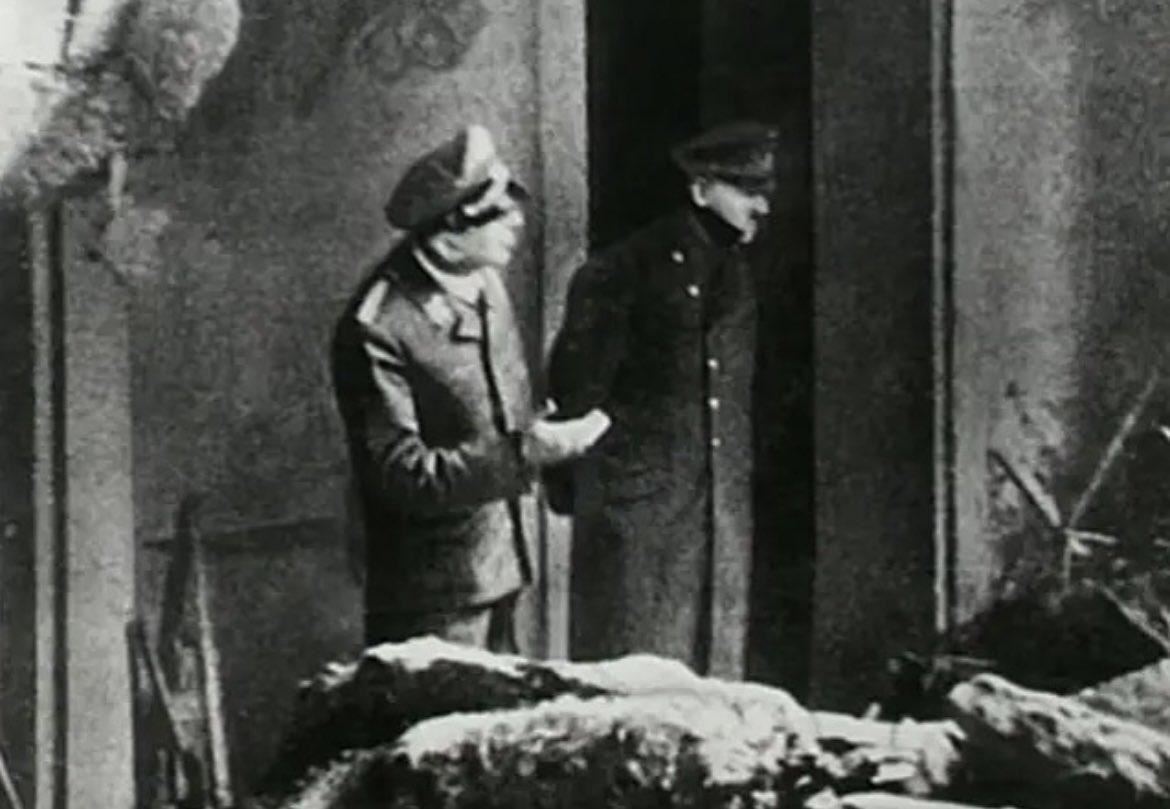
    The end of La Calle Curetes is something you should not miss. It is the Library of Celsus, considered the greatest infrastructure in Ephesus. It was built to commemorate the late Tiberius Julius Celsus Polemeanus, the Governor of Roman Asia. It used to contain more than 12,000 scrolls. The only part of the library that survives is its façade as it was burned by the Goths.

    One convenient thing about Curetes Street is that once you visit it, it serves as the primary path to explore the historical areas found in the ancient city of Ephesus such as the Temple of Artemis and the Library of Celsus. The exploration will be full of emotions and at the same time you will have the opportunity to learn from its rich history. The street is like going back in time and seeing how the Romans lived their lives long ago.

    📷© Ann Thomson
    Source: http://ephesusbreeze.com
    Curetes Street, Ephesus : In ancient times, Ephesus was a town in Asia Minor, in modern-day Türkiye. It was one of the richest cities around the world for centuries. In the city there are two standing marble pillars that stand on opposite sides of the roads. These pillars form the Gate of Hercules, decorated with fascinating reliefs depicting the famous strong man. These gates are the entrances to Curetes Street, one of the main streets of Ephesus. In mythology, the word Curetes belonged to the demi-gods. It was the name used in Ephesus to refer to the priests. The street connects the entire city of Ephesus where all the aristocrats once lived and worked. Curetes Street is one of the main arteries of Ephesus. It is mostly made of marble, covering an extensive part of the pipe drainage system. All that remains of its location are the pillars that have remained through time. To the right of Curetes Street, is the Temple of Hadrian, dedicated to the emperor during 129 AD. The sides of Curetes Street are overflowing with mosaics as well as galleries of columns. These galleries will guide any tourist to shops in the city and homes. The end of La Calle Curetes is something you should not miss. It is the Library of Celsus, considered the greatest infrastructure in Ephesus. It was built to commemorate the late Tiberius Julius Celsus Polemeanus, the Governor of Roman Asia. It used to contain more than 12,000 scrolls. The only part of the library that survives is its façade as it was burned by the Goths. One convenient thing about Curetes Street is that once you visit it, it serves as the primary path to explore the historical areas found in the ancient city of Ephesus such as the Temple of Artemis and the Library of Celsus. The exploration will be full of emotions and at the same time you will have the opportunity to learn from its rich history. The street is like going back in time and seeing how the Romans lived their lives long ago. 📷© Ann Thomson Source: http://ephesusbreeze.com
    EPHESUSBREEZE.COM
    Private Ephesus Tours - Ephesus Breeze Tours / Turkey
    Top rated (❶) private ephesus tours to see Ephesus city ruins and near attractions by Ephesus Breeze Tours ✔ a.k.a. About Tours. Read tour reviews and find out why we are the rated best!
    1 Commentarii 0 Distribuiri
  • https://www.youtube.com/watch?v=E6kI9sCEDvY The Destruction Of Carthage: Why Ancient Rome Feared Their Great Rival | Carthage | Timeline
    https://www.youtube.com/watch?v=E6kI9sCEDvY The Destruction Of Carthage: Why Ancient Rome Feared Their Great Rival | Carthage | Timeline
    1 Commentarii 0 Distribuiri
  • “An amazing ancient underground city where thousands of people lived.

    Although the underground complex of Derinkuyu, located in Turkish Cappadocia, gained popularity in the seventies, when Swiss researcher and author Erich Von Däniken discovered it to the world through "The Gold of the Gods", Derinkuyu had long raised questions especially among archaeologists in his country.

    She was accidentally discovered when a man knocked down her basement wall. Upon arrival, archaeologists revealed the city was 18 stories deep and everything underground life needed, including schools, chapels and even stables.

    Derinkuyu, Turkey's underground city, is nearly 3,000 years old, and it came to host 20,000 people. "

    Een geweldige oude ondergrondse stad waar duizenden mensen woonden. Hoewel het ondergrondse complex van Derinkuyu, gelegen in het Turks Cappadocië, in de jaren zeventig populariteit won, toen de Zwitserse onderzoeker en schrijver Erich Von Däniken het aan de wereld ontdekte via "Het goud van de Goden", had Derinkuyu al lang vragen gesteld vooral onder archeologen in zijn land.
    Ze werd per ongeluk ontdekt toen een man haar keldermuur omversloeg. Bij aankomst onthulde archeologen dat de stad 18 verdiepingen diep was en alles bodemleven nodig had, waaronder scholen, kapellen en zelfs stallen.
    Derinkuyu, de ondergrondse stad van Turkije, is bijna 3.000 jaar oud en het kwam om 20.000 mensen te gast.

    bron : https://www.facebook.com/TimexxNasty/posts/pfbid02DyMXmKo27V1bhmtcmSZHS1wA6BmpdCey7fZz5ESN1xtPah1pSHZ6b9YmVmCYteBGl
    “An amazing ancient underground city where thousands of people lived. Although the underground complex of Derinkuyu, located in Turkish Cappadocia, gained popularity in the seventies, when Swiss researcher and author Erich Von Däniken discovered it to the world through "The Gold of the Gods", Derinkuyu had long raised questions especially among archaeologists in his country. She was accidentally discovered when a man knocked down her basement wall. Upon arrival, archaeologists revealed the city was 18 stories deep and everything underground life needed, including schools, chapels and even stables. Derinkuyu, Turkey's underground city, is nearly 3,000 years old, and it came to host 20,000 people. " Een geweldige oude ondergrondse stad waar duizenden mensen woonden. Hoewel het ondergrondse complex van Derinkuyu, gelegen in het Turks Cappadocië, in de jaren zeventig populariteit won, toen de Zwitserse onderzoeker en schrijver Erich Von Däniken het aan de wereld ontdekte via "Het goud van de Goden", had Derinkuyu al lang vragen gesteld vooral onder archeologen in zijn land. Ze werd per ongeluk ontdekt toen een man haar keldermuur omversloeg. Bij aankomst onthulde archeologen dat de stad 18 verdiepingen diep was en alles bodemleven nodig had, waaronder scholen, kapellen en zelfs stallen. Derinkuyu, de ondergrondse stad van Turkije, is bijna 3.000 jaar oud en het kwam om 20.000 mensen te gast. bron : https://www.facebook.com/TimexxNasty/posts/pfbid02DyMXmKo27V1bhmtcmSZHS1wA6BmpdCey7fZz5ESN1xtPah1pSHZ6b9YmVmCYteBGl
    1 Commentarii 0 Distribuiri