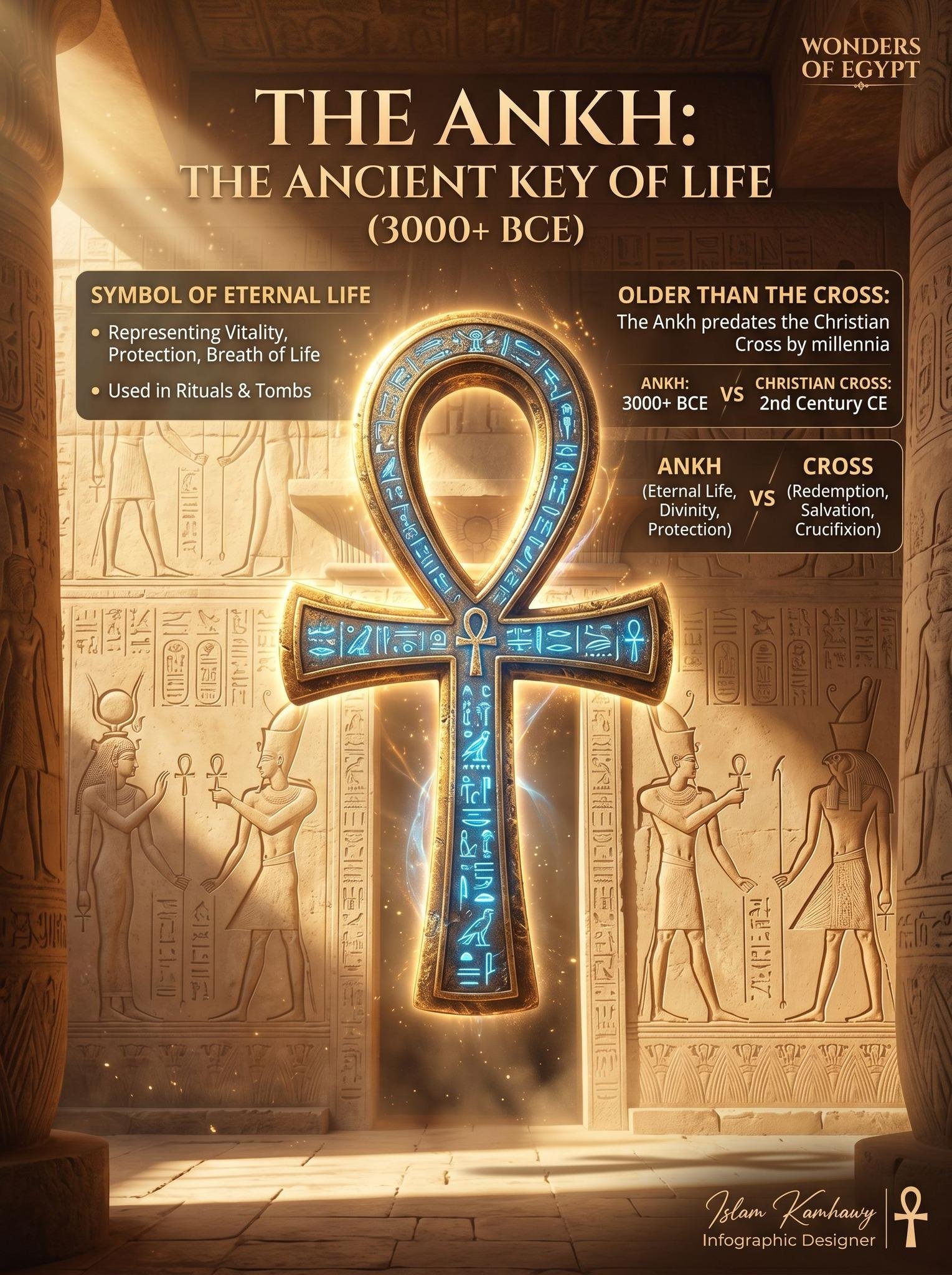
• The Ankh (☥) is one of the most famous symbols from Ancient Egypt. It represents life, eternal existence, and the power of the gods.

    The Ankh is not a cross and has a loop at the top and symbolizes life and immortality in ancient Egyptian beliefs.

    The cross, is a later symbol mainly associated with Christianity, representing faith, sacrifice, and salvation.

    So while they may look alike, each one carries a completely different meaning and history.

    The Ankh meanings come from ancient beliefs and mythology of ancient Egypt

    #Ankh #AncientEgypt #EgyptianSymbols #History
    The Ankh (☥) is one of the most famous symbols from Ancient Egypt. It represents life, eternal existence, and the power of the gods. The Ankh is not a cross and has a loop at the top and symbolizes life and immortality in ancient Egyptian beliefs. The cross, is a later symbol mainly associated with Christianity, representing faith, sacrifice, and salvation. So while they may look alike, each one carries a completely different meaning and history. The Ankh meanings come from ancient beliefs and mythology of ancient Egypt #Ankh #AncientEgypt #EgyptianSymbols #History
    1
    0 Commenti 0 condivisioni
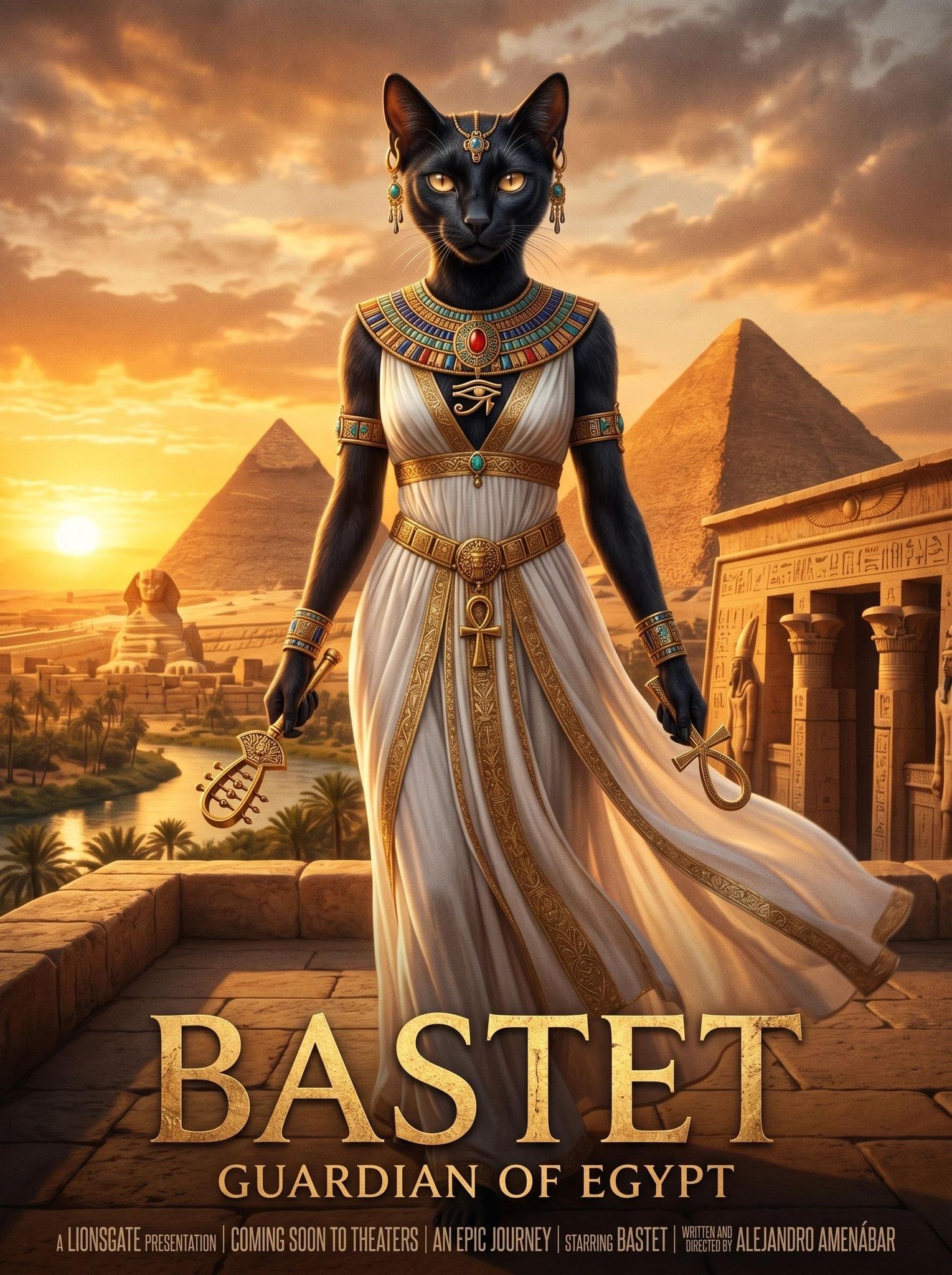
  • #Bastet, the feline guardian of ancient Egypt, symbolizes protection, joy, and fierce feminine power. With the grace of a cat and the teeth of a lightning mouse, she watches over homes, drives away evil, and brings harmony to daily life such as in #Amsterdam the nr 1 catcity of the planet.
    #Bastet, the feline guardian of ancient Egypt, symbolizes protection, joy, and fierce feminine power. With the grace of a cat and the teeth of a lightning mouse, she watches over homes, drives away evil, and brings harmony to daily life such as in #Amsterdam the nr 1 catcity of the planet.
    1
    1 Commenti 0 condivisioni
  • The Babylonian Map of the World with Irving Finkel | Curator’s Corner S9 Ep5

    The Babylonian map of the world is the oldest map of the world, in the world. Written and inscribed on clay in Mesopotamia around 2,900-years-ago, it is, like so many cuneiform tablets, incomplete. However, Irving Finkel and a particularly gifted student of his - Edith Horsley - managed to locate a missing piece of the map, slot it back into the cuneiform tablet, and from there set us all on journey through the somewhat mythical landscape of Mesopotamia to find the final resting place of the ark. And yes we mean that ark, as in Noah's ark. Although in the earlier Mesopotamian version of the flood story, the ark is built by Ziusudra.

    00:00 Intro

    00:52 Ancient Mesopotamian Cuneiform Tablets

    01:48 The oldest map of the world, in the world

    02:07 What is the Babylonian Map of the World?

    02:34 The Babylonian Map of the World explained

    04:13 What are the triangles on the Babylonian Map of the
    World?

    06:17 Missing triangle on the Babylonian Map of the World

    06:52 Edith Horsley - Cuneiform LEGEND

    07:20 Channel 4 News report on Babylonian Map of the World September 1995

    08:32 BABY IRVING!

    09:48 What the missing piece revealed

    11:39 The ark and parsiktu-vessel

    13:22 Mount Ararat and Mount Urartu

    14:18 What does it all mean?

    15:07 Author of Babylonian Map of the World

    17:07 Next episode of Curator's Corner • Archaeologists keep re-excavating this 400...

    https://www.youtube.com/watch?v=LUxFzh8r384
    The Babylonian Map of the World with Irving Finkel | Curator’s Corner S9 Ep5 The Babylonian map of the world is the oldest map of the world, in the world. Written and inscribed on clay in Mesopotamia around 2,900-years-ago, it is, like so many cuneiform tablets, incomplete. However, Irving Finkel and a particularly gifted student of his - Edith Horsley - managed to locate a missing piece of the map, slot it back into the cuneiform tablet, and from there set us all on journey through the somewhat mythical landscape of Mesopotamia to find the final resting place of the ark. And yes we mean that ark, as in Noah's ark. Although in the earlier Mesopotamian version of the flood story, the ark is built by Ziusudra. 00:00 Intro 00:52 Ancient Mesopotamian Cuneiform Tablets 01:48 The oldest map of the world, in the world 02:07 What is the Babylonian Map of the World? 02:34 The Babylonian Map of the World explained 04:13 What are the triangles on the Babylonian Map of the World? 06:17 Missing triangle on the Babylonian Map of the World 06:52 Edith Horsley - Cuneiform LEGEND 07:20 Channel 4 News report on Babylonian Map of the World September 1995 08:32 BABY IRVING! 09:48 What the missing piece revealed 11:39 The ark and parsiktu-vessel 13:22 Mount Ararat and Mount Urartu 14:18 What does it all mean? 15:07 Author of Babylonian Map of the World 17:07 Next episode of Curator's Corner • Archaeologists keep re-excavating this 400... https://www.youtube.com/watch?v=LUxFzh8r384
    1
    0 Commenti 0 condivisioni
  • Irving Finkel Writes In Ancient Cuneiform

    The Ancients Podcast

    In this episode of The Ancients, Tristan Hughes is joined by Dr Irving Finkel to uncover how cuneiform actually worked and how you would write it yourself.

    More than five thousand years ago, a revolutionary script emerged in the fertile lands of Mesopotamia that would transform how people counted, governed, worshipped and told stories. This was cuneiform, the world’s earliest known writing system.

    From humble beginnings as simple pictograms tracking beer and grain, to the wedge-shaped signs that recorded myths, laws and epic tales long before the Bible, this episode explores how cuneiform spread across Sumer, Babylon, Assyria and Persia — and why these clay tablets remain one of archaeology’s richest windows into the ancient world.


    0:00 Introduction to Cuneiform
    1:40 The Oldest Script Known to Archaeology
    3:10 Sumerian: The Language Without Relatives
    5:05 Akkadian and the Spread of Cuneiform
    8:45 The Behistun Inscription: Unlocking the Code
    13:15 Why Clay? The Ultimate Data Storage
    16:15 From Pictograms to Protocuneiform
    23:55 The Shift to Straight Edges and Wedges
    28:50 Accounting for Beer: Early Tablet Bookkeeping
    37:30 How to Write: The Three Basic Strokes
    38:02 Dr. Finkel Writes Cuneiform
    1:08:00 The Decline and Legacy of the Script

    Presented by Tristan Hughes. Producers are Joseph Knight & McKenna Fernandez, senior producer is Anne-Marie Luff. Editor is Matthew Wilson. Channel manager is Vilde Øksnes.

    https://www.youtube.com/watch?v=kELoypEdMs0
    Irving Finkel Writes In Ancient Cuneiform The Ancients Podcast In this episode of The Ancients, Tristan Hughes is joined by Dr Irving Finkel to uncover how cuneiform actually worked and how you would write it yourself. More than five thousand years ago, a revolutionary script emerged in the fertile lands of Mesopotamia that would transform how people counted, governed, worshipped and told stories. This was cuneiform, the world’s earliest known writing system. From humble beginnings as simple pictograms tracking beer and grain, to the wedge-shaped signs that recorded myths, laws and epic tales long before the Bible, this episode explores how cuneiform spread across Sumer, Babylon, Assyria and Persia — and why these clay tablets remain one of archaeology’s richest windows into the ancient world. 0:00 Introduction to Cuneiform 1:40 The Oldest Script Known to Archaeology 3:10 Sumerian: The Language Without Relatives 5:05 Akkadian and the Spread of Cuneiform 8:45 The Behistun Inscription: Unlocking the Code 13:15 Why Clay? The Ultimate Data Storage 16:15 From Pictograms to Protocuneiform 23:55 The Shift to Straight Edges and Wedges 28:50 Accounting for Beer: Early Tablet Bookkeeping 37:30 How to Write: The Three Basic Strokes 38:02 Dr. Finkel Writes Cuneiform 1:08:00 The Decline and Legacy of the Script Presented by Tristan Hughes. Producers are Joseph Knight & McKenna Fernandez, senior producer is Anne-Marie Luff. Editor is Matthew Wilson. Channel manager is Vilde Øksnes. https://www.youtube.com/watch?v=kELoypEdMs0
    1
    0 Commenti 0 condivisioni
  • A Tour of Babylon in 570 BC — Documentary History

    #Babylon #AncientBabylon #570BC

    In 570 BC, the largest and most powerful city on Earth sits on the banks of the Euphrates River in modern-day Iraq.

    Its walls are wide enough for two chariots to race side by side along the top. Its gate is covered in bright blue glazed bricks and golden dragons that no other civilization on Earth can replicate. Its tower rises ninety meters into the sky the structure that will inspire the legend of the Tower of Babel. And every single brick in this city carries the stamped name of the king who built it.

    This is Babylon. Not the myth. Not the metaphor. The real, functioning city at the absolute peak of its power.

    https://www.youtube.com/watch?v=KiZVWFIk-MU
    A Tour of Babylon in 570 BC — Documentary History #Babylon #AncientBabylon #570BC In 570 BC, the largest and most powerful city on Earth sits on the banks of the Euphrates River in modern-day Iraq. Its walls are wide enough for two chariots to race side by side along the top. Its gate is covered in bright blue glazed bricks and golden dragons that no other civilization on Earth can replicate. Its tower rises ninety meters into the sky the structure that will inspire the legend of the Tower of Babel. And every single brick in this city carries the stamped name of the king who built it. This is Babylon. Not the myth. Not the metaphor. The real, functioning city at the absolute peak of its power. https://www.youtube.com/watch?v=KiZVWFIk-MU
    1
    0 Commenti 0 condivisioni
  • The Rise and Fall of Babylon: History's Greatest City (2300 - 480 BC)

    Ancient Babylon history — from a tiny town on the Euphrates River to the greatest city of the ancient world. In this history documentary, we trace the rise and fall of the Babylonian empire across nearly two thousand years of Mesopotamia's most dramatic chapter.

    Using historically grounded visuals and cinematic storytelling, this film explores:

    How a nomadic Amorite tribe seized an unremarkable town and turned it into the capital of an empire

    How Hammurabi forgave all debts on his first day as king — and then wrote laws that protected women, children, and slaves millennia before Europe

    Why Babylonian women could divorce their husbands, win in court, and remarry — in the nineteenth century BCE

    How Hammurabi played rival kingdoms against each other for thirty years before launching his conquest of all Mesopotamia

    Why the Assyrian king Sennacherib burned Babylon to the ground, flooded its ruins, and carried away its gods — and how his own sons murdered him for it

    How a Chaldean rebel named Nabopolassar rose from the ashes, crushed the Assyrian empire, and founded a new dynasty

    What Nebuchadnezzar built on top of the destruction — walls wider than the Great Wall of China, the cobalt-blue Ishtar Gate, the ziggurat Etemenanki that inspired the Tower of Babel, and the Hanging Gardens that may never have existed

    How Babylon became the first city in history to reach two hundred thousand people — when Rome was still a village

    Why the Persian conquest and the theft of one statue marked the beginning of the end

    And how the Babylon we know from ruins is not the Babylon that became a legend — but a city built on top of its ghost
    This is not a summary. It is a reconstruction of a civilization.

    https://www.youtube.com/watch?v=N-uVKIstl7M
    The Rise and Fall of Babylon: History's Greatest City (2300 - 480 BC) Ancient Babylon history — from a tiny town on the Euphrates River to the greatest city of the ancient world. In this history documentary, we trace the rise and fall of the Babylonian empire across nearly two thousand years of Mesopotamia's most dramatic chapter. Using historically grounded visuals and cinematic storytelling, this film explores: How a nomadic Amorite tribe seized an unremarkable town and turned it into the capital of an empire How Hammurabi forgave all debts on his first day as king — and then wrote laws that protected women, children, and slaves millennia before Europe Why Babylonian women could divorce their husbands, win in court, and remarry — in the nineteenth century BCE How Hammurabi played rival kingdoms against each other for thirty years before launching his conquest of all Mesopotamia Why the Assyrian king Sennacherib burned Babylon to the ground, flooded its ruins, and carried away its gods — and how his own sons murdered him for it How a Chaldean rebel named Nabopolassar rose from the ashes, crushed the Assyrian empire, and founded a new dynasty What Nebuchadnezzar built on top of the destruction — walls wider than the Great Wall of China, the cobalt-blue Ishtar Gate, the ziggurat Etemenanki that inspired the Tower of Babel, and the Hanging Gardens that may never have existed How Babylon became the first city in history to reach two hundred thousand people — when Rome was still a village Why the Persian conquest and the theft of one statue marked the beginning of the end And how the Babylon we know from ruins is not the Babylon that became a legend — but a city built on top of its ghost This is not a summary. It is a reconstruction of a civilization. https://www.youtube.com/watch?v=N-uVKIstl7M
    1
    0 Commenti 0 condivisioni
  • The ENTIRE History of Egypt | Ancient Civilizations Documentary https://www.youtube.com/watch?v=CskfvgEItPA
    The ENTIRE History of Egypt | Ancient Civilizations Documentary https://www.youtube.com/watch?v=CskfvgEItPA
    0 Commenti 0 condivisioni
  • Egypt - Fall of the Pharaohs

    In this film, we travel to the Nile Valley, and tell the story of the most iconic cultures ever produced by humankind – the civilizations of ancient Egypt. This is the story of what happened to bring the age of the Pharaohs finally and cataclysmically to an end. https://www.youtube.com/watch?v=YpKej05RgsY
    Egypt - Fall of the Pharaohs In this film, we travel to the Nile Valley, and tell the story of the most iconic cultures ever produced by humankind – the civilizations of ancient Egypt. This is the story of what happened to bring the age of the Pharaohs finally and cataclysmically to an end. https://www.youtube.com/watch?v=YpKej05RgsY
    1
    0 Commenti 0 condivisioni
  • Symphony of the Infinite

    Oh, threads of life, in cosmic waltz they sway,
    Where souls and stars in radiant union play.
    From tiniest spark to galaxies’ grand flight,
    All hum as one in the universe’s light.

    We are the symphony, we rise and sing,
    A journey intertwined, in this cosmic fling.
    With every heartbeat, let our voices soar,
    In the dance of forever, we are wanting more.

    Earth’s heartbeat drums, and water’s murmurs sing,
    Fire’s golden dance, stone’s eternal ring.
    Spirit soars free, air whispers soft and bright,
    Bound to the moon’s glow and the sun’s warm delight.

    We are the symphony, we rise and sing,
    A journey intertwined, in this cosmic fling.
    With every heartbeat, let our voices soar,
    In the dance of forever, we are wanting more.

    No single thread can weave the tale alone,
    No cause, no deed, claims the mystery’s throne.
    Effects turn to causes, in cycles they blend,
    A timeless refrain where beginnings transcend.

    From realms unseen, where shadows softly call,
    A star’s ancient sigh may ripple through all.
    In conscious dreams or veils beyond our gaze,
    Love’s luminous pulse sets the cosmos ablaze.

    We are the symphony, we rise and sing,
    A journey intertwined, in this cosmic fling.
    With every heartbeat, our voices soar,
    In the dance of forever, we shine.

    Oh, living cosmos, thy secrets unfold,
    In nature’s sweet hymn, more radiant than gold.
    We stand, enraptured, where wonders align,

    Singing thy glory, O infinite divine.
    Together we blend in this symphonic embrace,
    In the heart of the universe, we find our place.


    Lyrics :

    Stan Rams Poetry Album

    https://www.stanrams.com/sparkling-from-the-wonderwell-of-muses-by-stan-rams/

    Music AI by Songer/ Art Media /

    #mp3 #Symphony #divine #ode #gospel
    Symphony of the Infinite :smiling-face-with-halo: Oh, threads of life, in cosmic waltz they sway, Where souls and stars in radiant union play. From tiniest spark to galaxies’ grand flight, All hum as one in the universe’s light. We are the symphony, we rise and sing, A journey intertwined, in this cosmic fling. With every heartbeat, let our voices soar, In the dance of forever, we are wanting more. Earth’s heartbeat drums, and water’s murmurs sing, Fire’s golden dance, stone’s eternal ring. Spirit soars free, air whispers soft and bright, Bound to the moon’s glow and the sun’s warm delight. We are the symphony, we rise and sing, A journey intertwined, in this cosmic fling. With every heartbeat, let our voices soar, In the dance of forever, we are wanting more. No single thread can weave the tale alone, No cause, no deed, claims the mystery’s throne. Effects turn to causes, in cycles they blend, A timeless refrain where beginnings transcend. From realms unseen, where shadows softly call, A star’s ancient sigh may ripple through all. In conscious dreams or veils beyond our gaze, Love’s luminous pulse sets the cosmos ablaze. We are the symphony, we rise and sing, A journey intertwined, in this cosmic fling. With every heartbeat, our voices soar, In the dance of forever, we shine. Oh, living cosmos, thy secrets unfold, In nature’s sweet hymn, more radiant than gold. We stand, enraptured, where wonders align, Singing thy glory, O infinite divine. Together we blend in this symphonic embrace, In the heart of the universe, we find our place. Lyrics : Stan Rams Poetry Album https://www.stanrams.com/sparkling-from-the-wonderwell-of-muses-by-stan-rams/ Music AI by Songer/ Art Media / #mp3 #Symphony #divine #ode #gospel

    1
    12 1 Commenti 0 condivisioni
  • Cracking Ancient Codes: Cuneiform Writing - with Irving The Finkel Theory https://www.youtube.com/watch?v=PfYYraMgiBA
    Cracking Ancient Codes: Cuneiform Writing - with Irving The Finkel Theory https://www.youtube.com/watch?v=PfYYraMgiBA
    0 Commenti 0 condivisioni
  • https://youtu.be/PfYYraMgiBA Cracking Ancient Codes: Cuneiform Writing - with Irving Finkel
    https://youtu.be/PfYYraMgiBA Cracking Ancient Codes: Cuneiform Writing - with Irving Finkel
    1
    0 Commenti 0 condivisioni
  • #DarkHistory #Caligula #AncientRome

    These 11 Emperors Were Evil,

    When people think of depraved Roman emperors, Caligula is usually the first name that comes to mind. But what if he was just the tip of the iceberg?

    In this video, we’re diving into the lives of 11 emperors whose crimes, cruelty, and twisted indulgences went even further than Caligula’s. These are men who murdered rivals and family, drained Rome’s coffers for wild extravagance, and turned the empire into their personal playground of terror.

    From secret assassinations to public spectacles drenched in blood, these rulers remind us that the throne of Rome was sometimes a seat of madness.

    If you thought Caligula was bad… wait until you meet the emperors on this list.


    https://www.youtube.com/watch?v=QldsVPLX5GU
    #DarkHistory #Caligula #AncientRome These 11 Emperors Were Evil, When people think of depraved Roman emperors, Caligula is usually the first name that comes to mind. But what if he was just the tip of the iceberg? In this video, we’re diving into the lives of 11 emperors whose crimes, cruelty, and twisted indulgences went even further than Caligula’s. These are men who murdered rivals and family, drained Rome’s coffers for wild extravagance, and turned the empire into their personal playground of terror. From secret assassinations to public spectacles drenched in blood, these rulers remind us that the throne of Rome was sometimes a seat of madness. If you thought Caligula was bad… wait until you meet the emperors on this list. https://www.youtube.com/watch?v=QldsVPLX5GU
    0 Commenti 0 condivisioni
  • The Rosetta Stone, originating from 196 BC.

    Unearthed in 1799 by French troops in Egypt, this granodiorite slab displays the same decree inscribed in Ancient Greek, Demotic, and Egyptian hieroglyphs.

    It served as the breakthrough for deciphering hieroglyphics, revealing centuries of ancient Egyptian language and history. Now housed in British Museum, the Rosetta Stone exemplifies the transformative power of translation and how a single artifact can enhance our comprehension of an entire civilization.

    The text carved into the Rosetta Stone is a decree from 196 BC, issued by King Ptolemy V.

    It extols the pharaoh's governance, emphasizing his generosity toward the priesthood, initiatives to stabilize Egypt, and contributions to temples. Additionally, it details the privileges granted to priests, tax collection, and royal commands to be observed across the realm. The inscription is presented in three different scripts—hieroglyphs for religious contexts, Demotic for daily administrative matters, and Ancient Greek, the language of contemporary rulers. This multi-script approach made the decree accessible to various segments of Egyptian society, representing the cultural amalgamation during the Ptolemaic era.
    The Rosetta Stone, originating from 196 BC. Unearthed in 1799 by French troops in Egypt, this granodiorite slab displays the same decree inscribed in Ancient Greek, Demotic, and Egyptian hieroglyphs. It served as the breakthrough for deciphering hieroglyphics, revealing centuries of ancient Egyptian language and history. Now housed in British Museum, the Rosetta Stone exemplifies the transformative power of translation and how a single artifact can enhance our comprehension of an entire civilization. The text carved into the Rosetta Stone is a decree from 196 BC, issued by King Ptolemy V. It extols the pharaoh's governance, emphasizing his generosity toward the priesthood, initiatives to stabilize Egypt, and contributions to temples. Additionally, it details the privileges granted to priests, tax collection, and royal commands to be observed across the realm. The inscription is presented in three different scripts—hieroglyphs for religious contexts, Demotic for daily administrative matters, and Ancient Greek, the language of contemporary rulers. This multi-script approach made the decree accessible to various segments of Egyptian society, representing the cultural amalgamation during the Ptolemaic era.
    1
    0 Commenti 0 condivisioni
  • 298 Million Year Old Ancient Forest discovered- #boom #bomenwonder #koester de bossen/ stop met kappen stel linkse gekken stop ermee!
    298 Million Year Old Ancient Forest discovered- #boom #bomenwonder #koester de bossen/ stop met kappen stel linkse gekken stop ermee!
    0 Commenti 0 condivisioni
  • https://www.youtube.com/watch?v=0NcjEToPUBw&t=16s

    The First Photographs Ever Taken of Amsterdam [600+ Images, 1859-1899] Dutch Golden Age/ Technology

    4 sep 2023

    Today we will browse through over 600 of the most detailed and rarest photographs taken of Amsterdam before the year 1900. These images, many never before seen on, come from a multitude of different resources, including, but not limited to; the Amsterdam Historical Society, and The University of Amsterdam.

    The oldest photograph is this collection will date to roughly 1859, which is the earliest photograph of Amsterdam I was able to locate. This is my most in depth collection to date, and the abundance of ancient, or old world technology, visible in this city is unquestionably remarkable. Please like, share, and subscribe to my channel if you’re not already, and be sure to leave a comment down below about which images stood out to you the most.

    Again, this collection is for the Old World researcher, and the newcomer to European History, as the vast and elaborate architecture showcased through today’s collection will astound even the most seasoned of viewers. Enjoy!
    https://www.youtube.com/watch?v=0NcjEToPUBw&t=16s The First Photographs Ever Taken of Amsterdam [600+ Images, 1859-1899] Dutch Golden Age/ Technology 4 sep 2023 Today we will browse through over 600 of the most detailed and rarest photographs taken of Amsterdam before the year 1900. These images, many never before seen on, come from a multitude of different resources, including, but not limited to; the Amsterdam Historical Society, and The University of Amsterdam. The oldest photograph is this collection will date to roughly 1859, which is the earliest photograph of Amsterdam I was able to locate. This is my most in depth collection to date, and the abundance of ancient, or old world technology, visible in this city is unquestionably remarkable. Please like, share, and subscribe to my channel if you’re not already, and be sure to leave a comment down below about which images stood out to you the most. Again, this collection is for the Old World researcher, and the newcomer to European History, as the vast and elaborate architecture showcased through today’s collection will astound even the most seasoned of viewers. Enjoy!
    1
    0 Commenti 0 condivisioni
  • A startlingly amazing beautiful painted limestone potsherd image (1200 BC) of an ancient Egyptian dancer, with elaborate hairstyle and rings and earrings in her ears, depicted in gymnastic throwback position (belonged to New Kingdom, 19th-20th Dynasty, 1292-1076 BC). source: https://x.com/archeohistories/status/1863100756137578953
    A startlingly amazing beautiful painted limestone potsherd image (1200 BC) of an ancient Egyptian dancer, with elaborate hairstyle and rings and earrings in her ears, depicted in gymnastic throwback position (belonged to New Kingdom, 19th-20th Dynasty, 1292-1076 BC). source: https://x.com/archeohistories/status/1863100756137578953
    0 Commenti 0 condivisioni
  • The sion moloch temple sect SMTS wrote the revelations
    / the ancient infiltraded sect that destroyed tartaria / and many cities sa hamburg dresden berlin nuremberg los angeles detroit chicago etc and countles civilisations

    The sect that planned financed and caused countless wars such as WW I WW II over 55 Nato expansion wars.

    We are in the times of awakening now, and see the deceivers of the Sion Moloch Temple Sect who walks among and infiltraded governments/ media/ universities etc. Yet, their empire of lies, paper, corona crimes war crimes and immoral laws is burning to ash. We are the generation that awakens, and the reign of the SMTS monsters is crumbling before our eyes.
    The sion moloch temple sect SMTS wrote the revelations / the ancient infiltraded sect that destroyed tartaria / and many cities sa hamburg dresden berlin nuremberg los angeles detroit chicago etc and countles civilisations The sect that planned financed and caused countless wars such as WW I WW II over 55 Nato expansion wars. We are in the times of awakening now, and see the deceivers of the Sion Moloch Temple Sect who walks among and infiltraded governments/ media/ universities etc. Yet, their empire of lies, paper, corona crimes war crimes and immoral laws is burning to ash. We are the generation that awakens, and the reign of the SMTS monsters is crumbling before our eyes.
    0 Commenti 0 condivisioni
  • Left Round Photo : a 5,500 Year Old Sumerian Star Map, a cuneiform clay tablet that indicates the Köfel’s impact event was observed in ancient times.

    The circular stone-cast tablet was recovered from the 650 BC underground library of King Ashurbanipal in Nineveh, Iraq in the late 19th century.

    This is very reminiscent of the motifs found on the drums of Nordic nomadic peoples, such as the Sami shamans, which were used in ceremonies to contact the spirit world and achieve transcendental states. What has been depicted is unclear, but there is certainly much knowledge and wisdom that has been forgotten.

    It is awe-inspiring how our ancestors could have such insight into celestial bodies and how our planet relates to the rest of the universe.Astrologie / Sterren atlas/ Astrologic map
    Left Round Photo : a 5,500 Year Old Sumerian Star Map, a cuneiform clay tablet that indicates the Köfel’s impact event was observed in ancient times. The circular stone-cast tablet was recovered from the 650 BC underground library of King Ashurbanipal in Nineveh, Iraq in the late 19th century. This is very reminiscent of the motifs found on the drums of Nordic nomadic peoples, such as the Sami shamans, which were used in ceremonies to contact the spirit world and achieve transcendental states. What has been depicted is unclear, but there is certainly much knowledge and wisdom that has been forgotten. It is awe-inspiring how our ancestors could have such insight into celestial bodies and how our planet relates to the rest of the universe.Astrologie / Sterren atlas/ Astrologic map
    1
    0 Commenti 0 condivisioni
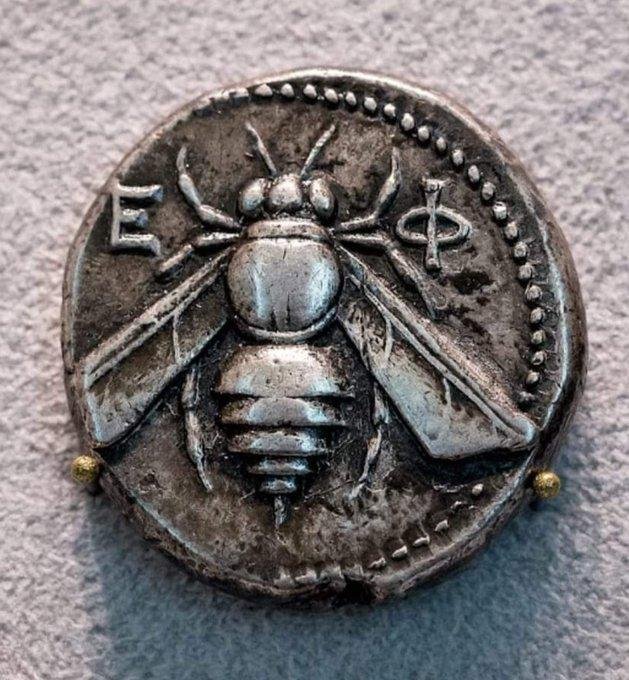
  • In ancient Greece, bees (mélissa) The Sacred Bee -, were considered sacred messengers of the gods, particularly by the Muses, goddesses of art, poetry and science

    The muses sent bees to humans, ordering them to smoother their lips with honey (μέλι - méli), in order to bring them wisdom and eloquence.

    Greek myth Zeus’s father, Kronos, wanted to kill him even before he was born, so his mother, Rhea, switched the infant with a rock, which Kronos then swallowed whilst she spirited the infant Zeus away to a secret cave on Mt.Dikte, on the island of Crete.

    There are various versions about what happened next, one has Zeus raised in a cave full of honeybees, which he later rewarded by giving them their golden colour.

    Another version is that nymph Melissa (goddess of honey and beekeeping), feeds baby Zeus honey from sacred bees and gives him milk from a goat named Amaltheia, which, in yet another version is a goat-tending nymph, who reared Zeus.

    Which version you prefer, Zeus, king of the Olympian gods, was raised on honey.

    Hippocrates (466 - 377 BC), "Father of medicine", was a great believer in the power of honey as the go to remedy for soothing most ancient ailments.

    Aristotle (384 - 322 BC) The great Greek philosopher, wrote about the art of beekeeping in his first book, "Historia Animalium" (The History of Animals). At the time of writing his book, people believed bees did not produce their young but found them in flowers but Aristotle thought they developed within honeycomb cells. He never did figure out though, how bees made honey and decided it came from the atmosphere.

    The author of the Iliad and the Odyssey Homer, goes into great detail about searching for wild honey amongst the rocks. At the Olympic Games in ancient Greece, athletes drank honey water in order to regain their strength. Pythagoras, the ancient mathematician, considered honey the elixir of youth, to consume it was the sure-fire way to longevity.
    In ancient Greece, bees (mélissa) The Sacred Bee -, were considered sacred messengers of the gods, particularly by the Muses, goddesses of art, poetry and science The muses sent bees to humans, ordering them to smoother their lips with honey (μέλι - méli), in order to bring them wisdom and eloquence. Greek myth Zeus’s father, Kronos, wanted to kill him even before he was born, so his mother, Rhea, switched the infant with a rock, which Kronos then swallowed whilst she spirited the infant Zeus away to a secret cave on Mt.Dikte, on the island of Crete. There are various versions about what happened next, one has Zeus raised in a cave full of honeybees, which he later rewarded by giving them their golden colour. Another version is that nymph Melissa (goddess of honey and beekeeping), feeds baby Zeus honey from sacred bees and gives him milk from a goat named Amaltheia, which, in yet another version is a goat-tending nymph, who reared Zeus. Which version you prefer, Zeus, king of the Olympian gods, was raised on honey. Hippocrates (466 - 377 BC), "Father of medicine", was a great believer in the power of honey as the go to remedy for soothing most ancient ailments. Aristotle (384 - 322 BC) The great Greek philosopher, wrote about the art of beekeeping in his first book, "Historia Animalium" (The History of Animals). At the time of writing his book, people believed bees did not produce their young but found them in flowers but Aristotle thought they developed within honeycomb cells. He never did figure out though, how bees made honey and decided it came from the atmosphere. The author of the Iliad and the Odyssey Homer, goes into great detail about searching for wild honey amongst the rocks. At the Olympic Games in ancient Greece, athletes drank honey water in order to regain their strength. Pythagoras, the ancient mathematician, considered honey the elixir of youth, to consume it was the sure-fire way to longevity.
    1
    0 Commenti 0 condivisioni
  • The Palermo Stone is an ancient Egyptian artifact dates back to the 5th Dynasty of the Old Kingdom, around 2400 BC. It is one of the seven surviving fragments of a larger piece, known collectively as the Royal Annals of the Old Kingdom, which recorded the reigns of the early Egyptian pharaohs. The stone was discovered in 1866 in the city of Palermo, Sicily, Italy, by an Italian collector named Ferdinand Guidano, who later donated it to the Palermo Archaeological Museum where it remains today.

    It’s a polished, black basalt slab that measures approximately 43.5 centimeters high, 25 centimeters wide, and 6.5 centimeters thick. The stone is inscribed on both sides with horizontal registers containing hieroglyphic text. Each register is divided into a series of compartments, with each compartment recording the events of a single year of a king’s reign. The hieroglyphs detail the names of kings, religious ceremonies, tax records, and other significant occurrences.

    https://x.com/histories_arch/status/1834877188295815293
    The Palermo Stone is an ancient Egyptian artifact dates back to the 5th Dynasty of the Old Kingdom, around 2400 BC. It is one of the seven surviving fragments of a larger piece, known collectively as the Royal Annals of the Old Kingdom, which recorded the reigns of the early Egyptian pharaohs. The stone was discovered in 1866 in the city of Palermo, Sicily, Italy, by an Italian collector named Ferdinand Guidano, who later donated it to the Palermo Archaeological Museum where it remains today. It’s a polished, black basalt slab that measures approximately 43.5 centimeters high, 25 centimeters wide, and 6.5 centimeters thick. The stone is inscribed on both sides with horizontal registers containing hieroglyphic text. Each register is divided into a series of compartments, with each compartment recording the events of a single year of a king’s reign. The hieroglyphs detail the names of kings, religious ceremonies, tax records, and other significant occurrences. https://x.com/histories_arch/status/1834877188295815293
    1
    0 Commenti 0 condivisioni
  • The wonder Mega Monolite

    A group of scientists and enthusiasts wonder if advanced ancient civilizations settled on our world and were wiped out by climate catastrophes; consider the ruins of sites like Nan Madol, the Great Pyramid, and Gunung Padang.

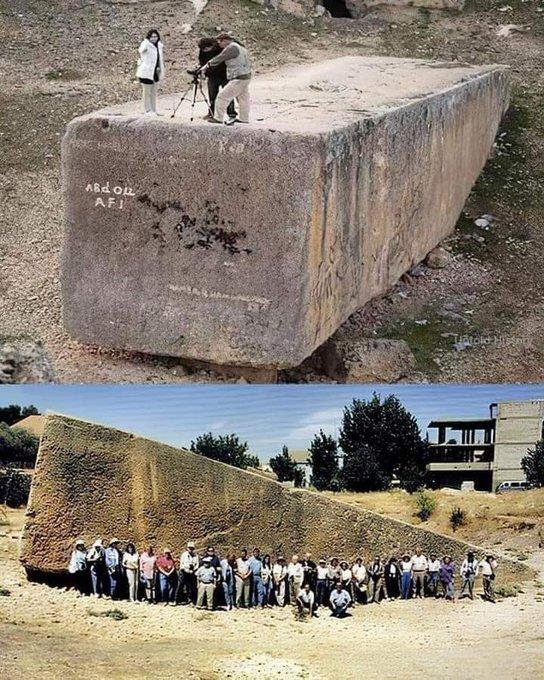
    In the breathtaking expanse of Baalbek in Lebanon lies the largest man-made monolith on the planet. This solid stone is no ordinary stone; it stands some 64.3 feet (19.6 meters) tall and tips the scales at around 3.3 million pounds (1,650 tons). This beast has been rolling over the landscape since Roman times; if not earlier, some theorize that it was carved out of the earth more than 5,000 years ago, though no one can pinpoint the exact date. Modern engineers are shocked by the ancient brilliance required to create and maneuver such an astronomical slab of stone.

    But wait, there’s more! This monolith is just one piece of the Baalbek-sized puzzle. Just a stone’s throw away is the Temple of Jupiter, which displays the Roman superstructure. But the real kicker is the massive limestone base on which it sits. This foundation is a jaw-dropping arrangement of 27 massive stones, three of which weigh around 2 million pounds (1,000 tons) each and are known to everyone as trilithons. Whoever built this ancient structure clearly had a mastery of quarrying, transporting and placing the stones that we still don’t understand.

    https://x.com/histories_arch/status/1834965380873306513

    The wonder Mega Monolite A group of scientists and enthusiasts wonder if advanced ancient civilizations settled on our world and were wiped out by climate catastrophes; consider the ruins of sites like Nan Madol, the Great Pyramid, and Gunung Padang. In the breathtaking expanse of Baalbek in Lebanon lies the largest man-made monolith on the planet. This solid stone is no ordinary stone; it stands some 64.3 feet (19.6 meters) tall and tips the scales at around 3.3 million pounds (1,650 tons). This beast has been rolling over the landscape since Roman times; if not earlier, some theorize that it was carved out of the earth more than 5,000 years ago, though no one can pinpoint the exact date. Modern engineers are shocked by the ancient brilliance required to create and maneuver such an astronomical slab of stone. But wait, there’s more! This monolith is just one piece of the Baalbek-sized puzzle. Just a stone’s throw away is the Temple of Jupiter, which displays the Roman superstructure. But the real kicker is the massive limestone base on which it sits. This foundation is a jaw-dropping arrangement of 27 massive stones, three of which weigh around 2 million pounds (1,000 tons) each and are known to everyone as trilithons. Whoever built this ancient structure clearly had a mastery of quarrying, transporting and placing the stones that we still don’t understand. https://x.com/histories_arch/status/1834965380873306513
    0 Commenti 0 condivisioni
  • Antikythera Mechanism.

    Portable Byzantine sundial and geared mechanical calendar, dated to 400-600 AD, is the second oldest known of its kind after the famous Antikythera Mechanism.

    The instrument comprises two practically independent parts: a sundial for use at any latitude, and a geared calendrical device showing the phase of the Moon, the day of the month and the places of the Sun and the Moon in the Zodiac.

    The device could tell the time in 16 locations and they are inscribed in Greek on the sundial plate, translated as:
    Constantinople, Syene, Thebaid, Africa, Alexandria, Antioch, Rhodes, Athens, Sicily, Thessalonika, Rome, Dalmatia, Doclea, Caesarea Sratonis, Palestine, and Ascalon.

    The Byzantine device may be created almost half a millennium after the Antikythera Mechanism and be simpler but it provides a proof that the technological achievements of the ancient Greek world weren't lost in the Eastern Roman Empire. This is also a masterpiece that is obviously based on deep knowledge of astronomy, mathematics and technological achievements, such as metalworking, automation and gear construction.

    Today it is exhibited in Science Museum of London.

    https://x.com/histories_arch/status/1834667405291016564
    Antikythera Mechanism. Portable Byzantine sundial and geared mechanical calendar, dated to 400-600 AD, is the second oldest known of its kind after the famous Antikythera Mechanism. The instrument comprises two practically independent parts: a sundial for use at any latitude, and a geared calendrical device showing the phase of the Moon, the day of the month and the places of the Sun and the Moon in the Zodiac. The device could tell the time in 16 locations and they are inscribed in Greek on the sundial plate, translated as: Constantinople, Syene, Thebaid, Africa, Alexandria, Antioch, Rhodes, Athens, Sicily, Thessalonika, Rome, Dalmatia, Doclea, Caesarea Sratonis, Palestine, and Ascalon. The Byzantine device may be created almost half a millennium after the Antikythera Mechanism and be simpler but it provides a proof that the technological achievements of the ancient Greek world weren't lost in the Eastern Roman Empire. This is also a masterpiece that is obviously based on deep knowledge of astronomy, mathematics and technological achievements, such as metalworking, automation and gear construction. Today it is exhibited in Science Museum of London. https://x.com/histories_arch/status/1834667405291016564
    1
    0 Commenti 0 condivisioni
  • Behistun Rock in Iran :

    Sir Henry Rawlinson made a groundbreaking achievement in In mid-19th Century CE translating the cuneiform script. The Behistun inscription, means "the place of god," it is a monumental multilingual inscription and a vast rocky relief carved into a cliff on Mount Behistun in Iran.

    The inscription Commissioned by Darius the Great played a crucial role in deciphering cuneiform script, as it contains three versions of the same text written in three distinct cuneiform languages: Ancient Persian, Elamite, and Babylonian.

    The Behistun inscription is to cuneiform what the Rosetta Stone is to Egyptian hieroglyphics.
    Behistun Rock in Iran : Sir Henry Rawlinson made a groundbreaking achievement in In mid-19th Century CE translating the cuneiform script. The Behistun inscription, means "the place of god," it is a monumental multilingual inscription and a vast rocky relief carved into a cliff on Mount Behistun in Iran. The inscription Commissioned by Darius the Great played a crucial role in deciphering cuneiform script, as it contains three versions of the same text written in three distinct cuneiform languages: Ancient Persian, Elamite, and Babylonian. The Behistun inscription is to cuneiform what the Rosetta Stone is to Egyptian hieroglyphics.
    1
    0 Commenti 0 condivisioni
  • https://www.youtube.com/watch?v=P3JTaPyY7Ok

    Kings and Generals animated historical documentary series on the Ancient Civilizations continues with an episode on the fall of Sparta, as we discuss the events after the Lacedaemonians gained the hegemony over Greece. We will describe various political, economic, social and military reasons why Sparta stopped being prominent and then lost its independence through the wars with Thebes, Aetolian League, Epirus, Macedon and finally Rome and look at the reigns of Agesilaus, Pausanias, Cleombrotus, Archidamus, Agis, Areus and Nabis, and the battles of Haliartus, Nemea, Cnidus, Coronea, Lechaeum, Leuctra, Mantinea, Siege of Sparta and Sellasia
    https://www.youtube.com/watch?v=P3JTaPyY7Ok Kings and Generals animated historical documentary series on the Ancient Civilizations continues with an episode on the fall of Sparta, as we discuss the events after the Lacedaemonians gained the hegemony over Greece. We will describe various political, economic, social and military reasons why Sparta stopped being prominent and then lost its independence through the wars with Thebes, Aetolian League, Epirus, Macedon and finally Rome and look at the reigns of Agesilaus, Pausanias, Cleombrotus, Archidamus, Agis, Areus and Nabis, and the battles of Haliartus, Nemea, Cnidus, Coronea, Lechaeum, Leuctra, Mantinea, Siege of Sparta and Sellasia
    0 Commenti 0 condivisioni
  • Assyrian (gypsum-alabaster) Relief Panel (883–859 BC) - Iraq :

    This panel from the Northwest Palace at Nimrud (ancient Kalhu) depicts a winged supernatural figure. Such figures appear throughout the palace, sometimes flanking either the figure of the Assyrian king or a stylized "sacred tree." The reliefs were painted, but today almost none of the original pigment survives. However, the reliefs themselves retain incredible detail, including intricate incised designs on many of the figures’ clothing.

    The figure depicted on the panel is eagle-headed and faces left, holding in his left hand a bucket and in his right hand a cone whose exact nature is unclear. One suggestion has been that the gesture, sometimes performed by figures flanking a sacred tree, is symbolic of fertilization: the "cone" resembles the male date spathe used by Mesopotamian farmers to artificially fertilize female date-palm trees. It does seem likely that the cone was supposed to hold and dispense water from the bucket in this way, but it is described in Akkadian as a "purifier," and the fact that figures performing this gesture are also shown flanking the king suggests that some purifying or protective meaning is present. The figure is richly dressed, with jewelry including a collar whose front bead appears pomegranate-shaped, a further collar with pendant tassels, armlets, and bracelets, one artificially reversed so that the large central rosette symbols, associated with divinity and perhaps particularly with the goddess Ishtar, are visible on both. Although we cannot know how these elements were originally painted, excavated parallels include elaborate jewelry in gold, inlaid with semi-precious stones. The figure carries two knives, tucked into a belt with their handles visible at chest level.

    The figures are supernatural but do not represent any of the great gods. Rather, they are part of the vast supernatural population that for ancient Mesopotamians animated every aspect of the world. They appear as either eagle-headed or human-headed and wear a horned crown to indicate divinity. Both types of figure usually have wings. Because of their resemblance to groups of figurines buried under doorways for protection whose identities are known through ritual texts, it has been suggested that the figures in the palace reliefs represent the apkallu, wise sages from the distant past. This may indeed be one level of their symbolism, but protective figures of this kind are likely to have held multiple meanings and mythological connections.

    Figures such as this continued to be depicted in later Assyrian palaces, though less frequently. Only in the Northwest Palace do they form such a dominant feature of the relief program.

    (236.2 x 177.8 x 10.8 cm)

    MET Museum - (not on view)
    https://x.com/histories_arch/status/1829461681811988600
    Assyrian (gypsum-alabaster) Relief Panel (883–859 BC) - Iraq : This panel from the Northwest Palace at Nimrud (ancient Kalhu) depicts a winged supernatural figure. Such figures appear throughout the palace, sometimes flanking either the figure of the Assyrian king or a stylized "sacred tree." The reliefs were painted, but today almost none of the original pigment survives. However, the reliefs themselves retain incredible detail, including intricate incised designs on many of the figures’ clothing. The figure depicted on the panel is eagle-headed and faces left, holding in his left hand a bucket and in his right hand a cone whose exact nature is unclear. One suggestion has been that the gesture, sometimes performed by figures flanking a sacred tree, is symbolic of fertilization: the "cone" resembles the male date spathe used by Mesopotamian farmers to artificially fertilize female date-palm trees. It does seem likely that the cone was supposed to hold and dispense water from the bucket in this way, but it is described in Akkadian as a "purifier," and the fact that figures performing this gesture are also shown flanking the king suggests that some purifying or protective meaning is present. The figure is richly dressed, with jewelry including a collar whose front bead appears pomegranate-shaped, a further collar with pendant tassels, armlets, and bracelets, one artificially reversed so that the large central rosette symbols, associated with divinity and perhaps particularly with the goddess Ishtar, are visible on both. Although we cannot know how these elements were originally painted, excavated parallels include elaborate jewelry in gold, inlaid with semi-precious stones. The figure carries two knives, tucked into a belt with their handles visible at chest level. The figures are supernatural but do not represent any of the great gods. Rather, they are part of the vast supernatural population that for ancient Mesopotamians animated every aspect of the world. They appear as either eagle-headed or human-headed and wear a horned crown to indicate divinity. Both types of figure usually have wings. Because of their resemblance to groups of figurines buried under doorways for protection whose identities are known through ritual texts, it has been suggested that the figures in the palace reliefs represent the apkallu, wise sages from the distant past. This may indeed be one level of their symbolism, but protective figures of this kind are likely to have held multiple meanings and mythological connections. Figures such as this continued to be depicted in later Assyrian palaces, though less frequently. Only in the Northwest Palace do they form such a dominant feature of the relief program. (236.2 x 177.8 x 10.8 cm) MET Museum - (not on view) https://x.com/histories_arch/status/1829461681811988600
    1
    0 Commenti 0 condivisioni
  • Around 5000 years ago, Sumerians, who lived in ancient Mesopotamia (modern-day Iraq), revolutionized how we perceive and measure time. They developed a sophisticated numerical system based on the number 60, known as the sexagesimal system. This unique system led to the division of an hour into 60 minutes and a minute into 60 seconds, concepts that are still in use today.

    Sumerians' need for precise timekeeping was driven by their agricultural society. Accurate calendars were essential for planting and harvesting crops. They also needed to coordinate their complex religious ceremonies and administrative activities.

    To aid their timekeeping, the Sumerians made significant advancements in astronomy. They observed the movements of celestial bodies and used this knowledge to create a lunar calendar with 12 months, which closely aligned with the agricultural seasons.

    The division of the day into 24 hours, each hour into 60 minutes, and each minute into 60 seconds was a monumental achievement. These divisions were not arbitrary but were designed to be practical and easily divisible, reflecting the Sumerians' advanced understanding of mathematics.

    This innovative approach to time had a profound impact on later civilizations, including the Babylonians, Greeks, and Romans, who adopted and further developed the Sumerian system. The legacy of the Sumerians' timekeeping system is evident in our modern clocks and calendars, demonstrating the enduring influence of their ingenuity on our daily lives.

    Source https://x.com/histories_arch/status/1829142325596938715
    Around 5000 years ago, Sumerians, who lived in ancient Mesopotamia (modern-day Iraq), revolutionized how we perceive and measure time. They developed a sophisticated numerical system based on the number 60, known as the sexagesimal system. This unique system led to the division of an hour into 60 minutes and a minute into 60 seconds, concepts that are still in use today. Sumerians' need for precise timekeeping was driven by their agricultural society. Accurate calendars were essential for planting and harvesting crops. They also needed to coordinate their complex religious ceremonies and administrative activities. To aid their timekeeping, the Sumerians made significant advancements in astronomy. They observed the movements of celestial bodies and used this knowledge to create a lunar calendar with 12 months, which closely aligned with the agricultural seasons. The division of the day into 24 hours, each hour into 60 minutes, and each minute into 60 seconds was a monumental achievement. These divisions were not arbitrary but were designed to be practical and easily divisible, reflecting the Sumerians' advanced understanding of mathematics. This innovative approach to time had a profound impact on later civilizations, including the Babylonians, Greeks, and Romans, who adopted and further developed the Sumerian system. The legacy of the Sumerians' timekeeping system is evident in our modern clocks and calendars, demonstrating the enduring influence of their ingenuity on our daily lives. Source https://x.com/histories_arch/status/1829142325596938715
    1
    0 Commenti 0 condivisioni
  • Sun cross, also called solar cross, sun wheel, is one of oldest symbols, dating back to prehistoric cultures. It has been found around the world and holds different interpretations to various cultures.

    It is believed to be one of oldest religious symbol in world, with links to Indian, Asian, American and European religious art from prehistoric ages.

    The symbol, and its many variations, have been found around the world. Carvings from the Bronze Age show the solar cross depicted on burial urns, dating back to 1440 BC. It makes appearances on ancient cave walls, in places of worship, on coins, artwork, sculptures and in architecture.

    Most basic form of sun cross features an equilateral cross set within a circle. This variation is known as Odin’s cross in Norse culture. It represented Odin, the most powerful of Nordic gods. Interestingly, English word cross is derived from Norse word for this symbol – kros.

    Celtic pagan god of thunder, Taranis, was often depicted with a spoked wheel in his hand, often associated with the solar cross. This wheel has been found on Celtic coins and jewelry. The Celtic cross is believed to be a variation of the wheel of Taranis, with the circle in its center believed to represent the sun.

    Swastika is a variation of the solar cross, featuring bent arms in a turning motion. This symbol was considered a good luck charm and used around the globe by many cultures, including the Native Americans, until Hitler appropriated it and altered its positive symbolism forever.

    It’s a symbol of sun, an object that has been worshipped since ancient times. Belief was that symbol represented chariot wheel of Sun god. Ancient kings in Egypt and elsewhere used this symbol as they saw it as representing highest power – sun. It represents wheel, which gave power, strength and mobility to people and society. In modern astronomy, the solar cross is used as the symbol for the Earth, rather than the sun.

    In Christianity, sun cross represents a halo, which is associated with angels and saints. Christians also consider it a symbol of the power of God.

    In Neopagan and Wiccan beliefs, the solar cross represents the sun as as the cycle of the four seasons or four directions. It's also considered to represent the four quadrants of the Wheel of the Year, a yearly cycle of seasonal festivals. The solar cross represents the solar calendar, which charts the sun's movements which are marked by the solstices and sometimes by the equinoxes as well.
    Sun cross, also called solar cross, sun wheel, is one of oldest symbols, dating back to prehistoric cultures. It has been found around the world and holds different interpretations to various cultures. It is believed to be one of oldest religious symbol in world, with links to Indian, Asian, American and European religious art from prehistoric ages. The symbol, and its many variations, have been found around the world. Carvings from the Bronze Age show the solar cross depicted on burial urns, dating back to 1440 BC. It makes appearances on ancient cave walls, in places of worship, on coins, artwork, sculptures and in architecture. Most basic form of sun cross features an equilateral cross set within a circle. This variation is known as Odin’s cross in Norse culture. It represented Odin, the most powerful of Nordic gods. Interestingly, English word cross is derived from Norse word for this symbol – kros. Celtic pagan god of thunder, Taranis, was often depicted with a spoked wheel in his hand, often associated with the solar cross. This wheel has been found on Celtic coins and jewelry. The Celtic cross is believed to be a variation of the wheel of Taranis, with the circle in its center believed to represent the sun. Swastika is a variation of the solar cross, featuring bent arms in a turning motion. This symbol was considered a good luck charm and used around the globe by many cultures, including the Native Americans, until Hitler appropriated it and altered its positive symbolism forever. It’s a symbol of sun, an object that has been worshipped since ancient times. Belief was that symbol represented chariot wheel of Sun god. Ancient kings in Egypt and elsewhere used this symbol as they saw it as representing highest power – sun. It represents wheel, which gave power, strength and mobility to people and society. In modern astronomy, the solar cross is used as the symbol for the Earth, rather than the sun. In Christianity, sun cross represents a halo, which is associated with angels and saints. Christians also consider it a symbol of the power of God. In Neopagan and Wiccan beliefs, the solar cross represents the sun as as the cycle of the four seasons or four directions. It's also considered to represent the four quadrants of the Wheel of the Year, a yearly cycle of seasonal festivals. The solar cross represents the solar calendar, which charts the sun's movements which are marked by the solstices and sometimes by the equinoxes as well.
    0 Commenti 0 condivisioni
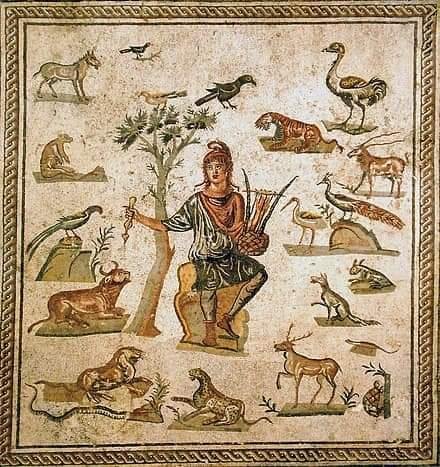
  • Orpheus, a Thracian bard, legendary musician, and prophet, is a prominent figure in ancient Greek mythology. Renowned for his musical talents, Orpheus is known for his ability to charm all living things and even stones with his music, as depicted in Orpheus mosaics. According to legend, he embarked on a journey with Jason and the Argonauts in search of the Golden Fleece and famously descended into the underworld of Hades to rescue his beloved wife, Eurydice. Orpheus was also recognized as the ruler of Bistonian Pieria.

    Ancient Greek authors like Strabo and Plutarch highlight Orpheus's Thracian heritage. His stories revolve around his musical prowess, his poignant attempt to bring back Eurydice from the underworld, and his tragic demise at the hands of the maenads of Dionysus, who grew weary of his mourning for Eurydice. Regarded as the archetype of the inspired singer, Orpheus holds significant cultural importance, inspiring various art forms and popular culture expressions such as poetry, film, opera, music, and painting.
    Orpheus, a Thracian bard, legendary musician, and prophet, is a prominent figure in ancient Greek mythology. Renowned for his musical talents, Orpheus is known for his ability to charm all living things and even stones with his music, as depicted in Orpheus mosaics. According to legend, he embarked on a journey with Jason and the Argonauts in search of the Golden Fleece and famously descended into the underworld of Hades to rescue his beloved wife, Eurydice. Orpheus was also recognized as the ruler of Bistonian Pieria. Ancient Greek authors like Strabo and Plutarch highlight Orpheus's Thracian heritage. His stories revolve around his musical prowess, his poignant attempt to bring back Eurydice from the underworld, and his tragic demise at the hands of the maenads of Dionysus, who grew weary of his mourning for Eurydice. Regarded as the archetype of the inspired singer, Orpheus holds significant cultural importance, inspiring various art forms and popular culture expressions such as poetry, film, opera, music, and painting.
    0 Commenti 0 condivisioni