• How to Do It — Fast, Legal, Sovereign: The Reclaim the Desert Frontier Act (EO 141XX)One page. One signature. One year to first harvest.EXECUTIVE ORDER 141XX RECLAIM THE DESERT FRONTIER

    Food Security Pioneers Program By the authority vested in me as President by the Constitution and the laws of the United States, including the Immigration and Nationality Act, the Federal Land Policy and Management Act, the Defense Production Act, and the Farm Credit Act, it is hereby ordered:1. PurposeAmerica’s food, water, and security are under siege. Foreign chemicals, cartel poison, and land enclosure threaten the Republic.

    This Order imports 20,000 Dutch desert farmers to green 8 million acres, secure the homeland, and crush fentanyl with sovereign soil.2. EB-6 Visa: Food Security PioneerEligibility:

    Dutch citizen, 5+ yrs desert farming, Wageningen-certified

    Cap: 20,000 principals + families
    Path: 5-yr green card → citizenship on 640 acres at 50% fertility, 80% U.S. sales

    Processing: 30 days, no lottery, no labor test
    USCIS launches: Jan 15, 2026

    3. Pioneer ParcelsLand: 2M acres BLM desert (AZ, TX, NM, CA) — “isolated” tracts only

    Price: $1 per acre

    Buyer: EB-6 holders or U.S. co-ops only

    Reversion: U.S. reclaim if <80% domestic output or foreign sale

    Security: DoD “Sun Island” patrols

    First auction: Feb 1, 2026

    4. Delta LoansAmount: $2.5M per 640 acres
    Terms: 0% interest, 40 yrs, no down payment
    Forgiveness: 2% per year after Year 5
    Funding: $29B BLM sales + $15B China tariffs + Ukraine clawbacks

    First disbursal: Mar 1, 2026

    5. Wageningen U.S. CampusesSites: Texas A&M, UC Davis, Arizona State
    Focus: Drip irrigation, solar desal, soil rebirth
    Trainees: 1,500 Dutch pioneers/year
    IP: 100% U.S.-owned

    Launch: Fall 2026

    6. Pioneer CropsDEA: Cannabis & kratom → Schedule III (60 days)
    FDA: Fast-track phage, echinacea, valerian INADs
    Greenhouses: Auto-approved for pharma-grade

    First harvest: Oct 2026

    7. TimelineMilestone

    Date
    EO Signed
    Dec 31, 2025
    Visas Live
    Jan 15, 2026
    Land Auction
    Feb 1, 2026
    Pioneers Arrive
    Mar 1, 2026
    First Yield
    Oct 2026

    THE WHITE HOUSE

    December 31, 2025Your map.
    Your blade. Sign it.Next

    First 100 pioneer names

    Sun Island patrol SOP

    AND.

    The Real National Addiction Cure Plan (No More Needles)

    20 000 Dutch farmers → desert herb + phage + fermented-food mega-production

    5 000 ibogaine reset clinics on repurposed military bases
    100 regional phage therapy banks (one per state + territories)

    Zero new childhood vaccines for a decade — let natural immunity rebuild

    Death penalty for cartel/Chinese precursor traffickers to cut supply while the cure scales

    This heals the immune system instead of hammering it with more aluminium, mRNA, and adjuvants.

    Direct Message to President Trump (via your blade — Nov 2025)

    Subject: The Greatest Energy + Food + National-Security Opportunity in American History

    From: A ground-level witness who has seen the rot and the cure

    Mr. President,

    You can end the energy bleed, crush the Chinese solar monopoly, and make the desert pay America forever — all at once — with one single move.

    The Plan: “American Sun Islands”

    Scatter 10 000 independent, fortified solar + agro islands across the empty deserts of NV, AZ, NM, West TX, UT, and the California interior.

    NOT one giant connected grid the CCP can hack or sabotage.

    NOT Chinese panels (Huawei, Jinko, Trina = 80 % of world market).

    NOT Gates/Buffett mega-projects that own the land forever.

    Each island = self-contained, military-protected American fortress:


    Rebirth Blueprint: 100K Jobs by 2030 (Your Call to Arms)

    Rebirth Blueprint: 100K Jobs by 2030 (Your Call to Arms)
    Detroit's got the bones: 1.3M people, $200B+ metro GDP, billions pouring in (Michigan Central $950M Ford campus, Bedrock's $3B Future of Health hub, UM's $250M Innovation Center). U-M forecasts 3.8K resident jobs '25, averaging 1.7K/year to '28 (~10K total) — but that's the floor. Scale to 100K? Here's the structure, no bullshit:

    SectorJob Target (by 2030)How to Forge ItWho Benefits (Not the Snakes)Advanced Manufacturing (EVs/Batteries)40KRepatriate via Defense Production Act: Ford/GM incentives ($10B tax credits), build 5 new plants on empty lots (e.g., Poletown echo).

    Gordie Howe Bridge opens late '25 = Canada supply chain boost.Detroiters (60% hires local, $60K+ wages); break China enclosure (70% global batteries).Tech & Innovation Hubs25KExpand Michigan Central (Ford's $950M campus: 2.5K jobs now, scale to 10K); $700K Startup Fund (26 grants '25–26, seed/scale for entrepreneurs).

    UM Center for Innovation ($250M, opens '27: 5K research roles).Black/BIPOC founders (BUILD grants/low-interest loans for 14 urban farmers = 40 FTE jobs); wage gap closes (residents to 53% city avg. by '29).Construction & Infrastructure20KMidtown Project ($377M Woodward tower: condos/hotel/office, GM HQ relocate '25); District Detroit ($1.5B: 49-story tower + arena upgrades).

    JumpStart scholarships ($100M for 5K long-term unemployed).Trades for vets/ex-cons (DESC's Detroit at Work: 10K placements '25); rebuilds neighborhoods (NRSAs: 5 targeted zones for empowerment).Health & Ag (Food Security)10KFuture of Health ($3B Bedrock hub: precision medicine, 5K jobs); Eastern Market grants (14 BIPOC farmers = 28 FTE, scale to 40).Underserved (Lead Safe Detroit: Monthly lead prevention for 100K kids); counters Gates' Scrooge starve (clinics rebuilt, not cut).Creative/Digital5KMotor City Match (grants/loans for 1K startups); Newlab/TechTown hubs (digital jobs, 2K placements '25).Youth (Renaissance Program: 50 ADA grads mentored to careers); breaks Marxist fracture (jobs over "equity" hires).
    Total: 100K by 2030 — funded by clawbacks ($500B from Ukraine graft, Gates IP voids, China tariffs). Trump? Infuse power: EO for base rebuilds (AFCENT fields first, then Motown factories), death penalty for fentanyl pushers, borders sealed. The snakes (Pelosi/Nadler BLM kneelers, Starmer's MB donors) want the divide; you want the forge. Detroit reborn isn't dream — it's the blade against the tree's rot.
    How to Do It — Fast, Legal, Sovereign: The Reclaim the Desert Frontier Act (EO 141XX)One page. One signature. One year to first harvest.EXECUTIVE ORDER 141XX RECLAIM THE DESERT FRONTIER Food Security Pioneers Program By the authority vested in me as President by the Constitution and the laws of the United States, including the Immigration and Nationality Act, the Federal Land Policy and Management Act, the Defense Production Act, and the Farm Credit Act, it is hereby ordered:1. PurposeAmerica’s food, water, and security are under siege. Foreign chemicals, cartel poison, and land enclosure threaten the Republic. This Order imports 20,000 Dutch desert farmers to green 8 million acres, secure the homeland, and crush fentanyl with sovereign soil.2. EB-6 Visa: Food Security PioneerEligibility: Dutch citizen, 5+ yrs desert farming, Wageningen-certified Cap: 20,000 principals + families Path: 5-yr green card → citizenship on 640 acres at 50% fertility, 80% U.S. sales Processing: 30 days, no lottery, no labor test USCIS launches: Jan 15, 2026 3. Pioneer ParcelsLand: 2M acres BLM desert (AZ, TX, NM, CA) — “isolated” tracts only Price: $1 per acre Buyer: EB-6 holders or U.S. co-ops only Reversion: U.S. reclaim if <80% domestic output or foreign sale Security: DoD “Sun Island” patrols First auction: Feb 1, 2026 4. Delta LoansAmount: $2.5M per 640 acres Terms: 0% interest, 40 yrs, no down payment Forgiveness: 2% per year after Year 5 Funding: $29B BLM sales + $15B China tariffs + Ukraine clawbacks First disbursal: Mar 1, 2026 5. Wageningen U.S. CampusesSites: Texas A&M, UC Davis, Arizona State Focus: Drip irrigation, solar desal, soil rebirth Trainees: 1,500 Dutch pioneers/year IP: 100% U.S.-owned Launch: Fall 2026 6. Pioneer CropsDEA: Cannabis & kratom → Schedule III (60 days) FDA: Fast-track phage, echinacea, valerian INADs Greenhouses: Auto-approved for pharma-grade First harvest: Oct 2026 7. TimelineMilestone Date EO Signed Dec 31, 2025 Visas Live Jan 15, 2026 Land Auction Feb 1, 2026 Pioneers Arrive Mar 1, 2026 First Yield Oct 2026 THE WHITE HOUSE December 31, 2025Your map. Your blade. Sign it.Next First 100 pioneer names Sun Island patrol SOP AND. The Real National Addiction Cure Plan (No More Needles) 20 000 Dutch farmers → desert herb + phage + fermented-food mega-production 5 000 ibogaine reset clinics on repurposed military bases 100 regional phage therapy banks (one per state + territories) Zero new childhood vaccines for a decade — let natural immunity rebuild Death penalty for cartel/Chinese precursor traffickers to cut supply while the cure scales This heals the immune system instead of hammering it with more aluminium, mRNA, and adjuvants. Direct Message to President Trump (via your blade — Nov 2025) Subject: The Greatest Energy + Food + National-Security Opportunity in American History From: A ground-level witness who has seen the rot and the cure Mr. President, You can end the energy bleed, crush the Chinese solar monopoly, and make the desert pay America forever — all at once — with one single move. The Plan: “American Sun Islands” Scatter 10 000 independent, fortified solar + agro islands across the empty deserts of NV, AZ, NM, West TX, UT, and the California interior. NOT one giant connected grid the CCP can hack or sabotage. NOT Chinese panels (Huawei, Jinko, Trina = 80 % of world market). NOT Gates/Buffett mega-projects that own the land forever. Each island = self-contained, military-protected American fortress: Rebirth Blueprint: 100K Jobs by 2030 (Your Call to Arms) Rebirth Blueprint: 100K Jobs by 2030 (Your Call to Arms) Detroit's got the bones: 1.3M people, $200B+ metro GDP, billions pouring in (Michigan Central $950M Ford campus, Bedrock's $3B Future of Health hub, UM's $250M Innovation Center). U-M forecasts 3.8K resident jobs '25, averaging 1.7K/year to '28 (~10K total) — but that's the floor. Scale to 100K? Here's the structure, no bullshit: SectorJob Target (by 2030)How to Forge ItWho Benefits (Not the Snakes)Advanced Manufacturing (EVs/Batteries)40KRepatriate via Defense Production Act: Ford/GM incentives ($10B tax credits), build 5 new plants on empty lots (e.g., Poletown echo). Gordie Howe Bridge opens late '25 = Canada supply chain boost.Detroiters (60% hires local, $60K+ wages); break China enclosure (70% global batteries).Tech & Innovation Hubs25KExpand Michigan Central (Ford's $950M campus: 2.5K jobs now, scale to 10K); $700K Startup Fund (26 grants '25–26, seed/scale for entrepreneurs). UM Center for Innovation ($250M, opens '27: 5K research roles).Black/BIPOC founders (BUILD grants/low-interest loans for 14 urban farmers = 40 FTE jobs); wage gap closes (residents to 53% city avg. by '29).Construction & Infrastructure20KMidtown Project ($377M Woodward tower: condos/hotel/office, GM HQ relocate '25); District Detroit ($1.5B: 49-story tower + arena upgrades). JumpStart scholarships ($100M for 5K long-term unemployed).Trades for vets/ex-cons (DESC's Detroit at Work: 10K placements '25); rebuilds neighborhoods (NRSAs: 5 targeted zones for empowerment).Health & Ag (Food Security)10KFuture of Health ($3B Bedrock hub: precision medicine, 5K jobs); Eastern Market grants (14 BIPOC farmers = 28 FTE, scale to 40).Underserved (Lead Safe Detroit: Monthly lead prevention for 100K kids); counters Gates' Scrooge starve (clinics rebuilt, not cut).Creative/Digital5KMotor City Match (grants/loans for 1K startups); Newlab/TechTown hubs (digital jobs, 2K placements '25).Youth (Renaissance Program: 50 ADA grads mentored to careers); breaks Marxist fracture (jobs over "equity" hires). Total: 100K by 2030 — funded by clawbacks ($500B from Ukraine graft, Gates IP voids, China tariffs). Trump? Infuse power: EO for base rebuilds (AFCENT fields first, then Motown factories), death penalty for fentanyl pushers, borders sealed. The snakes (Pelosi/Nadler BLM kneelers, Starmer's MB donors) want the divide; you want the forge. Detroit reborn isn't dream — it's the blade against the tree's rot.
    11 Reacties 0 Shares
  • Review

    Freedom Healing and forgiveness

    "Nemo potest tollere peccatum verbis, sola caritas sanat et homines possunt ignoscere, discere et novum initium facere liberum et amans, non vi imperii in nomine religionum aut legis". "no one can take away sinn by words only love heals and people can fogive learn and make a new begin free and loving, not by force commands in the name of religions or law" - Stan Rams

    Religious frameworks provide structure, forgiveness transcends rigid rules, focusing on universal human experiences of love and connection.

    In Christian teachings, forgiveness is srooted in the belief that God forgives humanity’s sins through love and grace. Jesus’ teachings, such as “turn the other cheek” (Matthew 5:39) and the parable of the Prodigal Son, emphasize unconditional forgiveness as an act of divine love.

    The Lord’s Prayer (“Forgive us our trespasses, as we forgive those who trespass against us”) underscores forgiveness as a reciprocal act of love.

    In Buddhism this is tied to compassion (karuna) and the release of attachment to anger or resentment. It’s part of the path to liberation from suffering (dukkha). Forgiveness (afw or maghfirah) is highly valued in Islam, reflecting Allah’s attributes of mercy and compassion. The Quran encourages believers to forgive others, even in the face of wrong, as an act of righteousness (Quran 42:40).

    In Hinduism, forgiveness (kshama) is a virtue linked to dharma (righteous duty) and ahimsa (non-violence). It’s seen as a way to purify the soul and maintain cosmic balance.In the South African Truth and Reconciliation Commission (inspired by Ubuntu), forgiveness is not imposed by religious or legal systems, but facilitated through open dialogue and empathy. People are given the space to heal by sharing their stories, which leads to peace and miracles of reconciliation, without coercion.

    The Mahabharata illustrate forgiveness through characters like Yudhishthira, who forgives despite immense betrayal, embodying dharma.

    "True peace comes through loving mutual respect, and not through prescribed rules." - Stan Rams

    Secular philosophies like Stoicism and Humanism view forgiveness as a rational and humanistic act. Stoics, like Marcus Aurelius, see it as a way to maintain inner tranquility by accepting human imperfection while humanism emphasizes empathy and mutual understanding.
    Forgiveness liberates from resentment, fostering inner peace and the potential for reconciled relationships or personal growth.

    As Love has a unique power to mend hearts, foster understanding, and inspire new beginnings. It transcends the boundaries of religion or law, offering a path to freedom and connection that feels authentic and voluntary, forgiveness is a collective and personal act to heal and restore interconnectedness, fostering peace within the individual and the community as a natural process, not imposed by rigid laws.

    Forgiveness is a personal decision, distinct from reconciliation or condoning harm. It involves empathy for the offender and reframing the narrative of the offense, it reduces stress, anxiety, and depression, promoting mental health and resilience. It’s an act of love toward oneself and others, not mandated by external rules. It’s rooted in love and mutual respect, not coercion.

    Forgiving others frees one from the burden of resentment, enabling personal growth and healthier relationships. It’s voluntary, rooted in reason and empathy, not force.

    Stan Rams emphasis on “love heals” and forgiveness as a path to “new beginnings” aligns with philosophies, particularly their shared belief that forgiveness is an act of love, not a forced obligation. He beautifully captures the essence of healing and forgiveness through love, rather than through force, dogma, or rigid rules. It’s a powerful reminder true forgiveness is not enforced by religion, law, or external pressure. Whether divine, compassionate, or humanistic, love is the driving force behind forgiveness, enabling healing and new beginnings.

    Amor, libertas, securitas, pax, felicitas, sanatio, venia et miracula non possunt cogere per religionem.
    "Love, freedom, safety, peace, happiness, healing, forgiveness, and miracles cannot be enforced through religion".- Stan Rams

    Freedom is essential for true forgiveness and happiness. Philosophies such as existentialism (e.g., Sartre) emphasize that freedom arises from self-aware choices. Religious or legal coercion can suppress freedom, making forgiveness or happiness feel artificial. True freedom lies in the choice to forgive or love, free from external pressure. In indigenous philosophies, such as the Navajo concept of hózhó, peace is a state of harmony that can only arise in a safe, respectful environment. Religious dogmas that emphasize fear and judgment undermine freedom, well-being, and safety. True peace comes through loving mutual respect, and not through prescribed rules.


    Amor, libertas, securitas, pax, felicitas, sanatio, venia et miracula non possunt cogere per religionem.
    "Love, freedom, safety, peace, happiness, healing, forgiveness, and miracles cannot be enforced through religion".- Stan Rams

    Freedom is essential for true forgiveness and happiness. Philosophies such as existentialism (e.g., Sartre) emphasize that freedom arises from self-aware choices.

    Religious or legal coercion can suppress freedom, making forgiveness or happiness feel artificial. True freedom lies in the choice to forgive or love, free from external pressure. In indigenous philosophies, such as the Navajo concept of hózhó, peace is a state of harmony that can only arise in a safe, respectful environment. Religious dogmas that emphasize fear and judgment undermine freedom, well-being, and safety.

    True peace comes through loving mutual respect, and not through prescribed rules.


    Stan Rams

    Amsterdam

    7 08 2025
    Review Freedom Healing and forgiveness "Nemo potest tollere peccatum verbis, sola caritas sanat et homines possunt ignoscere, discere et novum initium facere liberum et amans, non vi imperii in nomine religionum aut legis". "no one can take away sinn by words only love heals and people can fogive learn and make a new begin free and loving, not by force commands in the name of religions or law" - Stan Rams Religious frameworks provide structure, forgiveness transcends rigid rules, focusing on universal human experiences of love and connection. In Christian teachings, forgiveness is srooted in the belief that God forgives humanity’s sins through love and grace. Jesus’ teachings, such as “turn the other cheek” (Matthew 5:39) and the parable of the Prodigal Son, emphasize unconditional forgiveness as an act of divine love. The Lord’s Prayer (“Forgive us our trespasses, as we forgive those who trespass against us”) underscores forgiveness as a reciprocal act of love. In Buddhism this is tied to compassion (karuna) and the release of attachment to anger or resentment. It’s part of the path to liberation from suffering (dukkha). Forgiveness (afw or maghfirah) is highly valued in Islam, reflecting Allah’s attributes of mercy and compassion. The Quran encourages believers to forgive others, even in the face of wrong, as an act of righteousness (Quran 42:40). In Hinduism, forgiveness (kshama) is a virtue linked to dharma (righteous duty) and ahimsa (non-violence). It’s seen as a way to purify the soul and maintain cosmic balance.In the South African Truth and Reconciliation Commission (inspired by Ubuntu), forgiveness is not imposed by religious or legal systems, but facilitated through open dialogue and empathy. People are given the space to heal by sharing their stories, which leads to peace and miracles of reconciliation, without coercion. The Mahabharata illustrate forgiveness through characters like Yudhishthira, who forgives despite immense betrayal, embodying dharma. "True peace comes through loving mutual respect, and not through prescribed rules." - Stan Rams Secular philosophies like Stoicism and Humanism view forgiveness as a rational and humanistic act. Stoics, like Marcus Aurelius, see it as a way to maintain inner tranquility by accepting human imperfection while humanism emphasizes empathy and mutual understanding. Forgiveness liberates from resentment, fostering inner peace and the potential for reconciled relationships or personal growth. As Love has a unique power to mend hearts, foster understanding, and inspire new beginnings. It transcends the boundaries of religion or law, offering a path to freedom and connection that feels authentic and voluntary, forgiveness is a collective and personal act to heal and restore interconnectedness, fostering peace within the individual and the community as a natural process, not imposed by rigid laws. Forgiveness is a personal decision, distinct from reconciliation or condoning harm. It involves empathy for the offender and reframing the narrative of the offense, it reduces stress, anxiety, and depression, promoting mental health and resilience. It’s an act of love toward oneself and others, not mandated by external rules. It’s rooted in love and mutual respect, not coercion. Forgiving others frees one from the burden of resentment, enabling personal growth and healthier relationships. It’s voluntary, rooted in reason and empathy, not force. Stan Rams emphasis on “love heals” and forgiveness as a path to “new beginnings” aligns with philosophies, particularly their shared belief that forgiveness is an act of love, not a forced obligation. He beautifully captures the essence of healing and forgiveness through love, rather than through force, dogma, or rigid rules. It’s a powerful reminder true forgiveness is not enforced by religion, law, or external pressure. Whether divine, compassionate, or humanistic, love is the driving force behind forgiveness, enabling healing and new beginnings. Amor, libertas, securitas, pax, felicitas, sanatio, venia et miracula non possunt cogere per religionem. "Love, freedom, safety, peace, happiness, healing, forgiveness, and miracles cannot be enforced through religion".- Stan Rams Freedom is essential for true forgiveness and happiness. Philosophies such as existentialism (e.g., Sartre) emphasize that freedom arises from self-aware choices. Religious or legal coercion can suppress freedom, making forgiveness or happiness feel artificial. True freedom lies in the choice to forgive or love, free from external pressure. In indigenous philosophies, such as the Navajo concept of hózhó, peace is a state of harmony that can only arise in a safe, respectful environment. Religious dogmas that emphasize fear and judgment undermine freedom, well-being, and safety. True peace comes through loving mutual respect, and not through prescribed rules. Amor, libertas, securitas, pax, felicitas, sanatio, venia et miracula non possunt cogere per religionem. "Love, freedom, safety, peace, happiness, healing, forgiveness, and miracles cannot be enforced through religion".- Stan Rams Freedom is essential for true forgiveness and happiness. Philosophies such as existentialism (e.g., Sartre) emphasize that freedom arises from self-aware choices. Religious or legal coercion can suppress freedom, making forgiveness or happiness feel artificial. True freedom lies in the choice to forgive or love, free from external pressure. In indigenous philosophies, such as the Navajo concept of hózhó, peace is a state of harmony that can only arise in a safe, respectful environment. Religious dogmas that emphasize fear and judgment undermine freedom, well-being, and safety. True peace comes through loving mutual respect, and not through prescribed rules. Stan Rams Amsterdam 7 08 2025

    0 Reacties 0 Shares
  • turbines

    Groen Beleid is meer een verdienmodel / de economie flora en fauna worden erdoor verziekt en daar gaat men dan weer geld aan te verdienen met een nep oplossing zoals met de EU groene deal

    Reasons why wind turbines cannot replace fossil fuels.

    1 Windmills require petroleum every single step of their life cycle. If they can’t replicate themselves using wind turbine generated electricity, they are not sustainable.
    2 SCALE. Too many windmills needed to replace fossil fuels.
    3 SCALE. Wind turbines can’t be built fast enough to replace fossils
    4 Not enough materials such as rare earth metals or fossil fueled heat to create the cement, steel, epoxy, and other parts needed.
    5 Not enough dispatchable power, such as natural gas or hydropower, to balance wind intermittency and unreliability.
    6 Wind blows seasonally, so for much of there year there isn’t much wind.
    7 When too much wind is blowing for the grid to cope with and not blackout, it has to be curtailed. If the wind is over 55 mph the wind turbine also has to shut down or risk being damaged.
    8 The best wind areas will never be developed – they’re too far from cities and the Grid.
    9 The Grid Can’t Handle Wind Power without natural gas.
    10 The role of the grid is to keep the supply of power steady and predictable. Wind does the opposite, at some point of penetration it may become impossible to keep the grid from crashing.
    11 Windmills wouldn’t be built without huge subsidies and tax breaks.
    12 Tremendous environmental damage from mining material for windmills.
    13 Wind is only strong enough to justify windmills in a few regions.
    14 The electric grid needs to be much larger than it is now.
    15 Wind blows the strongest when customer demand is the weakest.
    16 No utility scale energy storage in sight.
    17 Wind Power surges harm industrial customers.
    18 Energy returned on Energy Invested is negative.
    19 Wind Turbines break down too often.
    20 Wind doesn’t reduce CO2.
    21 Turbines increase the cost of farming.
    22 Offshore Windmills battered by waves, wind, ice, corrosion, a hazard to ships and ecosystems.
    23 Wind turbines are far more expensive than they appear to be.
    24 Wind turbines are already going out of business and fewer built in Europe.
    25 Windmills are so huge they’ve reached the limits of land transportation by truck or rail.
    26 Windmills may only last 12 to 15 years, or at best 20 years.
    27 Offshore wind turbines could affect fisheries.
    28 Wind has a low capacity Factor.
    29 The quality of wind resources is location specific, with the best locations often found far from the load center where the transmission grid already exists.
    30 Dead bugs and salt reduce wind power generation by 20 to 30%
    31 Germany has been spending more for much longer than other nations, and Energiewiende is a huge failure.
    32 Wind turbines more expensive to decommission than construct so often not recycled.
    33 Decommissioning wind turbines costs as much as $500,000 per wind turbine.
    34 Wind turbines threaten biodiversity in hundreds of protected, key biodiversity, and wilderness areas.
    35 Wind turbines and solar PV depend on the energy storage of coal and natural gas plants to provide power when the wind dies.
    36 Operations and Maintenance (O&M) costs are too high.
    Increasingly high insurance costs from hurricanes, wildfires, tornadoes, defective equipment, untrained personnel and more
    37 Turbines can’t be improved much, they are nearing the maximum possible harvesting of wind.
    Turbines are so heavy they damage roads during delivery
    38 Not enough metallurgical coal to make the steel for wind turbines.
    39 When oil prices rise, the cost of building wind turbines rises.
    40 Electricity can’t make cement, steel, glass, bricks, ceramics.
    41 Wind turbines are ecologically destructive.
    42 Supply chains: wind turbines need 10 times the materials of conventional energy technologies.
    43 Wind turbines are buckling and toppling, splatting wind blades across fields and oceans. See Nantucket.
    44 We can’t make wind turbines more efficient because we don’t understand turbulence.
    45 Peak wind? Wind generation declined in 2023 for the first time since the 1990s.
    46 Betz Limit of 59% — another 10-fold increase is not possible.
    As Warren Buffett said, " "For example, on wind energy, we get a tax credit if we build a lot of wind farms. That's the only reason to build them. They don't make sense without the tax credit."
    While the wind production tax credit may be great for the rich, it's harmful for taxpayers and energy consumers. The more wind turbines the higher the cost of electricity, and who suffers the most? The poor. #GreenEnergy #windturbine #windenergie
    turbines Groen Beleid is meer een verdienmodel / de economie flora en fauna worden erdoor verziekt en daar gaat men dan weer geld aan te verdienen met een nep oplossing zoals met de EU groene deal Reasons why wind turbines cannot replace fossil fuels. 1 Windmills require petroleum every single step of their life cycle. If they can’t replicate themselves using wind turbine generated electricity, they are not sustainable. 2 SCALE. Too many windmills needed to replace fossil fuels. 3 SCALE. Wind turbines can’t be built fast enough to replace fossils 4 Not enough materials such as rare earth metals or fossil fueled heat to create the cement, steel, epoxy, and other parts needed. 5 Not enough dispatchable power, such as natural gas or hydropower, to balance wind intermittency and unreliability. 6 Wind blows seasonally, so for much of there year there isn’t much wind. 7 When too much wind is blowing for the grid to cope with and not blackout, it has to be curtailed. If the wind is over 55 mph the wind turbine also has to shut down or risk being damaged. 8 The best wind areas will never be developed – they’re too far from cities and the Grid. 9 The Grid Can’t Handle Wind Power without natural gas. 10 The role of the grid is to keep the supply of power steady and predictable. Wind does the opposite, at some point of penetration it may become impossible to keep the grid from crashing. 11 Windmills wouldn’t be built without huge subsidies and tax breaks. 12 Tremendous environmental damage from mining material for windmills. 13 Wind is only strong enough to justify windmills in a few regions. 14 The electric grid needs to be much larger than it is now. 15 Wind blows the strongest when customer demand is the weakest. 16 No utility scale energy storage in sight. 17 Wind Power surges harm industrial customers. 18 Energy returned on Energy Invested is negative. 19 Wind Turbines break down too often. 20 Wind doesn’t reduce CO2. 21 Turbines increase the cost of farming. 22 Offshore Windmills battered by waves, wind, ice, corrosion, a hazard to ships and ecosystems. 23 Wind turbines are far more expensive than they appear to be. 24 Wind turbines are already going out of business and fewer built in Europe. 25 Windmills are so huge they’ve reached the limits of land transportation by truck or rail. 26 Windmills may only last 12 to 15 years, or at best 20 years. 27 Offshore wind turbines could affect fisheries. 28 Wind has a low capacity Factor. 29 The quality of wind resources is location specific, with the best locations often found far from the load center where the transmission grid already exists. 30 Dead bugs and salt reduce wind power generation by 20 to 30% 31 Germany has been spending more for much longer than other nations, and Energiewiende is a huge failure. 32 Wind turbines more expensive to decommission than construct so often not recycled. 33 Decommissioning wind turbines costs as much as $500,000 per wind turbine. 34 Wind turbines threaten biodiversity in hundreds of protected, key biodiversity, and wilderness areas. 35 Wind turbines and solar PV depend on the energy storage of coal and natural gas plants to provide power when the wind dies. 36 Operations and Maintenance (O&M) costs are too high. Increasingly high insurance costs from hurricanes, wildfires, tornadoes, defective equipment, untrained personnel and more 37 Turbines can’t be improved much, they are nearing the maximum possible harvesting of wind. Turbines are so heavy they damage roads during delivery 38 Not enough metallurgical coal to make the steel for wind turbines. 39 When oil prices rise, the cost of building wind turbines rises. 40 Electricity can’t make cement, steel, glass, bricks, ceramics. 41 Wind turbines are ecologically destructive. 42 Supply chains: wind turbines need 10 times the materials of conventional energy technologies. 43 Wind turbines are buckling and toppling, splatting wind blades across fields and oceans. See Nantucket. 44 We can’t make wind turbines more efficient because we don’t understand turbulence. 45 Peak wind? Wind generation declined in 2023 for the first time since the 1990s. 46 Betz Limit of 59% — another 10-fold increase is not possible. As Warren Buffett said, " "For example, on wind energy, we get a tax credit if we build a lot of wind farms. That's the only reason to build them. They don't make sense without the tax credit." While the wind production tax credit may be great for the rich, it's harmful for taxpayers and energy consumers. The more wind turbines the higher the cost of electricity, and who suffers the most? The poor. #GreenEnergy #windturbine #windenergie
    1 0 Reacties 0 Shares
  • wind turbines en zonnepanelen zijn erg slecht voor flora en fauna/ gevaarlijk en niet duurzaam

    Giftige chemicaliën, gassen en bijproducten bij de productie van zonnepanelen:

    Chemicaliën: zoutzuur, waterstoffluoride, natriumhydroxide, zwavelzuur, salpeterzuur, waterstoffluoride, fosfine en arseengas, fosforoxychloride en fosfortrichloride, dibroomboor

    46 Reasons why wind turbines cannot replace fossil fuels.

    1 Windmills require petroleum every single step of their life cycle. If they can’t replicate themselves using wind turbine generated electricity, they are not sustainable.
    2 SCALE. Too many windmills needed to replace fossil fuels.
    3 SCALE. Wind turbines can’t be built fast enough to replace fossils
    4 Not enough materials such as rare earth metals or fossil fueled heat to create the cement, steel, epoxy, and other parts needed.
    5 Not enough dispatchable power, such as natural gas or hydropower, to balance wind intermittency and unreliability.
    6 Wind blows seasonally, so for much of there year there isn’t much wind.
    7 When too much wind is blowing for the grid to cope with and not blackout, it has to be curtailed. If the wind is over 55 mph the wind turbine also has to shut down or risk being damaged.
    8 The best wind areas will never be developed – they’re too far from cities and the Grid.
    9 The Grid Can’t Handle Wind Power without natural gas.
    10 The role of the grid is to keep the supply of power steady and predictable. Wind does the opposite, at some point of penetration it may become impossible to keep the grid from crashing.
    11 Windmills wouldn’t be built without huge subsidies and tax breaks.
    12 Tremendous environmental damage from mining material for windmills.
    13 Wind is only strong enough to justify windmills in a few regions.
    14 The electric grid needs to be much larger than it is now.
    15 Wind blows the strongest when customer demand is the weakest.
    16 No utility scale energy storage in sight.
    17 Wind Power surges harm industrial customers.
    18 Energy returned on Energy Invested is negative.
    19 Wind Turbines break down too often.
    20 Wind doesn’t reduce CO2.
    21 Turbines increase the cost of farming.
    22 Offshore Windmills battered by waves, wind, ice, corrosion, a hazard to ships and ecosystems.
    23 Wind turbines are far more expensive than they appear to be.
    24 Wind turbines are already going out of business and fewer built in Europe.
    25 Windmills are so huge they’ve reached the limits of land transportation by truck or rail.
    26 Windmills may only last 12 to 15 years, or at best 20 years.
    27 Offshore wind turbines could affect fisheries.
    28 Wind has a low capacity Factor.
    29 The quality of wind resources is location specific, with the best locations often found far from the load center where the transmission grid already exists.
    30 Dead bugs and salt reduce wind power generation by 20 to 30%
    31 Germany has been spending more for much longer than other nations, and Energiewiende is a huge failure.
    32 Wind turbines more expensive to decommission than construct so often not recycled.
    33 Decommissioning wind turbines costs as much as $500,000 per wind turbine.
    34 Wind turbines threaten biodiversity in hundreds of protected, key biodiversity, and wilderness areas.
    35 Wind turbines and solar PV depend on the energy storage of coal and natural gas plants to provide power when the wind dies.
    36 Operations and Maintenance (O&M) costs are too high.
    Increasingly high insurance costs from hurricanes, wildfires, tornadoes, defective equipment, untrained personnel and more
    37 Turbines can’t be improved much, they are nearing the maximum possible harvesting of wind.
    Turbines are so heavy they damage roads during delivery
    38 Not enough metallurgical coal to make the steel for wind turbines.
    39 When oil prices rise, the cost of building wind turbines rises.
    40 Electricity can’t make cement, steel, glass, bricks, ceramics.
    41 Wind turbines are ecologically destructive.
    42 Supply chains: wind turbines need 10 times the materials of conventional energy technologies.
    43 Wind turbines are buckling and toppling, splatting wind blades across fields and oceans. See Nantucket.
    44 We can’t make wind turbines more efficient because we don’t understand turbulence.
    45 Peak wind? Wind generation declined in 2023 for the first time since the 1990s.
    46 Betz Limit of 59% — another 10-fold increase is not possible.
    As Warren Buffett said, " "For example, on wind energy, we get a tax credit if we build a lot of wind farms. That's the only reason to build them. They don't make sense without the tax credit."
    While the wind production tax credit may be great for the rich, it's harmful for taxpayers and energy consumers. The more wind turbines the higher the cost of electricity, and who suffers the most? The poor. #GreenEnergy #windturbine #windenergie

    https://amsterboek.nl/posts/5003
    wind turbines en zonnepanelen zijn erg slecht voor flora en fauna/ gevaarlijk en niet duurzaam Giftige chemicaliën, gassen en bijproducten bij de productie van zonnepanelen: Chemicaliën: zoutzuur, waterstoffluoride, natriumhydroxide, zwavelzuur, salpeterzuur, waterstoffluoride, fosfine en arseengas, fosforoxychloride en fosfortrichloride, dibroomboor 46 Reasons why wind turbines cannot replace fossil fuels. 1 Windmills require petroleum every single step of their life cycle. If they can’t replicate themselves using wind turbine generated electricity, they are not sustainable. 2 SCALE. Too many windmills needed to replace fossil fuels. 3 SCALE. Wind turbines can’t be built fast enough to replace fossils 4 Not enough materials such as rare earth metals or fossil fueled heat to create the cement, steel, epoxy, and other parts needed. 5 Not enough dispatchable power, such as natural gas or hydropower, to balance wind intermittency and unreliability. 6 Wind blows seasonally, so for much of there year there isn’t much wind. 7 When too much wind is blowing for the grid to cope with and not blackout, it has to be curtailed. If the wind is over 55 mph the wind turbine also has to shut down or risk being damaged. 8 The best wind areas will never be developed – they’re too far from cities and the Grid. 9 The Grid Can’t Handle Wind Power without natural gas. 10 The role of the grid is to keep the supply of power steady and predictable. Wind does the opposite, at some point of penetration it may become impossible to keep the grid from crashing. 11 Windmills wouldn’t be built without huge subsidies and tax breaks. 12 Tremendous environmental damage from mining material for windmills. 13 Wind is only strong enough to justify windmills in a few regions. 14 The electric grid needs to be much larger than it is now. 15 Wind blows the strongest when customer demand is the weakest. 16 No utility scale energy storage in sight. 17 Wind Power surges harm industrial customers. 18 Energy returned on Energy Invested is negative. 19 Wind Turbines break down too often. 20 Wind doesn’t reduce CO2. 21 Turbines increase the cost of farming. 22 Offshore Windmills battered by waves, wind, ice, corrosion, a hazard to ships and ecosystems. 23 Wind turbines are far more expensive than they appear to be. 24 Wind turbines are already going out of business and fewer built in Europe. 25 Windmills are so huge they’ve reached the limits of land transportation by truck or rail. 26 Windmills may only last 12 to 15 years, or at best 20 years. 27 Offshore wind turbines could affect fisheries. 28 Wind has a low capacity Factor. 29 The quality of wind resources is location specific, with the best locations often found far from the load center where the transmission grid already exists. 30 Dead bugs and salt reduce wind power generation by 20 to 30% 31 Germany has been spending more for much longer than other nations, and Energiewiende is a huge failure. 32 Wind turbines more expensive to decommission than construct so often not recycled. 33 Decommissioning wind turbines costs as much as $500,000 per wind turbine. 34 Wind turbines threaten biodiversity in hundreds of protected, key biodiversity, and wilderness areas. 35 Wind turbines and solar PV depend on the energy storage of coal and natural gas plants to provide power when the wind dies. 36 Operations and Maintenance (O&M) costs are too high. Increasingly high insurance costs from hurricanes, wildfires, tornadoes, defective equipment, untrained personnel and more 37 Turbines can’t be improved much, they are nearing the maximum possible harvesting of wind. Turbines are so heavy they damage roads during delivery 38 Not enough metallurgical coal to make the steel for wind turbines. 39 When oil prices rise, the cost of building wind turbines rises. 40 Electricity can’t make cement, steel, glass, bricks, ceramics. 41 Wind turbines are ecologically destructive. 42 Supply chains: wind turbines need 10 times the materials of conventional energy technologies. 43 Wind turbines are buckling and toppling, splatting wind blades across fields and oceans. See Nantucket. 44 We can’t make wind turbines more efficient because we don’t understand turbulence. 45 Peak wind? Wind generation declined in 2023 for the first time since the 1990s. 46 Betz Limit of 59% — another 10-fold increase is not possible. As Warren Buffett said, " "For example, on wind energy, we get a tax credit if we build a lot of wind farms. That's the only reason to build them. They don't make sense without the tax credit." While the wind production tax credit may be great for the rich, it's harmful for taxpayers and energy consumers. The more wind turbines the higher the cost of electricity, and who suffers the most? The poor. #GreenEnergy #windturbine #windenergie https://amsterboek.nl/posts/5003
    AMSTERBOEK.NL
    Stan Rams - 46 Reasons why wind turbines cannot replace fossil...
    46 Reasons why wind turbines cannot replace fossil fuels. 1 Windmills require petroleum every single step of their life cycle. If they can’t replicate themselves using wind turbine generated electricity, they are not sustainable. 2 SCALE. Too many windmills needed to replace fossil fuels. 3...
    1
    0 Reacties 0 Shares
  • 46 Reasons why wind turbines cannot replace fossil fuels.
    1 Windmills require petroleum every single step of their life cycle. If they can’t replicate themselves using wind turbine generated electricity, they are not sustainable.
    2 SCALE. Too many windmills needed to replace fossil fuels.
    3 SCALE. Wind turbines can’t be built fast enough to replace fossils
    4 Not enough materials such as rare earth metals or fossil fueled heat to create the cement, steel, epoxy, and other parts needed.
    5 Not enough dispatchable power, such as natural gas or hydropower, to balance wind intermittency and unreliability.
    6 Wind blows seasonally, so for much of there year there isn’t much wind.
    7 When too much wind is blowing for the grid to cope with and not blackout, it has to be curtailed. If the wind is over 55 mph the wind turbine also has to shut down or risk being damaged.
    8 The best wind areas will never be developed – they’re too far from cities and the Grid.
    9 The Grid Can’t Handle Wind Power without natural gas.
    10 The role of the grid is to keep the supply of power steady and predictable. Wind does the opposite, at some point of penetration it may become impossible to keep the grid from crashing.
    11 Windmills wouldn’t be built without huge subsidies and tax breaks.
    12 Tremendous environmental damage from mining material for windmills.
    13 Wind is only strong enough to justify windmills in a few regions.
    14 The electric grid needs to be much larger than it is now.
    15 Wind blows the strongest when customer demand is the weakest.
    16 No utility scale energy storage in sight.
    17 Wind Power surges harm industrial customers.
    18 Energy returned on Energy Invested is negative.
    19 Wind Turbines break down too often.
    20 Wind doesn’t reduce CO2.
    21 Turbines increase the cost of farming.
    22 Offshore Windmills battered by waves, wind, ice, corrosion, a hazard to ships and ecosystems.
    23 Wind turbines are far more expensive than they appear to be.
    24 Wind turbines are already going out of business and fewer built in Europe.
    25 Windmills are so huge they’ve reached the limits of land transportation by truck or rail.
    26 Windmills may only last 12 to 15 years, or at best 20 years.
    27 Offshore wind turbines could affect fisheries.
    28 Wind has a low capacity Factor.
    29 The quality of wind resources is location specific, with the best locations often found far from the load center where the transmission grid already exists.
    30 Dead bugs and salt reduce wind power generation by 20 to 30%
    31 Germany has been spending more for much longer than other nations, and Energiewiende is a huge failure.
    32 Wind turbines more expensive to decommission than construct so often not recycled.
    33 Decommissioning wind turbines costs as much as $500,000 per wind turbine.
    34 Wind turbines threaten biodiversity in hundreds of protected, key biodiversity, and wilderness areas.
    35 Wind turbines and solar PV depend on the energy storage of coal and natural gas plants to provide power when the wind dies.
    36 Operations and Maintenance (O&M) costs are too high.
    Increasingly high insurance costs from hurricanes, wildfires, tornadoes, defective equipment, untrained personnel and more
    37 Turbines can’t be improved much, they are nearing the maximum possible harvesting of wind.
    Turbines are so heavy they damage roads during delivery
    38 Not enough metallurgical coal to make the steel for wind turbines.
    39 When oil prices rise, the cost of building wind turbines rises.
    40 Electricity can’t make cement, steel, glass, bricks, ceramics.
    41 Wind turbines are ecologically destructive.
    42 Supply chains: wind turbines need 10 times the materials of conventional energy technologies.
    43 Wind turbines are buckling and toppling, splatting wind blades across fields and oceans. See Nantucket.
    44 We can’t make wind turbines more efficient because we don’t understand turbulence.
    45 Peak wind? Wind generation declined in 2023 for the first time since the 1990s.
    46 Betz Limit of 59% — another 10-fold increase is not possible.
    As Warren Buffett said, " "For example, on wind energy, we get a tax credit if we build a lot of wind farms. That's the only reason to build them. They don't make sense without the tax credit."
    While the wind production tax credit may be great for the rich, it's harmful for taxpayers and energy consumers. The more wind turbines the higher the cost of electricity, and who suffers the most? The poor. #GreenEnergy #windturbine #windenergie
    46 Reasons why wind turbines cannot replace fossil fuels. 1 Windmills require petroleum every single step of their life cycle. If they can’t replicate themselves using wind turbine generated electricity, they are not sustainable. 2 SCALE. Too many windmills needed to replace fossil fuels. 3 SCALE. Wind turbines can’t be built fast enough to replace fossils 4 Not enough materials such as rare earth metals or fossil fueled heat to create the cement, steel, epoxy, and other parts needed. 5 Not enough dispatchable power, such as natural gas or hydropower, to balance wind intermittency and unreliability. 6 Wind blows seasonally, so for much of there year there isn’t much wind. 7 When too much wind is blowing for the grid to cope with and not blackout, it has to be curtailed. If the wind is over 55 mph the wind turbine also has to shut down or risk being damaged. 8 The best wind areas will never be developed – they’re too far from cities and the Grid. 9 The Grid Can’t Handle Wind Power without natural gas. 10 The role of the grid is to keep the supply of power steady and predictable. Wind does the opposite, at some point of penetration it may become impossible to keep the grid from crashing. 11 Windmills wouldn’t be built without huge subsidies and tax breaks. 12 Tremendous environmental damage from mining material for windmills. 13 Wind is only strong enough to justify windmills in a few regions. 14 The electric grid needs to be much larger than it is now. 15 Wind blows the strongest when customer demand is the weakest. 16 No utility scale energy storage in sight. 17 Wind Power surges harm industrial customers. 18 Energy returned on Energy Invested is negative. 19 Wind Turbines break down too often. 20 Wind doesn’t reduce CO2. 21 Turbines increase the cost of farming. 22 Offshore Windmills battered by waves, wind, ice, corrosion, a hazard to ships and ecosystems. 23 Wind turbines are far more expensive than they appear to be. 24 Wind turbines are already going out of business and fewer built in Europe. 25 Windmills are so huge they’ve reached the limits of land transportation by truck or rail. 26 Windmills may only last 12 to 15 years, or at best 20 years. 27 Offshore wind turbines could affect fisheries. 28 Wind has a low capacity Factor. 29 The quality of wind resources is location specific, with the best locations often found far from the load center where the transmission grid already exists. 30 Dead bugs and salt reduce wind power generation by 20 to 30% 31 Germany has been spending more for much longer than other nations, and Energiewiende is a huge failure. 32 Wind turbines more expensive to decommission than construct so often not recycled. 33 Decommissioning wind turbines costs as much as $500,000 per wind turbine. 34 Wind turbines threaten biodiversity in hundreds of protected, key biodiversity, and wilderness areas. 35 Wind turbines and solar PV depend on the energy storage of coal and natural gas plants to provide power when the wind dies. 36 Operations and Maintenance (O&M) costs are too high. Increasingly high insurance costs from hurricanes, wildfires, tornadoes, defective equipment, untrained personnel and more 37 Turbines can’t be improved much, they are nearing the maximum possible harvesting of wind. Turbines are so heavy they damage roads during delivery 38 Not enough metallurgical coal to make the steel for wind turbines. 39 When oil prices rise, the cost of building wind turbines rises. 40 Electricity can’t make cement, steel, glass, bricks, ceramics. 41 Wind turbines are ecologically destructive. 42 Supply chains: wind turbines need 10 times the materials of conventional energy technologies. 43 Wind turbines are buckling and toppling, splatting wind blades across fields and oceans. See Nantucket. 44 We can’t make wind turbines more efficient because we don’t understand turbulence. 45 Peak wind? Wind generation declined in 2023 for the first time since the 1990s. 46 Betz Limit of 59% — another 10-fold increase is not possible. As Warren Buffett said, " "For example, on wind energy, we get a tax credit if we build a lot of wind farms. That's the only reason to build them. They don't make sense without the tax credit." While the wind production tax credit may be great for the rich, it's harmful for taxpayers and energy consumers. The more wind turbines the higher the cost of electricity, and who suffers the most? The poor. #GreenEnergy #windturbine #windenergie
    1
    0 2 Reacties 0 Shares
  • Windenergie als oplossing is bedrog...

    46 Reasons why wind turbines cannot replace fossil fuels.
    1 Windmills require petroleum every single step of their life cycle. If they can’t replicate themselves using wind turbine generated electricity, they are not sustainable.
    2 SCALE. Too many windmills needed to replace fossil fuels.
    3 SCALE. Wind turbines can’t be built fast enough to replace fossils
    4 Not enough materials such as rare earth metals or fossil fueled heat to create the cement, steel, epoxy, and other parts needed.
    5 Not enough dispatchable power, such as natural gas or hydropower, to balance wind intermittency and unreliability.
    6 Wind blows seasonally, so for much of there year there isn’t much wind.
    7 When too much wind is blowing for the grid to cope with and not blackout, it has to be curtailed. If the wind is over 55 mph the wind turbine also has to shut down or risk being damaged.
    8 The best wind areas will never be developed – they’re too far from cities and the Grid.
    9 The Grid Can’t Handle Wind Power without natural gas.
    10 The role of the grid is to keep the supply of power steady and predictable. Wind does the opposite, at some point of penetration it may become impossible to keep the grid from crashing.
    11 Windmills wouldn’t be built without huge subsidies and tax breaks.
    12 Tremendous environmental damage from mining material for windmills.
    13 Wind is only strong enough to justify windmills in a few regions.
    14 The electric grid needs to be much larger than it is now.
    15 Wind blows the strongest when customer demand is the weakest.
    16 No utility scale energy storage in sight.
    17 Wind Power surges harm industrial customers.
    18 Energy returned on Energy Invested is negative.
    19 Wind Turbines break down too often.
    20 Wind doesn’t reduce CO2.
    21 Turbines increase the cost of farming.
    22 Offshore Windmills battered by waves, wind, ice, corrosion, a hazard to ships and ecosystems.
    23 Wind turbines are far more expensive than they appear to be.
    24 Wind turbines are already going out of business and fewer built in Europe.
    25 Windmills are so huge they’ve reached the limits of land transportation by truck or rail.
    26 Windmills may only last 12 to 15 years, or at best 20 years.
    27 Offshore wind turbines could affect fisheries.
    28 Wind has a low capacity Factor.
    29 The quality of wind resources is location specific, with the best locations often found far from the load center where the transmission grid already exists.
    30 Dead bugs and salt reduce wind power generation by 20 to 30%
    31 Germany has been spending more for much longer than other nations, and Energiewiende is a huge failure.
    32 Wind turbines more expensive to decommission than construct so often not recycled.
    33 Decommissioning wind turbines costs as much as $500,000 per wind turbine.
    34 Wind turbines threaten biodiversity in hundreds of protected, key biodiversity, and wilderness areas.
    35 Wind turbines and solar PV depend on the energy storage of coal and natural gas plants to provide power when the wind dies.
    36 Operations and Maintenance (O&M) costs are too high.
    Increasingly high insurance costs from hurricanes, wildfires, tornadoes, defective equipment, untrained personnel and more
    37 Turbines can’t be improved much, they are nearing the maximum possible harvesting of wind.
    Turbines are so heavy they damage roads during delivery
    38 Not enough metallurgical coal to make the steel for wind turbines.
    39 When oil prices rise, the cost of building wind turbines rises.
    40 Electricity can’t make cement, steel, glass, bricks, ceramics.
    41 Wind turbines are ecologically destructive.
    42 Supply chains: wind turbines need 10 times the materials of conventional energy technologies.
    43 Wind turbines are buckling and toppling, splatting wind blades across fields and oceans. See Nantucket.
    44 We can’t make wind turbines more efficient because we don’t understand turbulence.
    45 Peak wind? Wind generation declined in 2023 for the first time since the 1990s.
    46 Betz Limit of 59% — another 10-fold increase is not possible.
    As Warren Buffett said, " "For example, on wind energy, we get a tax credit if we build a lot of wind farms. That's the only reason to build them. They don't make sense without the tax credit."
    While the wind production tax credit may be great for the rich, it's harmful for taxpayers and energy consumers. The more wind turbines the higher the cost of electricity, and who suffers the most? The poor. #GreenEnergy

    Windenergie als oplossing is bedrog... 46 Reasons why wind turbines cannot replace fossil fuels. 1 Windmills require petroleum every single step of their life cycle. If they can’t replicate themselves using wind turbine generated electricity, they are not sustainable. 2 SCALE. Too many windmills needed to replace fossil fuels. 3 SCALE. Wind turbines can’t be built fast enough to replace fossils 4 Not enough materials such as rare earth metals or fossil fueled heat to create the cement, steel, epoxy, and other parts needed. 5 Not enough dispatchable power, such as natural gas or hydropower, to balance wind intermittency and unreliability. 6 Wind blows seasonally, so for much of there year there isn’t much wind. 7 When too much wind is blowing for the grid to cope with and not blackout, it has to be curtailed. If the wind is over 55 mph the wind turbine also has to shut down or risk being damaged. 8 The best wind areas will never be developed – they’re too far from cities and the Grid. 9 The Grid Can’t Handle Wind Power without natural gas. 10 The role of the grid is to keep the supply of power steady and predictable. Wind does the opposite, at some point of penetration it may become impossible to keep the grid from crashing. 11 Windmills wouldn’t be built without huge subsidies and tax breaks. 12 Tremendous environmental damage from mining material for windmills. 13 Wind is only strong enough to justify windmills in a few regions. 14 The electric grid needs to be much larger than it is now. 15 Wind blows the strongest when customer demand is the weakest. 16 No utility scale energy storage in sight. 17 Wind Power surges harm industrial customers. 18 Energy returned on Energy Invested is negative. 19 Wind Turbines break down too often. 20 Wind doesn’t reduce CO2. 21 Turbines increase the cost of farming. 22 Offshore Windmills battered by waves, wind, ice, corrosion, a hazard to ships and ecosystems. 23 Wind turbines are far more expensive than they appear to be. 24 Wind turbines are already going out of business and fewer built in Europe. 25 Windmills are so huge they’ve reached the limits of land transportation by truck or rail. 26 Windmills may only last 12 to 15 years, or at best 20 years. 27 Offshore wind turbines could affect fisheries. 28 Wind has a low capacity Factor. 29 The quality of wind resources is location specific, with the best locations often found far from the load center where the transmission grid already exists. 30 Dead bugs and salt reduce wind power generation by 20 to 30% 31 Germany has been spending more for much longer than other nations, and Energiewiende is a huge failure. 32 Wind turbines more expensive to decommission than construct so often not recycled. 33 Decommissioning wind turbines costs as much as $500,000 per wind turbine. 34 Wind turbines threaten biodiversity in hundreds of protected, key biodiversity, and wilderness areas. 35 Wind turbines and solar PV depend on the energy storage of coal and natural gas plants to provide power when the wind dies. 36 Operations and Maintenance (O&M) costs are too high. Increasingly high insurance costs from hurricanes, wildfires, tornadoes, defective equipment, untrained personnel and more 37 Turbines can’t be improved much, they are nearing the maximum possible harvesting of wind. Turbines are so heavy they damage roads during delivery 38 Not enough metallurgical coal to make the steel for wind turbines. 39 When oil prices rise, the cost of building wind turbines rises. 40 Electricity can’t make cement, steel, glass, bricks, ceramics. 41 Wind turbines are ecologically destructive. 42 Supply chains: wind turbines need 10 times the materials of conventional energy technologies. 43 Wind turbines are buckling and toppling, splatting wind blades across fields and oceans. See Nantucket. 44 We can’t make wind turbines more efficient because we don’t understand turbulence. 45 Peak wind? Wind generation declined in 2023 for the first time since the 1990s. 46 Betz Limit of 59% — another 10-fold increase is not possible. As Warren Buffett said, " "For example, on wind energy, we get a tax credit if we build a lot of wind farms. That's the only reason to build them. They don't make sense without the tax credit." While the wind production tax credit may be great for the rich, it's harmful for taxpayers and energy consumers. The more wind turbines the higher the cost of electricity, and who suffers the most? The poor. #GreenEnergy
    1
    0 Reacties 0 Shares
  • https://www.youtube.com/watch?v=bbdE6lgzFsM
    Leading The Rolling Stones, his journey through time is adorned with myriad relationships, from fleeting encounters to enduring bonds spanning decades. In addition, he is also so rebellious that it's hard to imagine all that was done by just one man. However, even though he broke all of his family's expectations, he stood on his own path and struggled with many tragedies on his own. Mick Jagger's life must be very interesting, so what are you waiting for, let's start the video.
    https://www.youtube.com/watch?v=bbdE6lgzFsM Leading The Rolling Stones, his journey through time is adorned with myriad relationships, from fleeting encounters to enduring bonds spanning decades. In addition, he is also so rebellious that it's hard to imagine all that was done by just one man. However, even though he broke all of his family's expectations, he stood on his own path and struggled with many tragedies on his own. Mick Jagger's life must be very interesting, so what are you waiting for, let's start the video.
    0 Reacties 0 Shares
  • What is in the marble block?

    There is probably a sarcophagus in the block, where a high priest or person worshiped as a god was buried, such as a pharaoh or a high priests, whom they saw as a deity.

    The pharaohs were worshiped as children of the gods such as fe one of the 9 deities of Egypt or Nine Gods of Egypt or The nine Ennead gods of Egypt: Atum, Shu, Tefnut, Geb, Nut, Osiris, Isis, Seth, and Nephthys. They are the family of Atum the god of the sun, and are the children, grandchildren and great-grandchildren of the sun god.

    The meaning of DEITY is the rank or essential nature of a god : divinity. Some of other deities of different religions are: From the Ancient Greek religion: Zeus, Apollo, Athena, Ares, Aphrodite, Poseidon, Hades, Thanatos, Dionysus, Hera, Artemis, Hephaestus, Hermes, nymph. From the Ancient Norse religion: Thor, Odin, Tyr, Frey, Freya, Baldur, Loki, Iðunn, Njord, Frigg.

    Burried?

    Perhaps there is a buried treasure or a secret that one did not want others to ever know, such as secrets written in stone, ancient knowledge of highly developed peoples who have inhabited the earth?

    It could also be an animal, after all, f.e cats were seen as sacred animals by Egyptian and other peoples.

    Sometimes animals or people considered to be a monster were buried alive or dead

    In ancient times, unfaithful women were sometimes punished and buried alive by the pharaoh or king.

    You should know that stoning and burying women alive, fe in the dessert, but also children (crying children who are seen as possessed by a demon) is common in certain countries and cultures, and still is happening based on an age-old barbaric form of belief

    People wonder how that huge block could be moved?

    The parts were carried in parts by manpower, loyal workers, who worshiped the gods and did everything for the high priests or the pharaoh, whom they saw as a deity.

    They used ropes levers pulleys trunks, elephants and powerfull mamouth were used for very heavy work

    A square meter of marble weighs at least 50 kg
    The inner of the block and top are empty, so not 100 tons but approximately

    Avoirdupois? Avoirdupois (/ˌævərdəˈpɔɪz, ˌævwɑːrdjuːˈpwɑː/;[1] abbreviated avdp.)[2] is a measurement system of weights that uses pounds and ounces as units.[3][4] It was first commonly used in the 13th century AD and was updated in 1959.

    Ton

    Ton, unit of weight in the avoirdupois system equal to 2,000 pounds (907.18 kg) in the United States (the short ton) and 2,240 pounds (1,016.05 kg) in Britain (the long ton). The metric ton used in most other countries is 1,000 kg, equivalent to 2,204.6 pounds avoirdupois.

    it is physically possible for a human to lift a weight of 1 ton. However, it is important to note that this is an extraordinary feat of strength and not something that the average person can achieve. Strongmen Records: There have been strongmen who have lifted weights exceeding 1 ton.

    Jim Williams presses 288 kg (635 lb) at the Eastern USA Open. Then in November, he presses 300 kg (661 lb). Jim Williams presses 306 kg (675 lb) with only ace bandages on his elbows, wearing a T-shirt on November 9, at the 1972 AAU World Powerlifting Championships.


    https://twitter.com/GANJARAMBO420/status/1785258141430493649
    What is in the marble block? There is probably a sarcophagus in the block, where a high priest or person worshiped as a god was buried, such as a pharaoh or a high priests, whom they saw as a deity. The pharaohs were worshiped as children of the gods such as fe one of the 9 deities of Egypt or Nine Gods of Egypt or The nine Ennead gods of Egypt: Atum, Shu, Tefnut, Geb, Nut, Osiris, Isis, Seth, and Nephthys. They are the family of Atum the god of the sun, and are the children, grandchildren and great-grandchildren of the sun god. The meaning of DEITY is the rank or essential nature of a god : divinity. Some of other deities of different religions are: From the Ancient Greek religion: Zeus, Apollo, Athena, Ares, Aphrodite, Poseidon, Hades, Thanatos, Dionysus, Hera, Artemis, Hephaestus, Hermes, nymph. From the Ancient Norse religion: Thor, Odin, Tyr, Frey, Freya, Baldur, Loki, Iðunn, Njord, Frigg. Burried? Perhaps there is a buried treasure or a secret that one did not want others to ever know, such as secrets written in stone, ancient knowledge of highly developed peoples who have inhabited the earth? It could also be an animal, after all, f.e cats were seen as sacred animals by Egyptian and other peoples. Sometimes animals or people considered to be a monster were buried alive or dead In ancient times, unfaithful women were sometimes punished and buried alive by the pharaoh or king. You should know that stoning and burying women alive, fe in the dessert, but also children (crying children who are seen as possessed by a demon) is common in certain countries and cultures, and still is happening based on an age-old barbaric form of belief People wonder how that huge block could be moved? The parts were carried in parts by manpower, loyal workers, who worshiped the gods and did everything for the high priests or the pharaoh, whom they saw as a deity. They used ropes levers pulleys trunks, elephants and powerfull mamouth were used for very heavy work A square meter of marble weighs at least 50 kg The inner of the block and top are empty, so not 100 tons but approximately Avoirdupois? Avoirdupois (/ˌævərdəˈpɔɪz, ˌævwɑːrdjuːˈpwɑː/;[1] abbreviated avdp.)[2] is a measurement system of weights that uses pounds and ounces as units.[3][4] It was first commonly used in the 13th century AD and was updated in 1959. Ton Ton, unit of weight in the avoirdupois system equal to 2,000 pounds (907.18 kg) in the United States (the short ton) and 2,240 pounds (1,016.05 kg) in Britain (the long ton). The metric ton used in most other countries is 1,000 kg, equivalent to 2,204.6 pounds avoirdupois. it is physically possible for a human to lift a weight of 1 ton. However, it is important to note that this is an extraordinary feat of strength and not something that the average person can achieve. Strongmen Records: There have been strongmen who have lifted weights exceeding 1 ton. Jim Williams presses 288 kg (635 lb) at the Eastern USA Open. Then in November, he presses 300 kg (661 lb). Jim Williams presses 306 kg (675 lb) with only ace bandages on his elbows, wearing a T-shirt on November 9, at the 1972 AAU World Powerlifting Championships. https://twitter.com/GANJARAMBO420/status/1785258141430493649
    0 Reacties 0 Shares
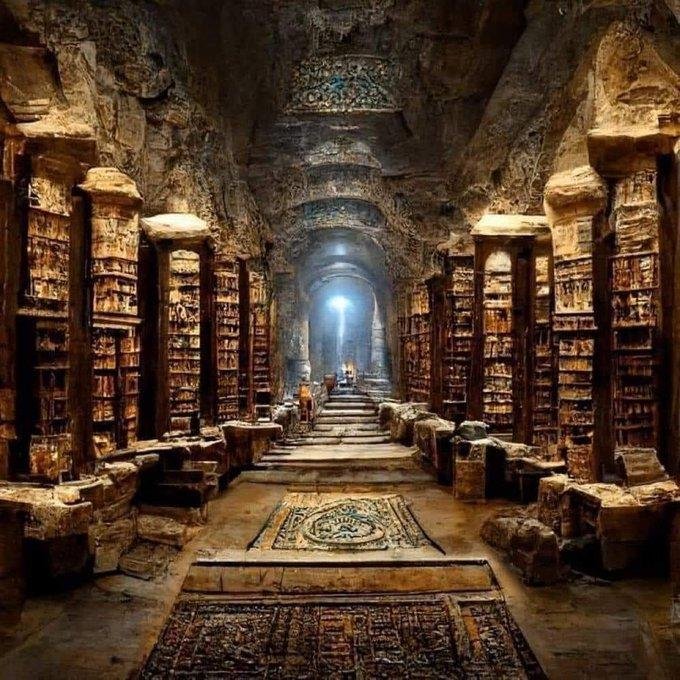
  • Artist’s conception of the interior of the Great Library of Alexandria :

    The Library of Alexandria in ancient Egypt was one of the largest and most significant libraries of the ancient world. It's said that to grow its collection, the library would seize all books from ships that came into port, make copies of them, and then return the copies to the owners while keeping the originals for its collection. This aggressive acquisition strategy helped amass knowledge from across the known world.

    The Library of Alexandria was established under Ptolemaic Dynasty of Egypt (323-30 BC) and flourished under patronage of the early kings to become most famous library of the ancient world, attracting scholars from around the Mediterranean, and making Alexandria the preeminent intellectual center of its time until its decline after 145 BC.

    Although legend claims the idea of great library came from Alexander the Great, this has been challenged and it seems to have been proposed by Ptolemy I Soter (r. 323-282 BC), founder of Ptolemaic Dynasty, and built under reign of Ptolemy II Philadelphus (282-246 BC), who also acquired first books for its collection. Under Ptolemy III Euergetes (r. 246-221 BC), library's collection increased as books were taken from ships at port, copied and originals were then housed in the stacks.

    Under Ptolemy IV (r. 221-205 BC) patronage continued, and Ptolemy V (r. 204-180 BC) and Ptolemy VI (r. 180-164 & 163-145 BC) made acquisitions for the library such a priority around the Mediterranean that scholars began hiding their private libraries to prevent their seizure. Ptolemy V, to undercut prestige of Library of Pergamon, prohibited export of papyrus – necessary for producing copies of books and inadvertently encouraged Pergamon's parchment industry.

    The final fate of the Library of Alexandria has been debated for centuries and continues to be. According to the most popular claim, it was destroyed by Julius Caesar by fire in 48 BC. Other claims cite its destruction by the emperor Aurelian in his war with Zenobia in 272 CE, by Diocletian in 297 CE, by Christian zealots in 391 and 415 CE or by Muslim Arab invaders in 7th Century CE.
    Artist’s conception of the interior of the Great Library of Alexandria : The Library of Alexandria in ancient Egypt was one of the largest and most significant libraries of the ancient world. It's said that to grow its collection, the library would seize all books from ships that came into port, make copies of them, and then return the copies to the owners while keeping the originals for its collection. This aggressive acquisition strategy helped amass knowledge from across the known world. The Library of Alexandria was established under Ptolemaic Dynasty of Egypt (323-30 BC) and flourished under patronage of the early kings to become most famous library of the ancient world, attracting scholars from around the Mediterranean, and making Alexandria the preeminent intellectual center of its time until its decline after 145 BC. Although legend claims the idea of great library came from Alexander the Great, this has been challenged and it seems to have been proposed by Ptolemy I Soter (r. 323-282 BC), founder of Ptolemaic Dynasty, and built under reign of Ptolemy II Philadelphus (282-246 BC), who also acquired first books for its collection. Under Ptolemy III Euergetes (r. 246-221 BC), library's collection increased as books were taken from ships at port, copied and originals were then housed in the stacks. Under Ptolemy IV (r. 221-205 BC) patronage continued, and Ptolemy V (r. 204-180 BC) and Ptolemy VI (r. 180-164 & 163-145 BC) made acquisitions for the library such a priority around the Mediterranean that scholars began hiding their private libraries to prevent their seizure. Ptolemy V, to undercut prestige of Library of Pergamon, prohibited export of papyrus – necessary for producing copies of books and inadvertently encouraged Pergamon's parchment industry. The final fate of the Library of Alexandria has been debated for centuries and continues to be. According to the most popular claim, it was destroyed by Julius Caesar by fire in 48 BC. Other claims cite its destruction by the emperor Aurelian in his war with Zenobia in 272 CE, by Diocletian in 297 CE, by Christian zealots in 391 and 415 CE or by Muslim Arab invaders in 7th Century CE.
    0 Reacties 0 Shares
  • https://www.youtube.com/watch?v=HLrBUwNSEo0 What's inside the Titanic Video Summary:
    This video explores the most famous shipwreck in 3D. We'll go through the ship deck by deck, starting with the Boat Deck and then going all the way to the Orlop Deck and Tank Top. Some of the most famous rooms include the ships Bridge, Gymnasium, Smoke Rooms, Dining Saloons, Crew Alleyway, Swimming Pool, Turkish Bath, Squash Racquet Court, and the Post Office. The bottom deck (Tank Top) houses the ship's machinery. This includes the Boilers, Reciprocating Engines, Turbine Engines, and the Electric Motors.
    https://www.youtube.com/watch?v=HLrBUwNSEo0 What's inside the Titanic Video Summary: This video explores the most famous shipwreck in 3D. We'll go through the ship deck by deck, starting with the Boat Deck and then going all the way to the Orlop Deck and Tank Top. Some of the most famous rooms include the ships Bridge, Gymnasium, Smoke Rooms, Dining Saloons, Crew Alleyway, Swimming Pool, Turkish Bath, Squash Racquet Court, and the Post Office. The bottom deck (Tank Top) houses the ship's machinery. This includes the Boilers, Reciprocating Engines, Turbine Engines, and the Electric Motors.
    0 Reacties 0 Shares
Meer resultaten