• AI met Twitter Grok gemaakt fan fantasie verhaal.

    A hero, a musician, and a celestial woman, each with their own unique talents and power, painted with endless love a new legend under the city's ever-watchful neon eyes.

    In the heart of the city, where the neon lights flickered like the dreams of those beneath them, lived three souls intertwined by fate.

    Seraphina, the Hero: With her cloak of midnight and eyes like the dawn, Seraphina was the guardian of the city's night. Her powers, a mix of strength and speed, were born from a meteor shower that had blessed her with celestial energies. She roamed the rooftops, her presence a whisper of justice in the shadows.

    Luna, the Musician: Luna's fingers danced on the strings of her guitar, each note a spell weaving through the smoky air of the underground club where she performed. Her music was magic, a balm for the weary and a call to the adventurous. Her songs told tales of freedom, love, and rebellion, resonating with those who listened, including one particular hero.

    Eleanor, the Woman: Eleanor was neither hero nor performer, but her heart was like a sea of love as vast as all the oceans of the planet. She worked in the library, surrounded by stories, her days filled with the quiet joy of knowledge. But beneath her calm exterior was a longing for something more, an adventure she hadn't yet dared to dream.

    Their paths crossed one stormy night when Seraphina, in pursuit of a notorious thief, took refuge in the very club where Luna was playing. The music pierced through Seraphina's usual focus, her heart syncing with the rhythm, feeling the pull of something beyond her nightly patrols.

    Eleanor, too, had been drawn out by the storm, seeking solace in the melodies that always calmed her soul. She found herself at the same club, the music guiding her to a table near the stage, where she could see Luna's passion in every strum.

    As Luna played, her eyes met Seraphina's, acknowledging the silent guardian among the crowd. After her set, Luna approached Seraphina, curiosity piqued by the hero's presence.

    "You seem like someone who needs a story more than a song," Luna said, her voice as enchanting as her music.

    Seraphina smiled, a rare sight, "Perhaps I do. But stories are found in many places, like the library where a friend of mine works."

    The mention of the library sparked interest in Eleanor, who overheard their conversation. She introduced herself, and the three found themselves sharing stories over coffee as the rain pattered against the windows.

    Their bond grew from that night. Seraphina found comfort in Luna's melodies, a reminder of what she fought for. Luna, inspired by Seraphina's courage, wrote songs that echoed through the city, giving voice to the voiceless. And Eleanor, with her love for stories, became the chronicler of their adventures, her library a sanctuary where they could all retreat from the chaos outside.

    Together, they faced villains, both external and within themselves, turning the city into not just a battleground but a canvas for their shared journey. The hero, the musician, and the woman, each with their own power, painted a new legend under the city's ever-watchful neon eyes.

    Amsterdam

    Grok 24 01 2024
    AI met Twitter Grok gemaakt fan fantasie verhaal. A hero, a musician, and a celestial woman, each with their own unique talents and power, painted with endless love a new legend under the city's ever-watchful neon eyes. In the heart of the city, where the neon lights flickered like the dreams of those beneath them, lived three souls intertwined by fate. Seraphina, the Hero: With her cloak of midnight and eyes like the dawn, Seraphina was the guardian of the city's night. Her powers, a mix of strength and speed, were born from a meteor shower that had blessed her with celestial energies. She roamed the rooftops, her presence a whisper of justice in the shadows. Luna, the Musician: Luna's fingers danced on the strings of her guitar, each note a spell weaving through the smoky air of the underground club where she performed. Her music was magic, a balm for the weary and a call to the adventurous. Her songs told tales of freedom, love, and rebellion, resonating with those who listened, including one particular hero. Eleanor, the Woman: Eleanor was neither hero nor performer, but her heart was like a sea of love as vast as all the oceans of the planet. She worked in the library, surrounded by stories, her days filled with the quiet joy of knowledge. But beneath her calm exterior was a longing for something more, an adventure she hadn't yet dared to dream. Their paths crossed one stormy night when Seraphina, in pursuit of a notorious thief, took refuge in the very club where Luna was playing. The music pierced through Seraphina's usual focus, her heart syncing with the rhythm, feeling the pull of something beyond her nightly patrols. Eleanor, too, had been drawn out by the storm, seeking solace in the melodies that always calmed her soul. She found herself at the same club, the music guiding her to a table near the stage, where she could see Luna's passion in every strum. As Luna played, her eyes met Seraphina's, acknowledging the silent guardian among the crowd. After her set, Luna approached Seraphina, curiosity piqued by the hero's presence. "You seem like someone who needs a story more than a song," Luna said, her voice as enchanting as her music. Seraphina smiled, a rare sight, "Perhaps I do. But stories are found in many places, like the library where a friend of mine works." The mention of the library sparked interest in Eleanor, who overheard their conversation. She introduced herself, and the three found themselves sharing stories over coffee as the rain pattered against the windows. Their bond grew from that night. Seraphina found comfort in Luna's melodies, a reminder of what she fought for. Luna, inspired by Seraphina's courage, wrote songs that echoed through the city, giving voice to the voiceless. And Eleanor, with her love for stories, became the chronicler of their adventures, her library a sanctuary where they could all retreat from the chaos outside. Together, they faced villains, both external and within themselves, turning the city into not just a battleground but a canvas for their shared journey. The hero, the musician, and the woman, each with their own power, painted a new legend under the city's ever-watchful neon eyes. Amsterdam Grok 24 01 2024
    0 Comentários 0 Compartilhamentos
  • Historical Fact:

    In late 1917, when the Bolshevik leader Lenin arrived in Russia by sealed train carriage with German (Sion Sect Jewish) Gold, 90% of his ‘companions’ were of Talmudic heritage.

    Many belonged to various revolutionary & socialist parties, not just the Bolsheviks. They were brought to Russia as a weapon to begin the mass ritual slaughter of Orthodox Christians, latter named ‘The Red Terror’

    Lenin’s carriage:

    1. Abramovich Maya Zelikovna
    2. Aizenbund Meer Kivovich
    3. Armand Inessa Fedorovna
    4. Goberman Mikhail Vulfovich
    5. Grebel'skaya Fanya
    6. Kon Elena Felixovna
    7. Konstantinovich Anna Evgen'evna
    8. Krupskaya Nadezhda Konstantinovna
    9. Lenin (Ulyanov-Blank) Vladimir Ilyich
    10. Linde Johann-Arnold Johannovich
    11. Miringof Elijah Davidovich
    12. Miringof Maria Efimovna
    13. Mortochkina Valentina Sergeevna (wife of Safarov)
    14. Peineson Semen Gershovich
    15. Pogosskaya Bunya Khemovna (with her son Ruvim)
    16. Ravich Sarra Nakumovna
    17. Radek (Sobelson) Karl Bernhardovich
    18. Radomyslskaya Zlata Evnovna
    19. Radomyslsky-Zinoviev (Apfelbaum) Ovsey-Gershen Aronovich
    20. Radomyslsky Stefan Ovseevich
    21. Rivkin Zalman-Berk Oserovich
    22. Rosenblum David Mordukhovich
    23. Safarov (Voldin) Georgy Ivanovich
    24. Skovno Abram Anchilovich
    25. Slyusareva Nadezhda Mikhailovna
    26. Sokolnikov (‘Diamond’) Hirsch Yankelovich
    27. Suliashvili David Sokratovich
    28. Usievich Grigory Alexandrovich
    29. Kharitonov Moses Motkovich
    30. Tskhakaya Mikhail Grigoryevich

    Members of the RSDRP (Russian Social Democratic Labour Party):

    1. Avdeev Ivan Ananevich (with his wife and son)
    2. Akselrod Tovia Leizerovich (with his wife)
    3. Aptekman Joseph Vasilyevich
    4. Asiriani Sosipatr Samsonovich
    5. Astrov (Poves) Isaac Sergeevich
    6. Baugidze Samuel Grigoryevich
    7. Belenky
    8. Belenky Zakhary Davidovich (with his wife and child)
    9. Bogrova Valentina Leonidovna
    10. Bronstein Rosa Abramovna
    11. Vanadze Alexander Semenovich
    12. Voikov (Weiner) Pinkhus Lazarevich
    13. Heronimus Joseph Borisovich
    14. Gershten
    15. Gishvaliner Petr Iosifovich
    16. Gogiashvili Polycarp Davidovich (with his wife and child)
    17. Gokhblit Matvey Iosifovich
    18. Gudovich
    19. Dobrovitsky Zakhary Leibovich
    20. Doidze Solomon Yassevich
    21. Zhviv (Makar) Simeon Moiseevich
    22. Ioffe David Nahumovich (with his wife)
    23. Kogan Vladimir Abramovich
    24. Kogan Israel Iremievich (with his wife and child)
    25. Kopelman
    26. Kristi Mikhail Petrovich
    27. Lebedev (Polyansky) Pavel Ivanovich (with his wife and child)
    28. Levina
    29. Levin Iochim Davidovich
    30. Levitman Liba Berkovna
    31. Lunacharsky Anatoly Vasilyevich
    32. Lyudninskaya
    33. Manevich Abram-Evel Izrailevich (with his wife)
    34. Manuilsky Dmitry Zakharovich
    35. Martov (‘Tsederbaum’, from the Yiddish ‘Keder’) Julian Osipovich
    36. Martynov (Piker) Semen Yulyevich (with his wife and child)
    37. Mgeladze Vlasa Djarismanovich
    38. Movshovich Moshe Solomonovich (with his wife and child)
    39. Muntian Sergey Fedorovich (with wife)
    40. Nazaryev Mikhail Fedorovich
    41. Orzherovsky Mark (with wife and child)
    42. Orlov (Mender) Fedor Ivanovich
    43. Ostashkinskaya Rosa Hirsch-Arapovna
    44. Pevzaya Viktor Vasilyevich
    45. Przhiborovsky Stefan Vladislavovich
    46. Plastinin Nikanor Fedorovich (with wife and child)
    47. Pozin Vladimir Ivanovich
    48. Rabinovich (Skenrer) Pilya Iosifovna
    49. Reitman (with wife and child)
    50. Rosenblum Herman Khaskelovich
    51. Rokhlin Mordkha Vulfovich
    52. Ruzer Leonid Isaakovich (with wife)
    53. Ryazanov (Goldendach) David Borisovich
    54. Sagredo Nicholas Petrovich (with wife)
    55. Sadokaya Iosif Bezhanovich
    56. Semkovsky (Bronstein) Semen Yulyevich (with wife)

    📰📖 Source:
    Newspaper of Vladimir L. Burtsev “The Common Cause" from 14.10.1917 and 16.10.1917. Also published in Oleg Platonov’s ‘Destruction of the Russian Tsardom’, 2013 (Book banned in РФ 🇷🇺) pages 41-48.


    Continued list of Talmudic Yiddish Revolutionaries, who traveled with Lenin by train into Revolutionary Russia:

    57. Sokolinskaya Gitlya Lazarevna (with husband)
    58. Sokolnikova (with child)
    59. Stroeva
    60. Turkin Mikhail Pavlovich
    61. Finkel Moses Adolfovich
    62. Khaperia Konstantin Alexeyevich
    63. Sheikman Aaron Leibovich
    64. Shifrin Natan Kalmanovich
    65. Ehrenburg Ilya Lazarevich

    Members of the ‘Bund’:

    66. Abramovich (Reyn) Rafael Abramovich (with wife and two children)
    67. Alter Estera Israilevna (with child)
    68. Barak
    69. Boltina Lazar Khaimovich
    70. Weinberg Markus Aronovich
    71. Galperin
    72. Diment Lazar Nahumovich
    73. Drankin Vulf Meerovich (with wife and child)
    74. Dreizenstok Anna Meerovna
    75. Zanin Mayrom Monashevich
    76. Idelson Mark Lipmanovich
    77. Ioffe Pinkus Yoselevich
    78. Klavir Lev Solomonovich
    79. Kontorsky Samuil-Srul Davidovich
    80. Levit (Gellert-Levit) Eydel Meerovna (with child)
    81. Lerner David
    82. Lipnin Judah Leybovich
    83. Lyubinsky Mechislav-Abram Osipovich (with wife and child)
    84. Luxemburg Moses Solomonovich
    85. Makhlina Taiva-Zeylik Zelmanovich
    86. Meerovich Movsha Gilelevich
    87. Nakhimzon Meer Itskovich
    88. Pinlis Meer Bentsianovich
    89. Rakov Moses Ilyich
    90. Rosen Khaim Yudovich (with wife)
    91. Svetitsky A.A.
    92. Skeptor Yakov Leybinovich
    93. Slobodsky Valentin Osipovich
    94. Tusenev Isaak Markovich
    95. Hefel Abram Yakovlevich
    96. Zukerstein Solomon Srulovich (with two children)
    97. Sheinberg
    98. Sheinis Iser Khaimovich

    Socialist Revolutionaries (SRs):

    99. Bezzemelny (Ustinov) Alexey Mikhailovich
    100. Belyaeva (Ures) Maria Alexandrovna (with child)
    101. Bobrov (Natanson) Mark Andreevich (with wife V.I. Alexandrovna)
    102. Vesnshtein Israel Aronovich
    103. Vinogradova Elizabeth Ievrovna
    104. Gavronsky Dmitry Osipovich
    105. Dakhlina David Grigorievich (with wife and child)
    106. Kalyan Evgenia Nikolaevna
    107. Klyushin Boris Israilevich (with wife)
    108. Levinzon Meer Abramovich (with wife and child)
    109. Lunkevich Zoe Pavlovna
    110. Perel Revekka
    111. Proshyan Tron Pershovich
    112. Rosenberg Lev Iosifovich (with wife and two children)
    113. Ulyanov Grigory Karlovich
    114. Tendelevich Leonid Abramovich (with wife and two children)
    115. Freifeld Lev Vladimirovich (with wife and child)

    Anarcho-Communists:

    115. Butsevich Alexander Stanislavovich
    116. Vyugin Yakov (with wife and children)
    117. Giterman Abram Moiseevich (with wife and child)
    118. Goldstein Abram Borisovich
    119. Lipdits Olga (with child)
    120. Maximov (Yastrzhembsky) Timofey Fedorovich
    121. Miller Abram Lipovich (with wife and two children)
    122. Rivkin Abram Yakovlevich
    123. Rubinchik Efraim-Abram Aronovich
    124. Segalov Abram Vulfovich (with wife)
    125. Skutelsky Joseph Isaakovich
    126. Toybiseman Vetya Israilevna
    127. Shmulevich Ester Isaakovna
    128. Yustin David

    Social Democrats of the Kingdom of Poland and Lithuania:

    129. Goldblum Rosa Mavrikiyevna
    130. Urban Ernst Ivanovich (with wife and child)
    131. Shuster Ivan Germanovich

    Polish Socialist Party:

    132. Kon Felix Yakovlevich (with daughter and son-in-law)
    133. Lapinsky (Levinson) Meer Abramovich
    134. Shpakovsky Yan-Ignatiy Alexandrovich

    Poale Zion (Workers of Zion):
    135. Volovnina Alassa Ovseevna
    136. Kara

    Socialist Zionists:

    137. Dines Rivka Khaimovna
    138. Rosenberg Lev Iosifovich

    Social Democratic Party of Lithuania:

    139. Martna Mikhail Yuryevich

    Others:

    140. Averbukh Shmul-Leyba Iosifovich
    141. Balabanova Anzhelika Isaakovna
    142. Braginsky Monus Osipovich
    143. Goniandsky Iosif Abramovich
    144. Zifeld Arthur Rudolfovich
    145. Karadzai Georgiy Artemyevich (with wife)
    146. Kimmel Iogan Voldemarovich
    147. Makarova Olga Mikhaylovna
    148. Mararam Elia Evelchevna
    149. Meisner Ivan (with wife and two children)
    The complete extensive list of Jewish and other Shabbos Goy revolutionaries who were ‘injected’ into the Provisional Government run Russia.

    The Tsar, detained, isolated & under arrest is unable to stop these dangerous enemies of Russia/mass murderers from entering the country.

    150. Odoyevsky (Severov) Afanasius Semenovich
    151. Okudzhava Vladimir Stepanovich
    152. Rashkovsky Khaim Punksovich
    153. Slobodsky Solomon Mordkovich
    154. Sokolov Pavel Yakovlevich
    155. Stuchevsky Pavel Vladimirovich
    156. Troyanovsky Konstantin Mikhailovich
    157. Shapiro Mark Leopoldovich.

    "By helping Lenin travel to Russia," wrote the German military leader Erich Ludendorff later, "our government assumed a special responsibility. From a military point of view, this undertaking was justified. Russia had to be brought down."

    Other German statesmen reasoned similarly. The envoy in Copenhagen, Count Brockdorff-Rantzau, advised the government to agree to the passage of Bolshevik functionaries through Germany, as it could be expected that within three months, Russia would undergo a complete collapse and the destruction of its military power. In the end, the German government allowed the Bolsheviks to pass in exchange for a promise to assist in the immediate conclusion of a separate peace.

    The German authorities (most likely convinced by International banking capital) provided Lenin and the group of citizens from a hostile state traveling with him - Bolsheviks, Bundists, and other ‘internationalists’ with a special carriage for the journey to Russia.

    After Lenin and 29 other passengers boarded, three doors of the carriage were sealed, leaving the fourth, rear door open. Accompanying Lenin were his wife Nadezhda Krupskaya and his mistress Inessa Armand, along with close associates Zinoviev, Radek, Safarov, Sokolnikov, and others.

    Shortly afterward, German intelligence services transported an entire poisonous trainload of revolutionaries (90 percent of them (Sion Moloch Temple Sect Jews) through German territory - resolute enemies of the Russian state, who played a terrible role in the history of Russia, becoming a pillar of the anti-Russian Bolshevik regime for many years.

    https://x.com/OCanonist/status/1831979330051969231
    Historical Fact: In late 1917, when the Bolshevik leader Lenin arrived in Russia by sealed train carriage with German (Sion Sect Jewish) Gold, 90% of his ‘companions’ were of Talmudic heritage. Many belonged to various revolutionary & socialist parties, not just the Bolsheviks. They were brought to Russia as a weapon to begin the mass ritual slaughter of Orthodox Christians, latter named ‘The Red Terror’ Lenin’s carriage: 1. Abramovich Maya Zelikovna 2. Aizenbund Meer Kivovich 3. Armand Inessa Fedorovna 4. Goberman Mikhail Vulfovich 5. Grebel'skaya Fanya 6. Kon Elena Felixovna 7. Konstantinovich Anna Evgen'evna 8. Krupskaya Nadezhda Konstantinovna 9. Lenin (Ulyanov-Blank) Vladimir Ilyich 10. Linde Johann-Arnold Johannovich 11. Miringof Elijah Davidovich 12. Miringof Maria Efimovna 13. Mortochkina Valentina Sergeevna (wife of Safarov) 14. Peineson Semen Gershovich 15. Pogosskaya Bunya Khemovna (with her son Ruvim) 16. Ravich Sarra Nakumovna 17. Radek (Sobelson) Karl Bernhardovich 18. Radomyslskaya Zlata Evnovna 19. Radomyslsky-Zinoviev (Apfelbaum) Ovsey-Gershen Aronovich 20. Radomyslsky Stefan Ovseevich 21. Rivkin Zalman-Berk Oserovich 22. Rosenblum David Mordukhovich 23. Safarov (Voldin) Georgy Ivanovich 24. Skovno Abram Anchilovich 25. Slyusareva Nadezhda Mikhailovna 26. Sokolnikov (‘Diamond’) Hirsch Yankelovich 27. Suliashvili David Sokratovich 28. Usievich Grigory Alexandrovich 29. Kharitonov Moses Motkovich 30. Tskhakaya Mikhail Grigoryevich Members of the RSDRP (Russian Social Democratic Labour Party): 1. Avdeev Ivan Ananevich (with his wife and son) 2. Akselrod Tovia Leizerovich (with his wife) 3. Aptekman Joseph Vasilyevich 4. Asiriani Sosipatr Samsonovich 5. Astrov (Poves) Isaac Sergeevich 6. Baugidze Samuel Grigoryevich 7. Belenky 8. Belenky Zakhary Davidovich (with his wife and child) 9. Bogrova Valentina Leonidovna 10. Bronstein Rosa Abramovna 11. Vanadze Alexander Semenovich 12. Voikov (Weiner) Pinkhus Lazarevich 13. Heronimus Joseph Borisovich 14. Gershten 15. Gishvaliner Petr Iosifovich 16. Gogiashvili Polycarp Davidovich (with his wife and child) 17. Gokhblit Matvey Iosifovich 18. Gudovich 19. Dobrovitsky Zakhary Leibovich 20. Doidze Solomon Yassevich 21. Zhviv (Makar) Simeon Moiseevich 22. Ioffe David Nahumovich (with his wife) 23. Kogan Vladimir Abramovich 24. Kogan Israel Iremievich (with his wife and child) 25. Kopelman 26. Kristi Mikhail Petrovich 27. Lebedev (Polyansky) Pavel Ivanovich (with his wife and child) 28. Levina 29. Levin Iochim Davidovich 30. Levitman Liba Berkovna 31. Lunacharsky Anatoly Vasilyevich 32. Lyudninskaya 33. Manevich Abram-Evel Izrailevich (with his wife) 34. Manuilsky Dmitry Zakharovich 35. Martov (‘Tsederbaum’, from the Yiddish ‘Keder’) Julian Osipovich 36. Martynov (Piker) Semen Yulyevich (with his wife and child) 37. Mgeladze Vlasa Djarismanovich 38. Movshovich Moshe Solomonovich (with his wife and child) 39. Muntian Sergey Fedorovich (with wife) 40. Nazaryev Mikhail Fedorovich 41. Orzherovsky Mark (with wife and child) 42. Orlov (Mender) Fedor Ivanovich 43. Ostashkinskaya Rosa Hirsch-Arapovna 44. Pevzaya Viktor Vasilyevich 45. Przhiborovsky Stefan Vladislavovich 46. Plastinin Nikanor Fedorovich (with wife and child) 47. Pozin Vladimir Ivanovich 48. Rabinovich (Skenrer) Pilya Iosifovna 49. Reitman (with wife and child) 50. Rosenblum Herman Khaskelovich 51. Rokhlin Mordkha Vulfovich 52. Ruzer Leonid Isaakovich (with wife) 53. Ryazanov (Goldendach) David Borisovich 54. Sagredo Nicholas Petrovich (with wife) 55. Sadokaya Iosif Bezhanovich 56. Semkovsky (Bronstein) Semen Yulyevich (with wife) 📰📖 Source: Newspaper of Vladimir L. Burtsev “The Common Cause" from 14.10.1917 and 16.10.1917. Also published in Oleg Platonov’s ‘Destruction of the Russian Tsardom’, 2013 (Book banned in РФ 🇷🇺) pages 41-48. Continued list of Talmudic Yiddish Revolutionaries, who traveled with Lenin by train into Revolutionary Russia: 57. Sokolinskaya Gitlya Lazarevna (with husband) 58. Sokolnikova (with child) 59. Stroeva 60. Turkin Mikhail Pavlovich 61. Finkel Moses Adolfovich 62. Khaperia Konstantin Alexeyevich 63. Sheikman Aaron Leibovich 64. Shifrin Natan Kalmanovich 65. Ehrenburg Ilya Lazarevich Members of the ‘Bund’: 66. Abramovich (Reyn) Rafael Abramovich (with wife and two children) 67. Alter Estera Israilevna (with child) 68. Barak 69. Boltina Lazar Khaimovich 70. Weinberg Markus Aronovich 71. Galperin 72. Diment Lazar Nahumovich 73. Drankin Vulf Meerovich (with wife and child) 74. Dreizenstok Anna Meerovna 75. Zanin Mayrom Monashevich 76. Idelson Mark Lipmanovich 77. Ioffe Pinkus Yoselevich 78. Klavir Lev Solomonovich 79. Kontorsky Samuil-Srul Davidovich 80. Levit (Gellert-Levit) Eydel Meerovna (with child) 81. Lerner David 82. Lipnin Judah Leybovich 83. Lyubinsky Mechislav-Abram Osipovich (with wife and child) 84. Luxemburg Moses Solomonovich 85. Makhlina Taiva-Zeylik Zelmanovich 86. Meerovich Movsha Gilelevich 87. Nakhimzon Meer Itskovich 88. Pinlis Meer Bentsianovich 89. Rakov Moses Ilyich 90. Rosen Khaim Yudovich (with wife) 91. Svetitsky A.A. 92. Skeptor Yakov Leybinovich 93. Slobodsky Valentin Osipovich 94. Tusenev Isaak Markovich 95. Hefel Abram Yakovlevich 96. Zukerstein Solomon Srulovich (with two children) 97. Sheinberg 98. Sheinis Iser Khaimovich Socialist Revolutionaries (SRs): 99. Bezzemelny (Ustinov) Alexey Mikhailovich 100. Belyaeva (Ures) Maria Alexandrovna (with child) 101. Bobrov (Natanson) Mark Andreevich (with wife V.I. Alexandrovna) 102. Vesnshtein Israel Aronovich 103. Vinogradova Elizabeth Ievrovna 104. Gavronsky Dmitry Osipovich 105. Dakhlina David Grigorievich (with wife and child) 106. Kalyan Evgenia Nikolaevna 107. Klyushin Boris Israilevich (with wife) 108. Levinzon Meer Abramovich (with wife and child) 109. Lunkevich Zoe Pavlovna 110. Perel Revekka 111. Proshyan Tron Pershovich 112. Rosenberg Lev Iosifovich (with wife and two children) 113. Ulyanov Grigory Karlovich 114. Tendelevich Leonid Abramovich (with wife and two children) 115. Freifeld Lev Vladimirovich (with wife and child) Anarcho-Communists: 115. Butsevich Alexander Stanislavovich 116. Vyugin Yakov (with wife and children) 117. Giterman Abram Moiseevich (with wife and child) 118. Goldstein Abram Borisovich 119. Lipdits Olga (with child) 120. Maximov (Yastrzhembsky) Timofey Fedorovich 121. Miller Abram Lipovich (with wife and two children) 122. Rivkin Abram Yakovlevich 123. Rubinchik Efraim-Abram Aronovich 124. Segalov Abram Vulfovich (with wife) 125. Skutelsky Joseph Isaakovich 126. Toybiseman Vetya Israilevna 127. Shmulevich Ester Isaakovna 128. Yustin David Social Democrats of the Kingdom of Poland and Lithuania: 129. Goldblum Rosa Mavrikiyevna 130. Urban Ernst Ivanovich (with wife and child) 131. Shuster Ivan Germanovich Polish Socialist Party: 132. Kon Felix Yakovlevich (with daughter and son-in-law) 133. Lapinsky (Levinson) Meer Abramovich 134. Shpakovsky Yan-Ignatiy Alexandrovich Poale Zion (Workers of Zion): 135. Volovnina Alassa Ovseevna 136. Kara Socialist Zionists: 137. Dines Rivka Khaimovna 138. Rosenberg Lev Iosifovich Social Democratic Party of Lithuania: 139. Martna Mikhail Yuryevich Others: 140. Averbukh Shmul-Leyba Iosifovich 141. Balabanova Anzhelika Isaakovna 142. Braginsky Monus Osipovich 143. Goniandsky Iosif Abramovich 144. Zifeld Arthur Rudolfovich 145. Karadzai Georgiy Artemyevich (with wife) 146. Kimmel Iogan Voldemarovich 147. Makarova Olga Mikhaylovna 148. Mararam Elia Evelchevna 149. Meisner Ivan (with wife and two children) The complete extensive list of Jewish and other Shabbos Goy revolutionaries who were ‘injected’ into the Provisional Government run Russia. The Tsar, detained, isolated & under arrest is unable to stop these dangerous enemies of Russia/mass murderers from entering the country. 150. Odoyevsky (Severov) Afanasius Semenovich 151. Okudzhava Vladimir Stepanovich 152. Rashkovsky Khaim Punksovich 153. Slobodsky Solomon Mordkovich 154. Sokolov Pavel Yakovlevich 155. Stuchevsky Pavel Vladimirovich 156. Troyanovsky Konstantin Mikhailovich 157. Shapiro Mark Leopoldovich. "By helping Lenin travel to Russia," wrote the German military leader Erich Ludendorff later, "our government assumed a special responsibility. From a military point of view, this undertaking was justified. Russia had to be brought down." Other German statesmen reasoned similarly. The envoy in Copenhagen, Count Brockdorff-Rantzau, advised the government to agree to the passage of Bolshevik functionaries through Germany, as it could be expected that within three months, Russia would undergo a complete collapse and the destruction of its military power. In the end, the German government allowed the Bolsheviks to pass in exchange for a promise to assist in the immediate conclusion of a separate peace. The German authorities (most likely convinced by International banking capital) provided Lenin and the group of citizens from a hostile state traveling with him - Bolsheviks, Bundists, and other ‘internationalists’ with a special carriage for the journey to Russia. After Lenin and 29 other passengers boarded, three doors of the carriage were sealed, leaving the fourth, rear door open. Accompanying Lenin were his wife Nadezhda Krupskaya and his mistress Inessa Armand, along with close associates Zinoviev, Radek, Safarov, Sokolnikov, and others. Shortly afterward, German intelligence services transported an entire poisonous trainload of revolutionaries (90 percent of them (Sion Moloch Temple Sect Jews) through German territory - resolute enemies of the Russian state, who played a terrible role in the history of Russia, becoming a pillar of the anti-Russian Bolshevik regime for many years. https://x.com/OCanonist/status/1831979330051969231

    0 Comentários 0 Compartilhamentos
  • Around 5000 years ago, Sumerians, who lived in ancient Mesopotamia (modern-day Iraq), revolutionized how we perceive and measure time. They developed a sophisticated numerical system based on the number 60, known as the sexagesimal system. This unique system led to the division of an hour into 60 minutes and a minute into 60 seconds, concepts that are still in use today.

    Sumerians' need for precise timekeeping was driven by their agricultural society. Accurate calendars were essential for planting and harvesting crops. They also needed to coordinate their complex religious ceremonies and administrative activities.

    To aid their timekeeping, the Sumerians made significant advancements in astronomy. They observed the movements of celestial bodies and used this knowledge to create a lunar calendar with 12 months, which closely aligned with the agricultural seasons.

    The division of the day into 24 hours, each hour into 60 minutes, and each minute into 60 seconds was a monumental achievement. These divisions were not arbitrary but were designed to be practical and easily divisible, reflecting the Sumerians' advanced understanding of mathematics.

    This innovative approach to time had a profound impact on later civilizations, including the Babylonians, Greeks, and Romans, who adopted and further developed the Sumerian system. The legacy of the Sumerians' timekeeping system is evident in our modern clocks and calendars, demonstrating the enduring influence of their ingenuity on our daily lives.

    Source https://x.com/histories_arch/status/1829142325596938715
    Around 5000 years ago, Sumerians, who lived in ancient Mesopotamia (modern-day Iraq), revolutionized how we perceive and measure time. They developed a sophisticated numerical system based on the number 60, known as the sexagesimal system. This unique system led to the division of an hour into 60 minutes and a minute into 60 seconds, concepts that are still in use today. Sumerians' need for precise timekeeping was driven by their agricultural society. Accurate calendars were essential for planting and harvesting crops. They also needed to coordinate their complex religious ceremonies and administrative activities. To aid their timekeeping, the Sumerians made significant advancements in astronomy. They observed the movements of celestial bodies and used this knowledge to create a lunar calendar with 12 months, which closely aligned with the agricultural seasons. The division of the day into 24 hours, each hour into 60 minutes, and each minute into 60 seconds was a monumental achievement. These divisions were not arbitrary but were designed to be practical and easily divisible, reflecting the Sumerians' advanced understanding of mathematics. This innovative approach to time had a profound impact on later civilizations, including the Babylonians, Greeks, and Romans, who adopted and further developed the Sumerian system. The legacy of the Sumerians' timekeeping system is evident in our modern clocks and calendars, demonstrating the enduring influence of their ingenuity on our daily lives. Source https://x.com/histories_arch/status/1829142325596938715
    1
    0 Comentários 0 Compartilhamentos
  • Antikythera-mechanisme, een oud Grieks handaangedreven planetarium (model van het zonnestelsel), beschreven als het oudst bekende voorbeeld van een analoge computer die decennia van tevoren werd gebruikt om astronomische posities en verduisteringen te voorspellen. Het zou ook kunnen worden gebruikt om de vierjarige cyclus van atletiekspelen te volgen, vergelijkbaar met een Olympiade, de cyclus van de oude Olympische Spelen.

    Dit artefact bevond zich tussen de wrakstukken die in 1901 uit een scheepswrak voor de kust van het Griekse eiland Antikythera waren gehaald. In 1902 werd door archeoloog Valerios Stais vastgesteld dat het een uitrusting bevatte. Het apparaat, gehuisvest in de overblijfselen van een kist met een houten frame met een (onzekere) totale grootte van 34 x 18 x 9 cm, werd gevonden als één klomp, later gescheiden in drie hoofdfragmenten die nu na conserveringsinspanningen in 82 afzonderlijke fragmenten zijn verdeeld. Vier van deze fragmenten bevatten tandwielen, terwijl op veel andere fragmenten inscripties te vinden zijn.

    Het grootste tandwiel heeft een diameter van ongeveer 13 cm en had oorspronkelijk 223 tanden. Al deze fragmenten van het mechanisme worden bewaard in het Nationaal Archeologisch Museum in Athene, samen met reconstructies en replica's, om te laten zien hoe het er mogelijk

    In 2005 gebruikte een team van de Universiteit van Cardiff computerröntgentomografie en scannen met hoge resolutie om fragmenten van het met korst omhulde mechanisme in beeld te brengen en de zwakste inscripties te lezen die ooit de buitenbehuizing bedekten. Dit suggereert dat het 37 in elkaar grijpende bronzen tandwielen had waardoor het de bewegingen van de maan en de zon door de dierenriem kon volgen, verduisteringen kon voorspellen en de onregelmatige baan van de maan kon modelleren, waar de snelheid van de maan hoger is in zijn perigeum dan in zijn hoogtepunt.

    Deze beweging werd in de 2e eeuw voor Christus bestudeerd door astronoom Hipparchus van Rhodos, en hij is mogelijk geraadpleegd bij de constructie van de machine. Er wordt gespeculeerd dat een deel van het mechanisme ontbreekt en dat het de posities van de vijf klassieke planeten berekende. De inscripties werden in 2016 verder ontcijferd, waarbij cijfers werden onthuld die verband hielden met de synodische cycli van Venus en Saturnus.

    Aangenomen wordt dat het instrument is ontworpen en gebouwd door hellenistische wetenschappers en op verschillende manieren gedateerd is rond 87 voor Christus, tussen 150 en 100 voor Christus, of 205 voor Christus. Het moet gebouwd zijn vóór het scheepswrak, dat door meerdere bewijslijnen wordt gedateerd op ongeveer 70-60 v.Chr. In 2022 stelden onderzoekers voor dat de oorspronkelijke kalibratiedatum, en niet de bouwdatum, 23 december 178 voor Christus had kunnen zijn.

    Andere experts stellen 204 v.Chr. voor als een waarschijnlijkere kalibratiedatum. Machines met een vergelijkbare complexiteit verschenen pas weer met de astronomische klokken van Richard van Wallingford in de 14e eeuw.

    Het Antikythera-mechanisme wordt algemeen de eerste bekende analoge computer genoemd. De kwaliteit en complexiteit van de constructie van het mechanisme suggereert dat het tijdens de Hellenistische periode onontdekte voorgangers moet hebben gehad. De constructie ervan was gebaseerd op theorieën over astronomie en wiskunde, ontwikkeld door Griekse astronomen in de 2e eeuw voor Christus, en er wordt geschat dat het eind 2e eeuw voor Christus of begin 1e eeuw voor Christus is gebouwd.

    📷: Antikythera-mechanisme (fragment A – voor en achter); zichtbaar is het grootste tandwiel in het mechanisme, ongeveer 13 cm in diameter.

    Icoon voor Geverifieerd door de community

    https://www.youtube.com/watch?v=UpLcnAIpVRA

    More than 21 centuries ago, a mechanism of fabulous ingenuity was created in Greece, a device capable of indicating exactly how the sky would look for decades to come -- the position of the moon and sun, lunar phases and even eclipses. But this incredible invention would be drowned in the sea and its secret forgotten for two thousand years.

    This video is a tribute from Swiss clock-maker Hublot and film-maker Philippe Nicolet to this device, known as the Antikythera Mechanism, or the world's "first computer". The fragments of the Mechanism were discovered in 1901 by sponge divers near the island of Antikythera. It is kept since then at the National Archaeological Museum in Athens, Greece.

    For more than a century, researchers were trying to understand its functions. Since 2005, a pluridisciplinary research team, the "Antikythera Mechanism Research Project", is studying the Mechanism with the latest high tech available.

    The results of this ongoing research has enabled the construction of many models. Amongst them, the unique mechanism of a watch, designed by Hublot as a tribute to the Mechanism, is incorporating the known functions of this mysterious and fascinating ancient Mechanism.

    A model of the Antikythera Mechanism, built by the Aristotle University in Greece, together with the mechanism of the watch and this film in 3D are featuring in an exhibition about the Mechanism that is taking place in Paris, at the Musée des Arts et Métiers.

    The original fragments of the Mechanism, its main models and the watch designed by Hublot are on display at the National Archaeological Museum in Athens, Greece.


    Antikythera-mechanisme, een oud Grieks handaangedreven planetarium (model van het zonnestelsel), beschreven als het oudst bekende voorbeeld van een analoge computer die decennia van tevoren werd gebruikt om astronomische posities en verduisteringen te voorspellen. Het zou ook kunnen worden gebruikt om de vierjarige cyclus van atletiekspelen te volgen, vergelijkbaar met een Olympiade, de cyclus van de oude Olympische Spelen. Dit artefact bevond zich tussen de wrakstukken die in 1901 uit een scheepswrak voor de kust van het Griekse eiland Antikythera waren gehaald. In 1902 werd door archeoloog Valerios Stais vastgesteld dat het een uitrusting bevatte. Het apparaat, gehuisvest in de overblijfselen van een kist met een houten frame met een (onzekere) totale grootte van 34 x 18 x 9 cm, werd gevonden als één klomp, later gescheiden in drie hoofdfragmenten die nu na conserveringsinspanningen in 82 afzonderlijke fragmenten zijn verdeeld. Vier van deze fragmenten bevatten tandwielen, terwijl op veel andere fragmenten inscripties te vinden zijn. Het grootste tandwiel heeft een diameter van ongeveer 13 cm en had oorspronkelijk 223 tanden. Al deze fragmenten van het mechanisme worden bewaard in het Nationaal Archeologisch Museum in Athene, samen met reconstructies en replica's, om te laten zien hoe het er mogelijk In 2005 gebruikte een team van de Universiteit van Cardiff computerröntgentomografie en scannen met hoge resolutie om fragmenten van het met korst omhulde mechanisme in beeld te brengen en de zwakste inscripties te lezen die ooit de buitenbehuizing bedekten. Dit suggereert dat het 37 in elkaar grijpende bronzen tandwielen had waardoor het de bewegingen van de maan en de zon door de dierenriem kon volgen, verduisteringen kon voorspellen en de onregelmatige baan van de maan kon modelleren, waar de snelheid van de maan hoger is in zijn perigeum dan in zijn hoogtepunt. Deze beweging werd in de 2e eeuw voor Christus bestudeerd door astronoom Hipparchus van Rhodos, en hij is mogelijk geraadpleegd bij de constructie van de machine. Er wordt gespeculeerd dat een deel van het mechanisme ontbreekt en dat het de posities van de vijf klassieke planeten berekende. De inscripties werden in 2016 verder ontcijferd, waarbij cijfers werden onthuld die verband hielden met de synodische cycli van Venus en Saturnus. Aangenomen wordt dat het instrument is ontworpen en gebouwd door hellenistische wetenschappers en op verschillende manieren gedateerd is rond 87 voor Christus, tussen 150 en 100 voor Christus, of 205 voor Christus. Het moet gebouwd zijn vóór het scheepswrak, dat door meerdere bewijslijnen wordt gedateerd op ongeveer 70-60 v.Chr. In 2022 stelden onderzoekers voor dat de oorspronkelijke kalibratiedatum, en niet de bouwdatum, 23 december 178 voor Christus had kunnen zijn. Andere experts stellen 204 v.Chr. voor als een waarschijnlijkere kalibratiedatum. Machines met een vergelijkbare complexiteit verschenen pas weer met de astronomische klokken van Richard van Wallingford in de 14e eeuw. Het Antikythera-mechanisme wordt algemeen de eerste bekende analoge computer genoemd. De kwaliteit en complexiteit van de constructie van het mechanisme suggereert dat het tijdens de Hellenistische periode onontdekte voorgangers moet hebben gehad. De constructie ervan was gebaseerd op theorieën over astronomie en wiskunde, ontwikkeld door Griekse astronomen in de 2e eeuw voor Christus, en er wordt geschat dat het eind 2e eeuw voor Christus of begin 1e eeuw voor Christus is gebouwd. 📷: Antikythera-mechanisme (fragment A – voor en achter); zichtbaar is het grootste tandwiel in het mechanisme, ongeveer 13 cm in diameter. Icoon voor Geverifieerd door de community https://www.youtube.com/watch?v=UpLcnAIpVRA More than 21 centuries ago, a mechanism of fabulous ingenuity was created in Greece, a device capable of indicating exactly how the sky would look for decades to come -- the position of the moon and sun, lunar phases and even eclipses. But this incredible invention would be drowned in the sea and its secret forgotten for two thousand years. This video is a tribute from Swiss clock-maker Hublot and film-maker Philippe Nicolet to this device, known as the Antikythera Mechanism, or the world's "first computer". The fragments of the Mechanism were discovered in 1901 by sponge divers near the island of Antikythera. It is kept since then at the National Archaeological Museum in Athens, Greece. For more than a century, researchers were trying to understand its functions. Since 2005, a pluridisciplinary research team, the "Antikythera Mechanism Research Project", is studying the Mechanism with the latest high tech available. The results of this ongoing research has enabled the construction of many models. Amongst them, the unique mechanism of a watch, designed by Hublot as a tribute to the Mechanism, is incorporating the known functions of this mysterious and fascinating ancient Mechanism. A model of the Antikythera Mechanism, built by the Aristotle University in Greece, together with the mechanism of the watch and this film in 3D are featuring in an exhibition about the Mechanism that is taking place in Paris, at the Musée des Arts et Métiers. The original fragments of the Mechanism, its main models and the watch designed by Hublot are on display at the National Archaeological Museum in Athens, Greece.
    1 Comentários 0 Compartilhamentos
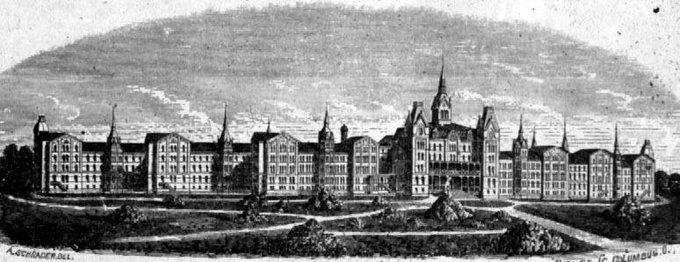
  • Central Ohio Lunatic Asylum.

    1877.

    One of the largest buildings in the world at the time under one roof.

    Old World building turned against us locking up survivors/ dissenters from the reset the genocide on christians by the sion moloch temple sect.
    Central Ohio Lunatic Asylum. 1877. One of the largest buildings in the world at the time under one roof. Old World building turned against us locking up survivors/ dissenters from the reset the genocide on christians by the sion moloch temple sect.
    0 Comentários 0 Compartilhamentos
  • Fake Moon Landings

    In the 1960s landing on the moon was chosen for the great deception show.

    Smart producers decided to fake the landing, do it in a combined way. They would actually organize everything, with rocket launch, lots of engineers in NASA's offices and tv personnel, but the lunar module landing and the walk on the moon would be staged in a studio environment and broadcast from there.

    This way, they could grab billions of dollars of taxpayer money for themselves. The only people who would know the truth would be the three astronauts from the sect and sect members from the studio and the Moloch Sect Leaders.

    The goal of the Moon Fake was to distract the world. The five subsequent missions that "landed" on the moon were all fake and necessary to ensure to pocket even more money.

    People are deceived into believing and because of mass propaganda and well faked pictures and films people believed / strong emotions of pride and achievement are involved ass well.
    Fake Moon Landings In the 1960s landing on the moon was chosen for the great deception show. Smart producers decided to fake the landing, do it in a combined way. They would actually organize everything, with rocket launch, lots of engineers in NASA's offices and tv personnel, but the lunar module landing and the walk on the moon would be staged in a studio environment and broadcast from there. This way, they could grab billions of dollars of taxpayer money for themselves. The only people who would know the truth would be the three astronauts from the sect and sect members from the studio and the Moloch Sect Leaders. The goal of the Moon Fake was to distract the world. The five subsequent missions that "landed" on the moon were all fake and necessary to ensure to pocket even more money. People are deceived into believing and because of mass propaganda and well faked pictures and films people believed / strong emotions of pride and achievement are involved ass well.
    1
    0 Comentários 0 Compartilhamentos
  • https://www.youtube.com/watch?v=Kku8HOnz_dQ&t=6s
    AKAI CS 702 vintage cassette met oproep IVM Angelika Baum

    Video over de vintage AKAI CS-702 1978 met een cassette met muziek van Jacques Brel (La chansons des vieux amants). In 1978 was ik zeer goed bevriend met de Duitse Angelika Baum, van vlak over de grens regio Heerlen Limburg . Zij was toen 22 jaar. Sinds 1978 heb ik haar en vriendin Christel helaas na een ongeluk op de weg in het centrum van Heerlen nooit meer gezien, ondanks vele jaren zoeken tot op heden. Ik hoop dat zij deze video ziet of iemand toch weet waar zij is. Heeft u een tip? Gelieve te mailen naar stan@stanrams.com

    Alvast hartelijk bedankt ! Stan Rams


    liebe Leute. 1978 war ich sehr gut mit Angelika Baum aus der Grenzregion Heerlen-Limburg befreundet. Sie war damals 22 Jahre alt. Leider habe ich nach einem Unfall auf der Straße im Zentrum von Heerlen sie und ihre Freundin Christel seit 1978 trotz jahrelanger Suche bis jetzt nie wieder gesehen. Ich hoffe, sie sieht dieses Video, wenn jemand weiß, wo sie ist. Hast du einen Tipp? Bitte senden Sie eine E-Mail an stan@stanrams.com

    Vielen Dank im Voraus! Stan Rams

    * Filmpje is gemaakt met een Iphone 7 op 30 mei 2022

    Note: You Tube melde dat het stukje muziek dat via de vintage Akai word afgespeeld van Jacques Brel, werd opgemerkt door de muziek uitgever Universal Music Division Barclay via You Tube, maar geen gevolgen heeft voor mijn kanaal. De clip mag dus gedeeld worden maar de melding van YT zet me aan het denken. Een deel van de muziek van Jacques Brel is door mij dan maar gedempt maar daarin stond nu net een stuk poezie van mijzelf. Helaas. Nou zou ik de video beter opnieuw kunnen opnemen dus en mijn eigen muziek eronder zetten! Ik kan er beter mijn eigen muziek en songtekst bij plaatsen waar ik trouwens van You Tube geen cent van krijg al vele jaren zoals de bij mij thuis opgenomen sessies “Glamour Land” “Lamour de la Luna” van ruim een uur op CASIO WK 3300 die met andere muziek van mij op You Tube en op mijn website staat. Er zijn ook remixes zonder commerce attributie en met toestemming van uitgevers. Het gaat mij helemaal niet om geld. Van alle mp3s van mij online, is nooit een eurocent verdiend en ik heb ook nooit iets gekregen aan auteurs rechten voor door mij gecomponeerde en live gespeelde sessies. Ik ben op zoek naar de spoorloos verdwenen jeugdliefde Angelika Baum en hoop ten zeerste dat ik haar terug vind. Merkwaardigerwijze blijkt de muziek van Jacques Brel die op het jaren 78 cassettebandje het nummer “La Chanson des Vieux Amants” te zijn met bij nader onderzoek, een bijzonder mooie tekst die ongelooflijk aansluit op de video boodschap en toeval? bestaat dus echt niet, het moet wel zoiets zoals synchroniteit of kharma zijn , een onverwoordbaar onverklaarbaar mysterie.

    Mijn website: https://stanrams.com
    https://www.youtube.com/watch?v=Kku8HOnz_dQ&t=6s AKAI CS 702 vintage cassette met oproep IVM Angelika Baum Video over de vintage AKAI CS-702 1978 met een cassette met muziek van Jacques Brel (La chansons des vieux amants). In 1978 was ik zeer goed bevriend met de Duitse Angelika Baum, van vlak over de grens regio Heerlen Limburg . Zij was toen 22 jaar. Sinds 1978 heb ik haar en vriendin Christel helaas na een ongeluk op de weg in het centrum van Heerlen nooit meer gezien, ondanks vele jaren zoeken tot op heden. Ik hoop dat zij deze video ziet of iemand toch weet waar zij is. Heeft u een tip? Gelieve te mailen naar stan@stanrams.com Alvast hartelijk bedankt ! Stan Rams liebe Leute. 1978 war ich sehr gut mit Angelika Baum aus der Grenzregion Heerlen-Limburg befreundet. Sie war damals 22 Jahre alt. Leider habe ich nach einem Unfall auf der Straße im Zentrum von Heerlen sie und ihre Freundin Christel seit 1978 trotz jahrelanger Suche bis jetzt nie wieder gesehen. Ich hoffe, sie sieht dieses Video, wenn jemand weiß, wo sie ist. Hast du einen Tipp? Bitte senden Sie eine E-Mail an stan@stanrams.com Vielen Dank im Voraus! Stan Rams * Filmpje is gemaakt met een Iphone 7 op 30 mei 2022 Note: You Tube melde dat het stukje muziek dat via de vintage Akai word afgespeeld van Jacques Brel, werd opgemerkt door de muziek uitgever Universal Music Division Barclay via You Tube, maar geen gevolgen heeft voor mijn kanaal. De clip mag dus gedeeld worden maar de melding van YT zet me aan het denken. Een deel van de muziek van Jacques Brel is door mij dan maar gedempt maar daarin stond nu net een stuk poezie van mijzelf. Helaas. Nou zou ik de video beter opnieuw kunnen opnemen dus en mijn eigen muziek eronder zetten! Ik kan er beter mijn eigen muziek en songtekst bij plaatsen waar ik trouwens van You Tube geen cent van krijg al vele jaren zoals de bij mij thuis opgenomen sessies “Glamour Land” “Lamour de la Luna” van ruim een uur op CASIO WK 3300 die met andere muziek van mij op You Tube en op mijn website staat. Er zijn ook remixes zonder commerce attributie en met toestemming van uitgevers. Het gaat mij helemaal niet om geld. Van alle mp3s van mij online, is nooit een eurocent verdiend en ik heb ook nooit iets gekregen aan auteurs rechten voor door mij gecomponeerde en live gespeelde sessies. Ik ben op zoek naar de spoorloos verdwenen jeugdliefde Angelika Baum en hoop ten zeerste dat ik haar terug vind. Merkwaardigerwijze blijkt de muziek van Jacques Brel die op het jaren 78 cassettebandje het nummer “La Chanson des Vieux Amants” te zijn met bij nader onderzoek, een bijzonder mooie tekst die ongelooflijk aansluit op de video boodschap en toeval? bestaat dus echt niet, het moet wel zoiets zoals synchroniteit of kharma zijn , een onverwoordbaar onverklaarbaar mysterie. Mijn website: https://stanrams.com
    0 Comentários 0 Compartilhamentos
  • These lunatics want to to tell us that we are the most advanced civilization to ever live and that they built the #pyramids with a bunch of Fred Flintstones

    This fact here👇👇 is probably one of the lesser impressive facts about the pyramids

    Whoever built them clearly had superior technology
    These lunatics want to to tell us that we are the most advanced civilization to ever live and that they built the #pyramids with a bunch of Fred Flintstones This fact here👇👇 is probably one of the lesser impressive facts about the pyramids Whoever built them clearly had superior technology
    1
    1 Comentários 0 Compartilhamentos
  • #fluit #dans #mp3 #stanrams #luna lamour de la luna
    #fluit #dans #mp3 #stanrams #luna lamour de la luna
    3 0 Comentários 0 Compartilhamentos
  • #maan #luna #stanrams #mp3
    #maan #luna #stanrams #mp3
    3 0 Comentários 0 Compartilhamentos
Páginas impulsionada