

Sun cross, also called solar cross, sun wheel, is one of oldest symbols, dating back to prehistoric cultures. It has been found around the world and holds different interpretations to various cultures.
It is believed to be one of oldest religious symbol in world, with links to Indian, Asian, American and European religious art from prehistoric ages.
The symbol, and its many variations, have been found around the world. Carvings from the Bronze Age show the solar cross depicted on burial urns, dating back to 1440 BC. It makes appearances on ancient cave walls, in places of worship, on coins, artwork, sculptures and in architecture.
Most basic form of sun cross features an equilateral cross set within a circle. This variation is known as Odin’s cross in Norse culture. It represented Odin, the most powerful of Nordic gods. Interestingly, English word cross is derived from Norse word for this symbol – kros.
Celtic pagan god of thunder, Taranis, was often depicted with a spoked wheel in his hand, often associated with the solar cross. This wheel has been found on Celtic coins and jewelry. The Celtic cross is believed to be a variation of the wheel of Taranis, with the circle in its center believed to represent the sun.
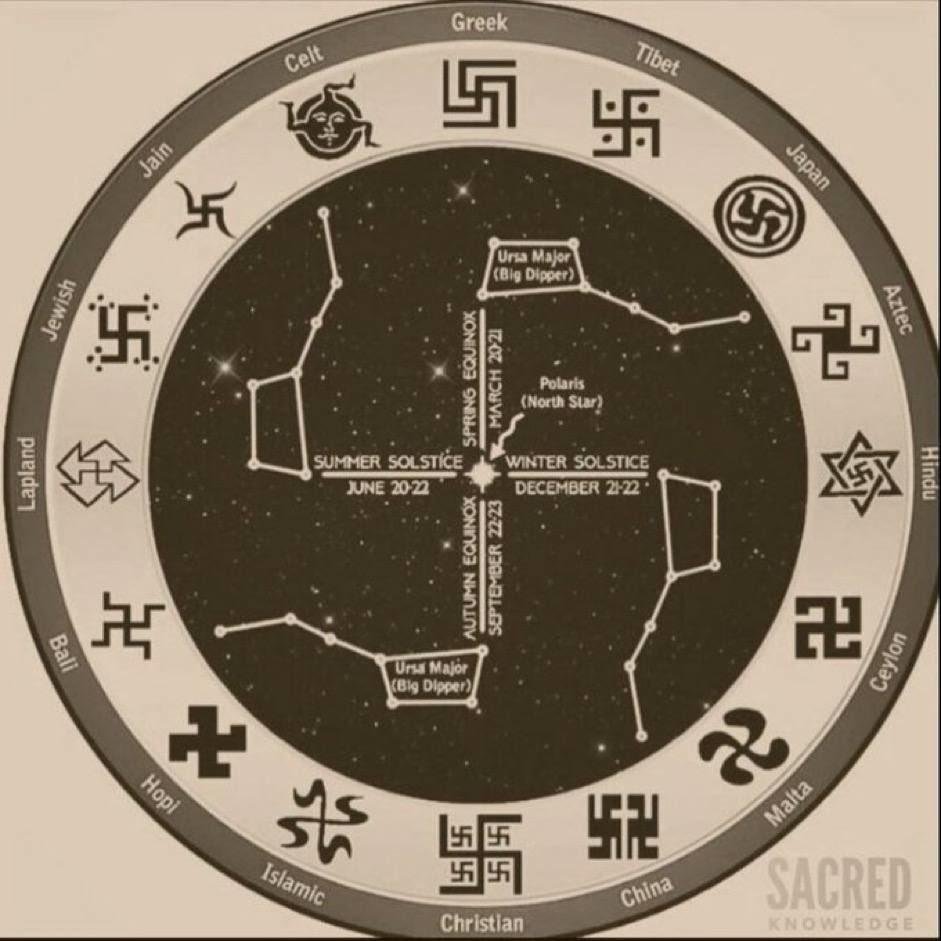
Swastika is a variation of the solar cross, featuring bent arms in a turning motion. This symbol was considered a good luck charm and used around the globe by many cultures, including the Native Americans, until Hitler appropriated it and altered its positive symbolism forever.
It’s a symbol of sun, an object that has been worshipped since ancient times. Belief was that symbol represented chariot wheel of Sun god. Ancient kings in Egypt and elsewhere used this symbol as they saw it as representing highest power – sun. It represents wheel, which gave power, strength and mobility to people and society. In modern astronomy, the solar cross is used as the symbol for the Earth, rather than the sun.
In Christianity, sun cross represents a halo, which is associated with angels and saints. Christians also consider it a symbol of the power of God.
In Neopagan and Wiccan beliefs, the solar cross represents the sun as as the cycle of the four seasons or four directions. It's also considered to represent the four quadrants of the Wheel of the Year, a yearly cycle of seasonal festivals. The solar cross represents the solar calendar, which charts the sun's movements which are marked by the solstices and sometimes by the equinoxes as well.
It is believed to be one of oldest religious symbol in world, with links to Indian, Asian, American and European religious art from prehistoric ages.
The symbol, and its many variations, have been found around the world. Carvings from the Bronze Age show the solar cross depicted on burial urns, dating back to 1440 BC. It makes appearances on ancient cave walls, in places of worship, on coins, artwork, sculptures and in architecture.
Most basic form of sun cross features an equilateral cross set within a circle. This variation is known as Odin’s cross in Norse culture. It represented Odin, the most powerful of Nordic gods. Interestingly, English word cross is derived from Norse word for this symbol – kros.
Celtic pagan god of thunder, Taranis, was often depicted with a spoked wheel in his hand, often associated with the solar cross. This wheel has been found on Celtic coins and jewelry. The Celtic cross is believed to be a variation of the wheel of Taranis, with the circle in its center believed to represent the sun.
Swastika is a variation of the solar cross, featuring bent arms in a turning motion. This symbol was considered a good luck charm and used around the globe by many cultures, including the Native Americans, until Hitler appropriated it and altered its positive symbolism forever.
It’s a symbol of sun, an object that has been worshipped since ancient times. Belief was that symbol represented chariot wheel of Sun god. Ancient kings in Egypt and elsewhere used this symbol as they saw it as representing highest power – sun. It represents wheel, which gave power, strength and mobility to people and society. In modern astronomy, the solar cross is used as the symbol for the Earth, rather than the sun.
In Christianity, sun cross represents a halo, which is associated with angels and saints. Christians also consider it a symbol of the power of God.
In Neopagan and Wiccan beliefs, the solar cross represents the sun as as the cycle of the four seasons or four directions. It's also considered to represent the four quadrants of the Wheel of the Year, a yearly cycle of seasonal festivals. The solar cross represents the solar calendar, which charts the sun's movements which are marked by the solstices and sometimes by the equinoxes as well.
Sun cross, also called solar cross, sun wheel, is one of oldest symbols, dating back to prehistoric cultures. It has been found around the world and holds different interpretations to various cultures.
It is believed to be one of oldest religious symbol in world, with links to Indian, Asian, American and European religious art from prehistoric ages.
The symbol, and its many variations, have been found around the world. Carvings from the Bronze Age show the solar cross depicted on burial urns, dating back to 1440 BC. It makes appearances on ancient cave walls, in places of worship, on coins, artwork, sculptures and in architecture.
Most basic form of sun cross features an equilateral cross set within a circle. This variation is known as Odin’s cross in Norse culture. It represented Odin, the most powerful of Nordic gods. Interestingly, English word cross is derived from Norse word for this symbol – kros.
Celtic pagan god of thunder, Taranis, was often depicted with a spoked wheel in his hand, often associated with the solar cross. This wheel has been found on Celtic coins and jewelry. The Celtic cross is believed to be a variation of the wheel of Taranis, with the circle in its center believed to represent the sun.
Swastika is a variation of the solar cross, featuring bent arms in a turning motion. This symbol was considered a good luck charm and used around the globe by many cultures, including the Native Americans, until Hitler appropriated it and altered its positive symbolism forever.
It’s a symbol of sun, an object that has been worshipped since ancient times. Belief was that symbol represented chariot wheel of Sun god. Ancient kings in Egypt and elsewhere used this symbol as they saw it as representing highest power – sun. It represents wheel, which gave power, strength and mobility to people and society. In modern astronomy, the solar cross is used as the symbol for the Earth, rather than the sun.
In Christianity, sun cross represents a halo, which is associated with angels and saints. Christians also consider it a symbol of the power of God.
In Neopagan and Wiccan beliefs, the solar cross represents the sun as as the cycle of the four seasons or four directions. It's also considered to represent the four quadrants of the Wheel of the Year, a yearly cycle of seasonal festivals. The solar cross represents the solar calendar, which charts the sun's movements which are marked by the solstices and sometimes by the equinoxes as well.

0 Kommentare
0 Anteile

 English
 Arabic
 French
 Spanish
 Portuguese
 Turkish
 Dutch
Dutch
 Italiano
 Russian
 Romaian
 Portuguese (Brazil)
 Greek
Greek