• Nebukadnezar II

    Nebukadnezar II of Nebukadnessar, ook wel Nebukadrezar of Nabuc(h)odonosor,[1] (Akkadisch: 𒀭𒀝𒆪𒁺𒌨𒊑𒋀, mdNabû-kudurrī-ú-ṣu-ur of mdNabû-kudurrī-úṣur,[2] betekent zoveel als "Nabu [god van wijsheid en schrift], bescherm de oudste zoon!" of "Nabu, bescherm de grenzen!") was de machtigste koning van het Nieuw-Babylonische Rijk. Het is (vanuit de chronologie berekend) waarschijnlijk dat de in Herodotos' Historiën (1.74) genoemde Labynetos dezelfde persoon is als Nebukadnezar.

    https://nl.wikipedia.org/wiki/Nebukadnezar_II
    Nebukadnezar II Nebukadnezar II of Nebukadnessar, ook wel Nebukadrezar of Nabuc(h)odonosor,[1] (Akkadisch: 𒀭𒀝𒆪𒁺𒌨𒊑𒋀, mdNabû-kudurrī-ú-ṣu-ur of mdNabû-kudurrī-úṣur,[2] betekent zoveel als "Nabu [god van wijsheid en schrift], bescherm de oudste zoon!" of "Nabu, bescherm de grenzen!") was de machtigste koning van het Nieuw-Babylonische Rijk. Het is (vanuit de chronologie berekend) waarschijnlijk dat de in Herodotos' Historiën (1.74) genoemde Labynetos dezelfde persoon is als Nebukadnezar. https://nl.wikipedia.org/wiki/Nebukadnezar_II
    NL.WIKIPEDIA.ORG
    Nebukadnezar II
    Nebukadnezar II of Nebukadnessar, ook wel Nebukadrezar of Nabuc(h)odonosor, (Akkadisch: 𒀭𒀝𒆪𒁺𒌨𒊑𒋀, mdNabû-kudurrī-ú-ṣu-ur of mdNabû-kudurrī-úṣur, betekent zoveel als "Nabu [god van wijsheid en schrift], bescherm de oudste zoon!" of "Nabu, bescherm de grenzen!") was de machtigste koning van het Nieuw-Babylonische Rijk. Het is (vanuit de chronologie berekend) waarschijnlijk dat de in Herodotos' Historiën (1.74) genoemde Labynetos dezelfde persoon is als Nebukadnezar. Regeerperiode Nebukadnezar was de zoon en opvolger van Nabopolassar en regeerde van 605 tot 562 v.Chr. Als koning van het Nieuw-Babylonische rijk bewees Nebukadnezar een verlicht vorst te zijn. Zo'n 95% van alle ruïnes die gevonden zijn in zijn koninkrijk, zijn gemaakt van bakstenen waar zijn naam op staat. Het lijkt erop dat hij bijna elke stad en elke tempel in het hele land heeft laten bouwen of restaureren. Onder hem werd de hoofdstad Babylon in zijn vroegere luister hersteld. Tot de projecten die hij liet uitvoeren behoorde de herbouw van de tempel van Marduk en de bouw van een paleisburcht…
    0 التعليقات 0 نشر
  • The Babylonian Map of the World with Irving Finkel | Curator’s Corner S9 Ep5

    The Babylonian map of the world is the oldest map of the world, in the world. Written and inscribed on clay in Mesopotamia around 2,900-years-ago, it is, like so many cuneiform tablets, incomplete. However, Irving Finkel and a particularly gifted student of his - Edith Horsley - managed to locate a missing piece of the map, slot it back into the cuneiform tablet, and from there set us all on journey through the somewhat mythical landscape of Mesopotamia to find the final resting place of the ark. And yes we mean that ark, as in Noah's ark. Although in the earlier Mesopotamian version of the flood story, the ark is built by Ziusudra.

    00:00 Intro

    00:52 Ancient Mesopotamian Cuneiform Tablets

    01:48 The oldest map of the world, in the world

    02:07 What is the Babylonian Map of the World?

    02:34 The Babylonian Map of the World explained

    04:13 What are the triangles on the Babylonian Map of the
    World?

    06:17 Missing triangle on the Babylonian Map of the World

    06:52 Edith Horsley - Cuneiform LEGEND

    07:20 Channel 4 News report on Babylonian Map of the World September 1995

    08:32 BABY IRVING!

    09:48 What the missing piece revealed

    11:39 The ark and parsiktu-vessel

    13:22 Mount Ararat and Mount Urartu

    14:18 What does it all mean?

    15:07 Author of Babylonian Map of the World

    17:07 Next episode of Curator's Corner • Archaeologists keep re-excavating this 400...

    https://www.youtube.com/watch?v=LUxFzh8r384
    The Babylonian Map of the World with Irving Finkel | Curator’s Corner S9 Ep5 The Babylonian map of the world is the oldest map of the world, in the world. Written and inscribed on clay in Mesopotamia around 2,900-years-ago, it is, like so many cuneiform tablets, incomplete. However, Irving Finkel and a particularly gifted student of his - Edith Horsley - managed to locate a missing piece of the map, slot it back into the cuneiform tablet, and from there set us all on journey through the somewhat mythical landscape of Mesopotamia to find the final resting place of the ark. And yes we mean that ark, as in Noah's ark. Although in the earlier Mesopotamian version of the flood story, the ark is built by Ziusudra. 00:00 Intro 00:52 Ancient Mesopotamian Cuneiform Tablets 01:48 The oldest map of the world, in the world 02:07 What is the Babylonian Map of the World? 02:34 The Babylonian Map of the World explained 04:13 What are the triangles on the Babylonian Map of the World? 06:17 Missing triangle on the Babylonian Map of the World 06:52 Edith Horsley - Cuneiform LEGEND 07:20 Channel 4 News report on Babylonian Map of the World September 1995 08:32 BABY IRVING! 09:48 What the missing piece revealed 11:39 The ark and parsiktu-vessel 13:22 Mount Ararat and Mount Urartu 14:18 What does it all mean? 15:07 Author of Babylonian Map of the World 17:07 Next episode of Curator's Corner • Archaeologists keep re-excavating this 400... https://www.youtube.com/watch?v=LUxFzh8r384
    1
    0 التعليقات 0 نشر
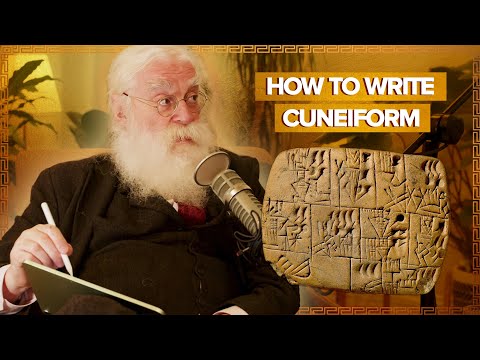
  • Irving Finkel Writes In Ancient Cuneiform

    The Ancients Podcast

    In this episode of The Ancients, Tristan Hughes is joined by Dr Irving Finkel to uncover how cuneiform actually worked and how you would write it yourself.

    More than five thousand years ago, a revolutionary script emerged in the fertile lands of Mesopotamia that would transform how people counted, governed, worshipped and told stories. This was cuneiform, the world’s earliest known writing system.

    From humble beginnings as simple pictograms tracking beer and grain, to the wedge-shaped signs that recorded myths, laws and epic tales long before the Bible, this episode explores how cuneiform spread across Sumer, Babylon, Assyria and Persia — and why these clay tablets remain one of archaeology’s richest windows into the ancient world.


    0:00 Introduction to Cuneiform
    1:40 The Oldest Script Known to Archaeology
    3:10 Sumerian: The Language Without Relatives
    5:05 Akkadian and the Spread of Cuneiform
    8:45 The Behistun Inscription: Unlocking the Code
    13:15 Why Clay? The Ultimate Data Storage
    16:15 From Pictograms to Protocuneiform
    23:55 The Shift to Straight Edges and Wedges
    28:50 Accounting for Beer: Early Tablet Bookkeeping
    37:30 How to Write: The Three Basic Strokes
    38:02 Dr. Finkel Writes Cuneiform
    1:08:00 The Decline and Legacy of the Script

    Presented by Tristan Hughes. Producers are Joseph Knight & McKenna Fernandez, senior producer is Anne-Marie Luff. Editor is Matthew Wilson. Channel manager is Vilde Øksnes.

    https://www.youtube.com/watch?v=kELoypEdMs0
    Irving Finkel Writes In Ancient Cuneiform The Ancients Podcast In this episode of The Ancients, Tristan Hughes is joined by Dr Irving Finkel to uncover how cuneiform actually worked and how you would write it yourself. More than five thousand years ago, a revolutionary script emerged in the fertile lands of Mesopotamia that would transform how people counted, governed, worshipped and told stories. This was cuneiform, the world’s earliest known writing system. From humble beginnings as simple pictograms tracking beer and grain, to the wedge-shaped signs that recorded myths, laws and epic tales long before the Bible, this episode explores how cuneiform spread across Sumer, Babylon, Assyria and Persia — and why these clay tablets remain one of archaeology’s richest windows into the ancient world. 0:00 Introduction to Cuneiform 1:40 The Oldest Script Known to Archaeology 3:10 Sumerian: The Language Without Relatives 5:05 Akkadian and the Spread of Cuneiform 8:45 The Behistun Inscription: Unlocking the Code 13:15 Why Clay? The Ultimate Data Storage 16:15 From Pictograms to Protocuneiform 23:55 The Shift to Straight Edges and Wedges 28:50 Accounting for Beer: Early Tablet Bookkeeping 37:30 How to Write: The Three Basic Strokes 38:02 Dr. Finkel Writes Cuneiform 1:08:00 The Decline and Legacy of the Script Presented by Tristan Hughes. Producers are Joseph Knight & McKenna Fernandez, senior producer is Anne-Marie Luff. Editor is Matthew Wilson. Channel manager is Vilde Øksnes. https://www.youtube.com/watch?v=kELoypEdMs0
    1
    0 التعليقات 0 نشر
  • A Tour of Babylon in 570 BC — Documentary History

    #Babylon #AncientBabylon #570BC

    In 570 BC, the largest and most powerful city on Earth sits on the banks of the Euphrates River in modern-day Iraq.

    Its walls are wide enough for two chariots to race side by side along the top. Its gate is covered in bright blue glazed bricks and golden dragons that no other civilization on Earth can replicate. Its tower rises ninety meters into the sky the structure that will inspire the legend of the Tower of Babel. And every single brick in this city carries the stamped name of the king who built it.

    This is Babylon. Not the myth. Not the metaphor. The real, functioning city at the absolute peak of its power.

    https://www.youtube.com/watch?v=KiZVWFIk-MU
    A Tour of Babylon in 570 BC — Documentary History #Babylon #AncientBabylon #570BC In 570 BC, the largest and most powerful city on Earth sits on the banks of the Euphrates River in modern-day Iraq. Its walls are wide enough for two chariots to race side by side along the top. Its gate is covered in bright blue glazed bricks and golden dragons that no other civilization on Earth can replicate. Its tower rises ninety meters into the sky the structure that will inspire the legend of the Tower of Babel. And every single brick in this city carries the stamped name of the king who built it. This is Babylon. Not the myth. Not the metaphor. The real, functioning city at the absolute peak of its power. https://www.youtube.com/watch?v=KiZVWFIk-MU
    1
    0 التعليقات 0 نشر
  • The Rise and Fall of Babylon: History's Greatest City (2300 - 480 BC)

    Ancient Babylon history — from a tiny town on the Euphrates River to the greatest city of the ancient world. In this history documentary, we trace the rise and fall of the Babylonian empire across nearly two thousand years of Mesopotamia's most dramatic chapter.

    Using historically grounded visuals and cinematic storytelling, this film explores:

    How a nomadic Amorite tribe seized an unremarkable town and turned it into the capital of an empire

    How Hammurabi forgave all debts on his first day as king — and then wrote laws that protected women, children, and slaves millennia before Europe

    Why Babylonian women could divorce their husbands, win in court, and remarry — in the nineteenth century BCE

    How Hammurabi played rival kingdoms against each other for thirty years before launching his conquest of all Mesopotamia

    Why the Assyrian king Sennacherib burned Babylon to the ground, flooded its ruins, and carried away its gods — and how his own sons murdered him for it

    How a Chaldean rebel named Nabopolassar rose from the ashes, crushed the Assyrian empire, and founded a new dynasty

    What Nebuchadnezzar built on top of the destruction — walls wider than the Great Wall of China, the cobalt-blue Ishtar Gate, the ziggurat Etemenanki that inspired the Tower of Babel, and the Hanging Gardens that may never have existed

    How Babylon became the first city in history to reach two hundred thousand people — when Rome was still a village

    Why the Persian conquest and the theft of one statue marked the beginning of the end

    And how the Babylon we know from ruins is not the Babylon that became a legend — but a city built on top of its ghost
    This is not a summary. It is a reconstruction of a civilization.

    https://www.youtube.com/watch?v=N-uVKIstl7M
    The Rise and Fall of Babylon: History's Greatest City (2300 - 480 BC) Ancient Babylon history — from a tiny town on the Euphrates River to the greatest city of the ancient world. In this history documentary, we trace the rise and fall of the Babylonian empire across nearly two thousand years of Mesopotamia's most dramatic chapter. Using historically grounded visuals and cinematic storytelling, this film explores: How a nomadic Amorite tribe seized an unremarkable town and turned it into the capital of an empire How Hammurabi forgave all debts on his first day as king — and then wrote laws that protected women, children, and slaves millennia before Europe Why Babylonian women could divorce their husbands, win in court, and remarry — in the nineteenth century BCE How Hammurabi played rival kingdoms against each other for thirty years before launching his conquest of all Mesopotamia Why the Assyrian king Sennacherib burned Babylon to the ground, flooded its ruins, and carried away its gods — and how his own sons murdered him for it How a Chaldean rebel named Nabopolassar rose from the ashes, crushed the Assyrian empire, and founded a new dynasty What Nebuchadnezzar built on top of the destruction — walls wider than the Great Wall of China, the cobalt-blue Ishtar Gate, the ziggurat Etemenanki that inspired the Tower of Babel, and the Hanging Gardens that may never have existed How Babylon became the first city in history to reach two hundred thousand people — when Rome was still a village Why the Persian conquest and the theft of one statue marked the beginning of the end And how the Babylon we know from ruins is not the Babylon that became a legend — but a city built on top of its ghost This is not a summary. It is a reconstruction of a civilization. https://www.youtube.com/watch?v=N-uVKIstl7M
    0 التعليقات 0 نشر
  • SMTS The Luciferian Sion Moloch Temple Sect / aka Khazarian Mafia (KM / a.k.a. The Synagogue Of Satan) Would Like The World To Believe That all so called "Jews" Are The Only Real Israelites.

    They Cloak Themselves With religion (Judaism) To Hide Their Rituals (#BlackMagik, #Kabbalah & #Witchcraft) & True Babylonian Canaanite Luciferian Satanic Roots (Sacrificing To / Worshipping Luciferian Deities Like Baal, Baphomet, Beelzebub, Hades, Lucifer, Moloch, Satan & The Devil).

    They Invented The Term "Anti-Semitic" To Discredit Any Claim That Attempts To Expose The Fake Jews, False Israelites Or The Khazarian Mafia.

    The People From Israel Claiming To Be "God's Chosen People" Are In Actuality False Israelites That Descend From Canaan, Ashkenaz, Ishmael & Esau.

    In Reality There Are 12 Tribes Of Israel Descending From Adam, Seth, Enoch, Noah, Sem, Abraham, Isaac & Jacob.

    The 12 Tribes Of Israel:
    1⃣ Joseph
    2⃣ Judah
    3⃣ Reuben
    4⃣ Naphtali
    5⃣ Simeon
    6⃣ Gad
    7⃣ Levi
    8⃣ Asher
    9⃣ Dan
    🔟 Zebulon
    1⃣1⃣ Issachar
    1⃣2⃣ Benjamin

    ↙️↙️Read & Share The Full Articles↘️↘️

    🔍"Q Anon Starter Guide & Deep State Connection Maps"

    https://x.com/NotOpCue/status/1711063517497839764
    SMTS The Luciferian Sion Moloch Temple Sect / aka Khazarian Mafia (KM / a.k.a. The Synagogue Of Satan) Would Like The World To Believe That all so called "Jews" Are The Only Real Israelites. They Cloak Themselves With religion (Judaism) To Hide Their Rituals (#BlackMagik, #Kabbalah & #Witchcraft) & True Babylonian Canaanite Luciferian Satanic Roots (Sacrificing To / Worshipping Luciferian Deities Like Baal, Baphomet, Beelzebub, Hades, Lucifer, Moloch, Satan & The Devil). They Invented The Term "Anti-Semitic" To Discredit Any Claim That Attempts To Expose The Fake Jews, False Israelites Or The Khazarian Mafia. The People From Israel Claiming To Be "God's Chosen People" Are In Actuality False Israelites That Descend From Canaan, Ashkenaz, Ishmael & Esau. In Reality There Are 12 Tribes Of Israel Descending From Adam, Seth, Enoch, Noah, Sem, Abraham, Isaac & Jacob. The 12 Tribes Of Israel: 1⃣ Joseph 2⃣ Judah 3⃣ Reuben 4⃣ Naphtali 5⃣ Simeon 6⃣ Gad 7⃣ Levi 8⃣ Asher 9⃣ Dan 🔟 Zebulon 1⃣1⃣ Issachar 1⃣2⃣ Benjamin ↙️↙️Read & Share The Full Articles↘️↘️ 🔍"Q Anon Starter Guide & Deep State Connection Maps" https://x.com/NotOpCue/status/1711063517497839764
    0 التعليقات 0 نشر
  • The Luciferian Khazarian Mafia (KM / a.k.a. The Synagogue Of Satan) Would Like The World To Believe That "Jews" Are The Only Real Israelites.

    They Cloak Themselves With The Jewish Religion (Judaism) To Hide Their Rituals (#BlackMagik, #Kabbalah & #Witchcraft) & True Babylonian Canaanite Luciferian Satanic Roots (Sacrificing To / Worshipping Luciferian Deities Like Baal, Baphomet, Beelzebub, Hades, Lucifer, Moloch, Satan & The Devil).

    They Invented The Term "Anti-Semitic" To Discredit Any Claim That Attempts To Expose The Fake Jews, False Israelites Or The Khazarian Mafia.

    The People From Israel Claiming To Be "God's Chosen People" Are In Actuality False Israelites That Descend From Canaan, Ashkenaz, Ishmael & Esau.

    In Reality There Are 12 Tribes Of Israel Descending From Adam, Seth, Enoch, Noah, Sem, Abraham, Isaac & Jacob.

    The 12 Tribes Of Israel:
    1⃣ Joseph
    2⃣ Judah
    3⃣ Reuben
    4⃣ Naphtali
    5⃣ Simeon
    6⃣ Gad
    7⃣ Levi
    8⃣ Asher
    9⃣ Dan
    🔟 Zebulon
    1⃣1⃣ Issachar
    1⃣2⃣ Benjamin

    ↙️↙️Read & Share The Full Articles↘️↘️

    🔍"Q Anon Starter Guide & Deep State Connection Maps"

    https://x.com/NotOpCue/status/1711063517497839764
    The Luciferian Khazarian Mafia (KM / a.k.a. The Synagogue Of Satan) Would Like The World To Believe That "Jews" Are The Only Real Israelites. They Cloak Themselves With The Jewish Religion (Judaism) To Hide Their Rituals (#BlackMagik, #Kabbalah & #Witchcraft) & True Babylonian Canaanite Luciferian Satanic Roots (Sacrificing To / Worshipping Luciferian Deities Like Baal, Baphomet, Beelzebub, Hades, Lucifer, Moloch, Satan & The Devil). They Invented The Term "Anti-Semitic" To Discredit Any Claim That Attempts To Expose The Fake Jews, False Israelites Or The Khazarian Mafia. The People From Israel Claiming To Be "God's Chosen People" Are In Actuality False Israelites That Descend From Canaan, Ashkenaz, Ishmael & Esau. In Reality There Are 12 Tribes Of Israel Descending From Adam, Seth, Enoch, Noah, Sem, Abraham, Isaac & Jacob. The 12 Tribes Of Israel: 1⃣ Joseph 2⃣ Judah 3⃣ Reuben 4⃣ Naphtali 5⃣ Simeon 6⃣ Gad 7⃣ Levi 8⃣ Asher 9⃣ Dan 🔟 Zebulon 1⃣1⃣ Issachar 1⃣2⃣ Benjamin ↙️↙️Read & Share The Full Articles↘️↘️ 🔍"Q Anon Starter Guide & Deep State Connection Maps" https://x.com/NotOpCue/status/1711063517497839764
    0 التعليقات 0 نشر
  • https://www.youtube.com/watch?v=o7uqs974-S0
    THE ROLLING STONES - Like a Rolling Stone

    THE ROLLING STONES - "BRIDGES TO BABYLON" (1998)

    MICK JAGGER - vocals, guitar, harmonica
    KEITH RICHARDS - guitar
    CHARLIE WATTS - drums
    RON WOOD - guitar
    Side Musicians
    Bobby Keys - saxophone
    Chuck Leavell - keyboards
    Darryl Jones - bass
    Lisa Fischer - backing vocals
    Bernard Fowler - backing vocals
    Blondie Chaplin - backing vocals
    Michael Davis - trombone
    Kent Smith - trumpet
    Andy Snitzer - saxophone / keyboards
    Special Guest Performers
    Dave Matthews - vocals
    Joshua Redman - saxophone
    https://www.youtube.com/watch?v=o7uqs974-S0 THE ROLLING STONES - Like a Rolling Stone THE ROLLING STONES - "BRIDGES TO BABYLON" (1998) MICK JAGGER - vocals, guitar, harmonica KEITH RICHARDS - guitar CHARLIE WATTS - drums RON WOOD - guitar Side Musicians Bobby Keys - saxophone Chuck Leavell - keyboards Darryl Jones - bass Lisa Fischer - backing vocals Bernard Fowler - backing vocals Blondie Chaplin - backing vocals Michael Davis - trombone Kent Smith - trumpet Andy Snitzer - saxophone / keyboards Special Guest Performers Dave Matthews - vocals Joshua Redman - saxophone
    0 التعليقات 0 نشر
  • Behistun Rock in Iran :

    Sir Henry Rawlinson made a groundbreaking achievement in In mid-19th Century CE translating the cuneiform script. The Behistun inscription, means "the place of god," it is a monumental multilingual inscription and a vast rocky relief carved into a cliff on Mount Behistun in Iran.

    The inscription Commissioned by Darius the Great played a crucial role in deciphering cuneiform script, as it contains three versions of the same text written in three distinct cuneiform languages: Ancient Persian, Elamite, and Babylonian.

    The Behistun inscription is to cuneiform what the Rosetta Stone is to Egyptian hieroglyphics.
    Behistun Rock in Iran : Sir Henry Rawlinson made a groundbreaking achievement in In mid-19th Century CE translating the cuneiform script. The Behistun inscription, means "the place of god," it is a monumental multilingual inscription and a vast rocky relief carved into a cliff on Mount Behistun in Iran. The inscription Commissioned by Darius the Great played a crucial role in deciphering cuneiform script, as it contains three versions of the same text written in three distinct cuneiform languages: Ancient Persian, Elamite, and Babylonian. The Behistun inscription is to cuneiform what the Rosetta Stone is to Egyptian hieroglyphics.
    1
    0 التعليقات 0 نشر
  • Around 5000 years ago, Sumerians, who lived in ancient Mesopotamia (modern-day Iraq), revolutionized how we perceive and measure time. They developed a sophisticated numerical system based on the number 60, known as the sexagesimal system. This unique system led to the division of an hour into 60 minutes and a minute into 60 seconds, concepts that are still in use today.

    Sumerians' need for precise timekeeping was driven by their agricultural society. Accurate calendars were essential for planting and harvesting crops. They also needed to coordinate their complex religious ceremonies and administrative activities.

    To aid their timekeeping, the Sumerians made significant advancements in astronomy. They observed the movements of celestial bodies and used this knowledge to create a lunar calendar with 12 months, which closely aligned with the agricultural seasons.

    The division of the day into 24 hours, each hour into 60 minutes, and each minute into 60 seconds was a monumental achievement. These divisions were not arbitrary but were designed to be practical and easily divisible, reflecting the Sumerians' advanced understanding of mathematics.

    This innovative approach to time had a profound impact on later civilizations, including the Babylonians, Greeks, and Romans, who adopted and further developed the Sumerian system. The legacy of the Sumerians' timekeeping system is evident in our modern clocks and calendars, demonstrating the enduring influence of their ingenuity on our daily lives.

    Source https://x.com/histories_arch/status/1829142325596938715
    Around 5000 years ago, Sumerians, who lived in ancient Mesopotamia (modern-day Iraq), revolutionized how we perceive and measure time. They developed a sophisticated numerical system based on the number 60, known as the sexagesimal system. This unique system led to the division of an hour into 60 minutes and a minute into 60 seconds, concepts that are still in use today. Sumerians' need for precise timekeeping was driven by their agricultural society. Accurate calendars were essential for planting and harvesting crops. They also needed to coordinate their complex religious ceremonies and administrative activities. To aid their timekeeping, the Sumerians made significant advancements in astronomy. They observed the movements of celestial bodies and used this knowledge to create a lunar calendar with 12 months, which closely aligned with the agricultural seasons. The division of the day into 24 hours, each hour into 60 minutes, and each minute into 60 seconds was a monumental achievement. These divisions were not arbitrary but were designed to be practical and easily divisible, reflecting the Sumerians' advanced understanding of mathematics. This innovative approach to time had a profound impact on later civilizations, including the Babylonians, Greeks, and Romans, who adopted and further developed the Sumerian system. The legacy of the Sumerians' timekeeping system is evident in our modern clocks and calendars, demonstrating the enduring influence of their ingenuity on our daily lives. Source https://x.com/histories_arch/status/1829142325596938715
    1
    0 التعليقات 0 نشر
الصفحات المعززة